

IILM University’s PRME Conference Concludes with Focus on AI, Ethics & Stakeholder Value Creation
TEN NEWS NETWORK
Greater Noida News (28 March 2026): The second and concluding day of the 13th International PRME Conference at IILM University culminated on a high note, bringing together thought leaders, industry experts, and academicians for insightful discussions on responsible management in the age of Artificial Intelligence. Centered around the theme “Responsible Management in the Age of AI: Driving Resilience, Ethics, and Sustainable Impact,” the conference ended with engaging deliberations and the presentation of prestigious awards.
Held at the IGSM Auditorium, the closing day featured a series of sessions including a welcome address, keynote speech on India’s AI landscape, a high-level panel discussion on stakeholder integration and social value creation, followed by award distribution, certificate ceremonies, and the valedictory session.
The proceedings began with a welcome address by Dr. Harivansh Chaturvedi, Pro-Chancellor of IILM University and Director General of IILM, Lodhi Road, New Delhi. He highlighted the growing relevance of responsible management practices in an increasingly technology-driven world and emphasized the need for academic institutions to play a proactive role in shaping ethical leadership.
The keynote address was delivered by V. N. Rajasekharan Pillai, former Chairman of the University Grants Commission and Vice-Chancellor of Somaiya Vidyavihar University, Mumbai. Speaking on “India–AI Relationship: From Manifesto to Mission,” he underscored that Artificial Intelligence should be viewed not merely as a technological advancement but as a transformative national mission. He stressed the importance of strategic vision, inclusive policies, and effective execution in leveraging AI for societal progress.
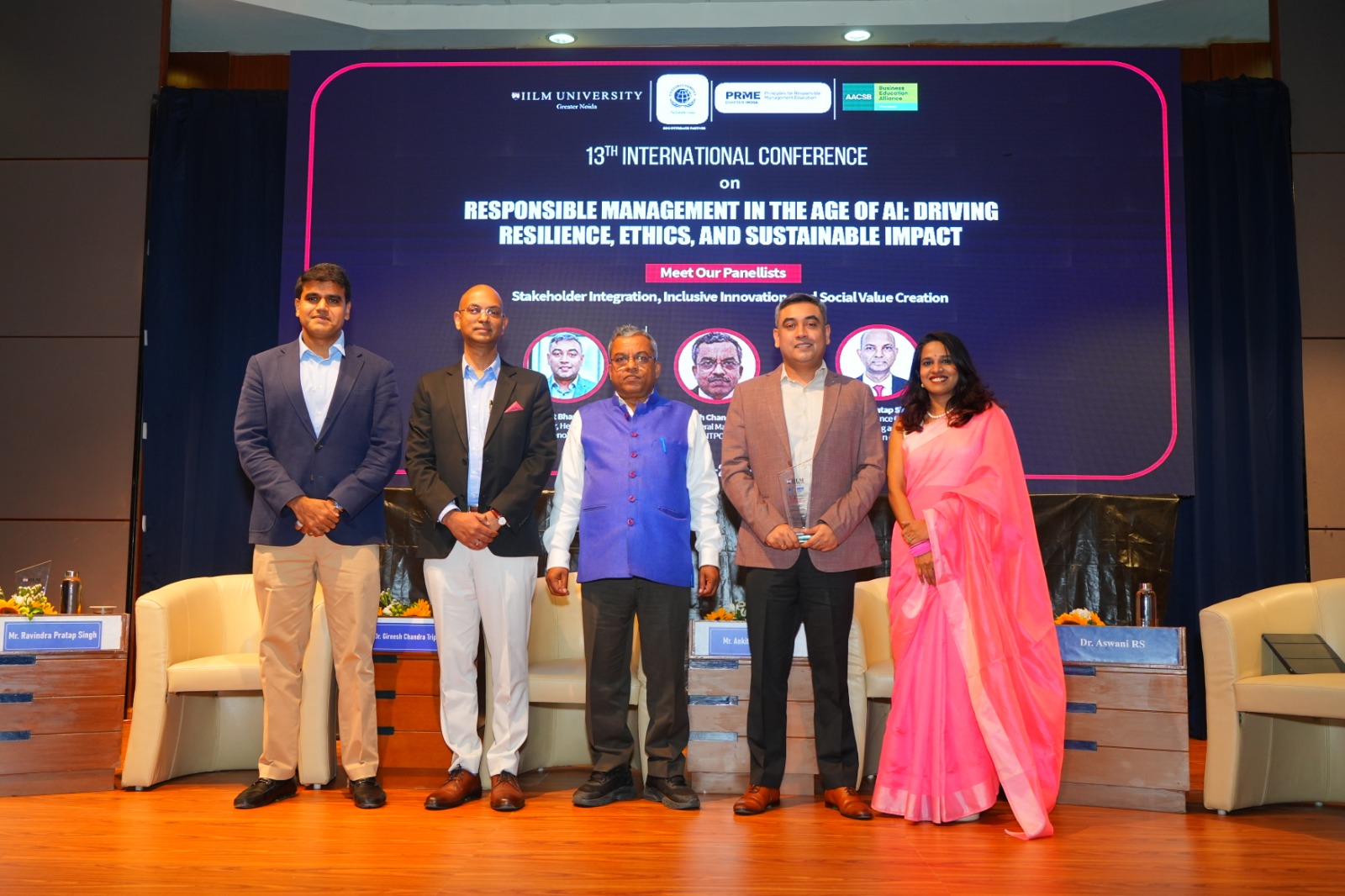
One of the key highlights of the day was a panel discussion on “Stakeholder Integration, Inclusive Innovation, and Social Value Creation,” moderated by Dr. Ashwani from IILM. The panel brought together senior representatives from leading public sector enterprises including Oil and Natural Gas Corporation, NTPC Limited, Indian Railway Finance Corporation, Security Printing and Minting Corporation of India, and Balmer Lawrie & Co. Ltd..
The discussion emphasized that responsible management is rooted in collaboration, trust, and inclusive participation. Panelists highlighted the growing importance of aligning policy frameworks, innovation strategies, and institutional partnerships to create long-term value for stakeholders. They also noted that process-driven approaches, when combined with ethical governance, can significantly contribute to sustainable development.
The valedictory session was marked by the presentation of two distinguished awards recognizing excellence in responsible leadership and business impact. The Responsible Management Leader Award was conferred upon Anuradha Sehgal of Coforge, while the Responsible Business Impact Award was presented to Fibertech Private Limited. These recognitions celebrated organizations and individuals demonstrating a strong commitment to ethical practices, sustainability, and stakeholder-centric growth.
Award recipients shared their perspectives on leadership, purpose-driven innovation, and the evolving role of businesses in addressing societal challenges. Certificates were also distributed to participants of the “Deep Purpose Retreat,” acknowledging their engagement in leadership and personal development initiatives.
Reinforcing its commitment to sustainability, the university also organized a tree plantation drive as part of the concluding activities, symbolizing environmental responsibility and long-term ecological balance.
The conference concluded with a closing address by Dr. Nihar Amonkar, Acting Vice-Chancellor and Director of the School of Management at IILM University, followed by the national anthem.
In conclusion, the final day of the conference underscored that in the era of Artificial Intelligence, responsible management extends beyond innovation and efficiency. It lies in how effectively organizations create value for stakeholders, foster meaningful collaborations, and embed ethical principles into their core operations—thereby shaping a more inclusive and sustainable future.

Comments are closed.