
Biomedical Engineering – The Fusion of Engineering and Human Life
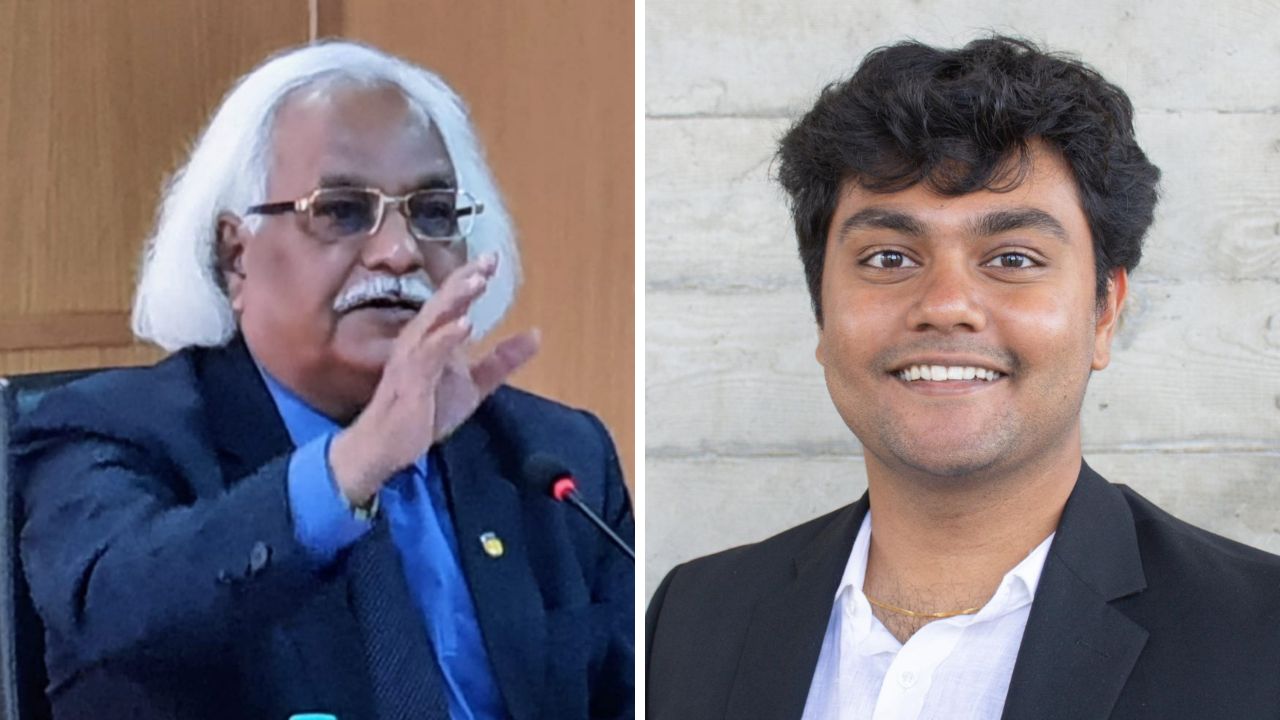
Authored By: Anugyan Sharma and Prof. PB Sharma
For a long time, the medical sciences have been fighting the battle of diseases to safeguard human life from variety of ills and ailments, some of them as chronic as cancer and diabetes. The pathways chosen by the modern medical sciences have all along been designing and developing drugs and formulations that could at best mitigate the attacks on human life and treat the diseases with the tools and systems of pharmacology and reactive intervention. All this has worked to a great extent to create a healthcare system that responds to the call of diseases and distress. But that is not enough as the tall order of diseases are creating the challenges to reengineer the healthcare systems such that the crowds in hospitals are minimized and diseases are confronted at their early stages to negate their impact on human life. It is this context that the fusion of biological sciences and engineering and technology innovations is not only desirable but a dire necessity.
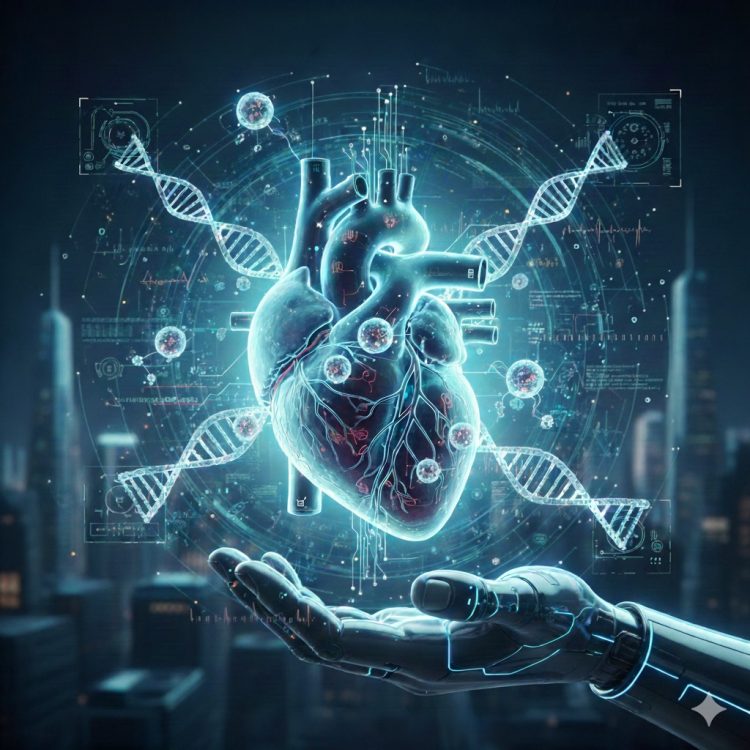
Biomedical engineering truly represents a radical fusion of technology and biology, moving us toward the horizon of a disease-free society. Rather than waiting for illness to take hold, this discipline anticipates the threat, activating the body’s innate defenses before a strike can even land. By merging the precision of engineering with the complexity of medical science, we are no longer just treating symptoms; we are deploying molecular medicine and microscopic surgical tools to neutralize threats at their source. This is the new architecture of human resilience.
New Horizons of Biomedical Engineering
The frontiers of biomedical engineering have provided a valid opportunity to shift our focus of medical healthcare from merely “fixing” the body to architecting it using the profound understanding of the science of life and the power of engineering of the human body and its neural systems of cognitive ability. As of 2025, the field is moving away from reactive drug-based medicine toward a paradigm of integrated and proactive confrontation of diseases and viruses for which the human body is vulnerable. The emerging frontiers of fusion of engineering and biological sciences are:
The Frontier of “Cancer Engineering”
Biomedical engineering has evolved beyond oncology to “Cancer Engineering.” Instead of just using chemicals (chemotherapy), researchers are now treating cancer as a structural and mechanical problem.
Researchers are creating 3D-printed “tumoroids”, miniature, living replicas of a patient’s specific tumor to test treatments in a lab before they ever touch the patient. Explorations are also underway to create cancer free organs and thus a cancer free world. New “smart” antibodies are being designed to stay inactive in the bloodstream and only “snap open” and activate when they encounter the specific mechanical environment of a tumor, preventing toxic side effects.
Regenerative Medicine & 4D Bioprinting
The goal is no longer to wait for an organ donor, but to print a replacement utilizing the enormous power of bioengineering and biomedical sciences. While 3D printing creates static shapes, 4D bioprinting uses “smart” materials (hydrogels) that change shape or function over time in response to the body’s internal signals (like heat or pH levels). Efforts are also underway to develop natural formulations for hydrogels that could be engineered to “trap” natural medicine molecules and release them only when triggered by specific body signals like heat, pH levels, or enzymes. As a part of biomedical education and research, the university undergrads are engaged in designing and developing biomaterials such as hydrogels that are engineered for customized treatment. Preliminary investigations by scientists at Amity University Gurugram into the biocompatibility of hydrogels done by cytotoxicity assays using HeLa and McCoy mouse fibroblast cell lines have revealed that they are non-cytotoxic, paving the way for further biomedical applications. Researchers at UC San Diego have found injectable biomaterial therapy can even mitigate right ventricular heart failure.
As per the NASA International Space Station Research Communications Team, in a major 2025 milestone, successful bioprinting of complex tissues occurred aboard the International Space Station. The lack of gravity allows delicate biological structures to be printed without collapsing under their own weight, a breakthrough for engineering fragile vascular networks (veins and arteries). Astronauts have also grown more than 50 species of plants in space, including tomatoes, bok choi, romaine lettuce, and chili peppers. Scientists at Amity University have sent a biological payload containing spinach plant callus into orbit on an Indian Space Research Organisation (ISRO) mission SpaDeX, launched Dec 30th 2024, to study plant growth in microgravity. This payload is a key step towards developing sustainable food sources for future long-duration space missions and stations, such as India’s proposed Bharati space station.
Molecular Machines and Nanobots
Lipid nanoparticles, the same tech used in mRNA vaccines are being refined to act as “GPS-guided” delivery vehicles. They can cross the blood-brain barrier to deliver gene-editing tools like CRISPR directly to damaged neurons to treat diseases such as Alzheimer’s or Parkinson’s. There is also emerging research into “nanobots”, which involves tiny, biocompatible machines that can be steered via magnetic fields to clear arterial blockages or perform cellular-level biopsies without an incision.
Neural Engineering & The “Silicon Pulse”
The interface between the brain and computers is becoming seamless. Using smart-responsive materials, engineers can create scaffolds that not only hold nerves together but actively send electrical signals to encourage them to regrow across spinal cord injuries. New smart prosthetics now include sensory feedback loops, allowing an amputee to “feel” the texture and pressure of an object, effectively integrating the machine into the user’s nervous system.
The Future
The overarching trend in the advancements of biomedical engineering is revolving around Precision Personalization. We are moving toward a world where our “inbuilt immunity” is not just what we were born with, but a system reinforced by engineering to be smarter, faster, and more resilient than evolution intended. The fusion of medical sciences and technology innovations are a promise for engineering a new vista of human life capable of negating diseases and ailments. The medical science would then be legitimately called Ayurveda, the science of healthy life, assuring longevity and vitality for a good hundred years or even more. The Vedic proclamation of Jivem Sarda Satam, meaning that we are ordained to live a healthy life for one hundred years would then find its true meaning in the new age of the “Biological Renaissance“, where the limits of our birth would no longer be the boundaries of our potential. Technology would then not be perceived as replacing nature, but rather helping human potential transcend the limitations of biological evolution.
The authors, Anugyan Sharma is a student member of Biomedical Engineering Society and Bioengineering Undergraduate at UC San Diego; Professor PB Sharma is a renowned thought leader, visionary educationist, and a crusader for sustainable development, currently Vice Chancellor of Amity University Gurugram, India.

Comments are closed.