

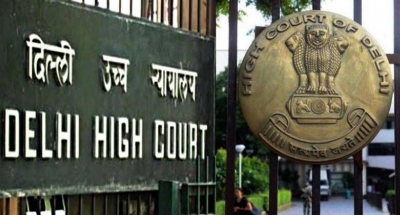
EdTech platform can display public rankings of universities as long as it is not disparaging: Delhi HC
New Delhi, Feb 20 (IANS) The Delhi High Court has set aside interim injunction orders restraining an EdTech platform from displaying details of two universities on its website, holding that publicly available information can be used as long as it is not presented in a disparaging manner.
Allowing appeals filed by GetMyUni Education Services Private Limited, a single-judge Bench of Justice Manoj Kumar Ohri overturned the orders passed earlier by a Dwarka court, which had restrained the company from using the names, information and details of Mangalayatan University and Usha Martin University on its website and had directed deletion of such material during pendency of the suits.
The Delhi High Court had stayed the operation of the impugned orders on May 22, 2023.
The appellant contended that it is an education-technology start-up acting as an online platform providing information about universities and colleges to students, and that it had only displayed extracts from publicly available data, including rankings under the National Institutional Ranking Framework (NIRF) as well as rankings by publications such as ‘The Week’ and ‘India Today’. It argued that the information was displayed in public interest without misrepresentation or any claim of association with the universities, and that the trial court’s orders had caused irreparable harm by depriving students of access to relevant information.
On the other hand, the respondent universities claimed that the rankings and search results displayed on the appellant’s website did not correspond with those shown on the Google search engine and that such display was disparaging to their professional reputation.
After examining the record, the Delhi High Court found that there was no material to suggest that the appellant had manipulated rankings or made editorial comments affecting the reputation of the respondent universities.
“The trial court, while passing the impugned order, has failed to appreciate that there is no evidence to show that the appellant has tinkered with the NIRF rankings, added its own editorial comments on the rankings, or commented on the quality of the services provided by the ranked institutions,” it said.
Justice Ohri found the allegation of reputational harm untenable, saying: “It is an unconvincing argument made by the respondent that the rankings per se, shown on the website, are disparaging to its professional reputation when the rankings displayed on the website are referenced to the rankings available in the public domain and are open-sourced.”
The order further noted that email exchanges between the parties showed prior discussions regarding proposals for lead generation campaigns for the universities, which ultimately did not fructify.
The Delhi High Court observed that the institutions had neither challenged the rankings made by the ranking agencies nor exercised any “right to be forgotten” by requesting removal from search engine results. It added that there was no allegation that the appellant had appropriated the intellectual property of the universities or falsely claimed association with their trademarks.
Holding that the respondent universities had failed to make out a prima facie case, the Delhi High Court said the appellant “has a right to use publicly available information about the respondents, as long as the same is not disparagingly presented”.
Accordingly, Justice Ohri set aside the impugned interim orders in both appeals and disposed of the appeals along with pending applications.
–IANS
pds/vd

Comments are closed.