
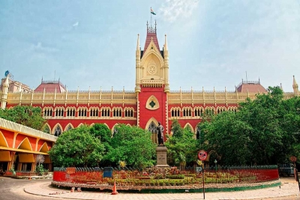
West Bengal witnessing rise in seekers for judicial involvement

New Delhi, Feb 20 (IANS) West Bengal is increasingly requiring judicial involvement in issues pertaining to procedural details and administrative inertia, where political interests are allegedly reigning over other aspects.
From law-and-order matters to holding rallies, several incidents of such court involvement have been seen of late.
Friday’s “extraordinary decision in view of the extraordinary circumstances” direction to depute judicial officers to adjudicate claims of voters listed under the category of “logical discrepancy” in the Election Commission’s ongoing Special Intensive Revision (SIR) exercise in West Bengal has now been termed unprecedented, or such simile, in most reportage.
Recent years have seen prayers courts approached on permissions for public meetings, the legality of administrative transfers, and the scope of police powers.
Media coverage and legal filings show a steady stream of petitions seeking court directions to settle disputes that can be handled within administrative or political channels.
In 2024, the West Bengal Bharatiya Janata Party (BJP) had to move the Calcutta High Court after the Kolkata Police rejected its application for holding a meeting in November that year, which was to be addressed by the Union Home Minister Amit Shah.
When a single judge bench allowed the BJP to hold the meeting at Esplanade in Kolkata, the Trinamool Congress-led state government filed an appeal.
Observing that processions, rallies, and meetings are a “regular feature in the state of West Bengal and more particularly in Kolkata”, a division bench upheld the order of the single judge bench order allowing the meeting.
Similar incidents take place on occasions when the West Bengal BJP leaders approach the administration for public rallies, the party alleged.
Court intervention is necessitated even for matter related to nation’s security.
In end-January, a Calcutta High Court division set March 31 as deadline for the West Bengal government to hand over land already acquired in nine districts to the Border Security Force (BSF) without any delay so that the barbed wire fencing can be erected along the India-Bangladesh border.
The bench passed the order while hearing a petition filed by a retired Army officer.
Petitioner Subrata Saha had earlier accused the state of failing to hand over the land for fencing, which he alleged had contributed to smuggling and infiltration at the border.
The heinous rape and murder case at Kolkata’s R.G. Kar Medical College and Hospital was referred to the Central Bureau of Investigation (CBI) by Calcutta High Court.
It followed allegations over the completeness, impartiality and credibility of the local investigation.
Questions were also raised of a wider conspiracy that the state police were seen as ill‑placed to investigate.
Even the apex court has on earlier occasions directed the transfer of complex, high‑profile or multi‑state investigations to the CBI where public perception of fairness is at stake.
In another incident, the Calcutta High Court ordered the CBI to investigate further into the West Bengal teacher recruitment scam, a significant educational scam involving the illegal appointment of teachers and non-teaching staff through the State Level Selection Test (SLST) in 2016.
The scam was exposed after the CBI arrested former State Education Minister Partha Chatterjee and several officials from the West Bengal School Service Commission in July 2022.
It has had serious consequences for job seekers, education policies, and the political landscape of West Bengal.
There are many other incidents where courts have been seized of petitions challenging executive orders, transfers and police actions during political events.
Legal interventions have repeatedly been sought also to set aside arbitrary orders or to lay down conditions for enforcement.
And now, what began as disagreements over officer deputation and procedural details in the SIR process has escalated into a constitutional intervention.
The Supreme Court, describing a “trust deficit” between the state government and the Election Commission, directed Justice Sujoy Paul, Chief Justice of the Calcutta High Court, to nominate serving and retired judicial officers to act as Electoral Registration Officers for adjudicating claims and objections.
–IANS
jb/khz

Comments are closed.