

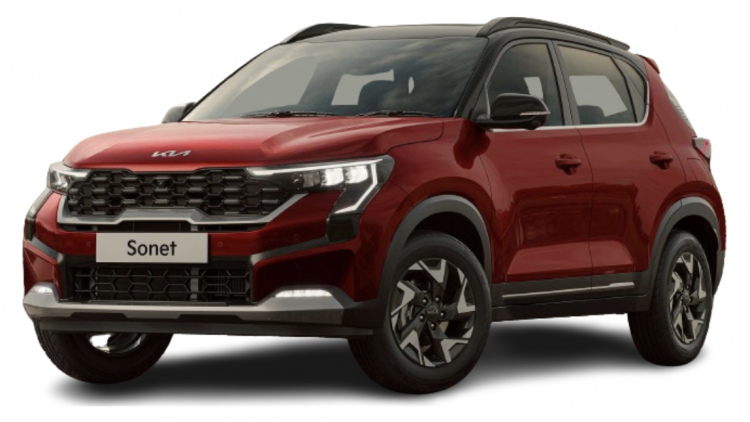
Is the Kia Sonet an Over-Optimised SUV for Its Segment?
The compact SUV segment has evolved rapidly, with manufacturers continuously adding features, technologies, and configurations to attract buyers. In this competitive environment, some vehicles appear to go beyond basic requirements, offering specifications that may exceed typical expectations for their size and price category. The Kia Sonet is often viewed through this lens, raising an interesting question: is it an over-optimised SUV for its segment?
Exploring this idea requires examining how the Sonet balances feature richness, engineering, and real-world usability.
Understanding Over-Optimisation in Automotive Design
Over-optimisation refers to the inclusion of features or capabilities that go beyond what is strictly necessary for the intended use of a product. In automotive terms, this could mean offering advanced technologies, multiple configurations, or premium features in a segment where they are not traditionally expected.
In the case of the Kia Sonet, the SUV is positioned as “loaded with tech” and designed to deliver a distinctive driving experience. This approach suggests a deliberate emphasis on feature density.
The question is whether this level of optimisation enhances value or introduces unnecessary complexity.
Feature Density Beyond Segment Expectations
The Sonet includes a wide range of features typically associated with larger SUVs, such as:
- Ventilated front seats
- 4-way power driver’s seat
- Smart air purifier with virus and bacteria protection
- Bose premium 7-speaker sound system
- 26.03 cm touchscreen infotainment system
These features significantly elevate the in-cabin experience. However, not all users may fully utilise them in everyday driving.
From one perspective, this could be seen as over-optimisation — offering more than what is functionally required. From another, it represents added value that enhances the ownership experience.
Advanced Safety Systems in a Compact SUV
The Sonet also integrates a comprehensive set of safety features, including:
- 6 airbags as standard
- Electronic Stability Control (ESC)
- 360-degree camera
- Blind View Monitor (BVM)
- All-wheel disc brakes
Additionally, it offers Level 1 ADAS features, such as forward collision avoidance, lane keep assist, and driver attention warning.
These systems enhance safety and driver awareness, but they also add to the vehicle’s complexity. For some buyers, especially those transitioning from simpler vehicles, adapting to these features may require time.
This raises the question of whether such advanced systems are essential or optional in this segment.
Multiple Powertrain Options and Complexity
The Sonet’s powertrain lineup includes:
- 1.2L petrol engine
- 1.0L turbo petrol engine producing 88 kW and 172 Nm torque
- 1.5L diesel engine producing 85 kW and 250 Nm torque
These engines are paired with various transmission options, including manual, iMT, automatic, and DCT.
While this diversity allows buyers to tailor the vehicle to their needs, it also introduces complexity in decision-making. Buyers must evaluate performance, efficiency, and long-term costs across multiple configurations.
Such variety can be seen as both a strength and a potential source of over-optimisation.
Technology Integration and User Experience
The Sonet’s Kia Connect platform, offering over 70 connected features, further illustrates its feature-rich approach. These features include remote vehicle control, navigation updates, and diagnostic information.
While these capabilities enhance convenience, their practical usage varies among users. Some drivers may actively use connected features, while others may rarely interact with them.
This disparity highlights the difference between available functionality and actual usage.
The Buyer Perspective
From a buyer’s perspective, over-optimisation is not necessarily a disadvantage. Many buyers prefer vehicles that offer more features, even if they do not use all of them regularly.
The presence of advanced features can create a sense of value and future readiness. Buyers may feel reassured knowing that their vehicle includes capabilities that could become useful over time.
In this context, over-optimisation can be interpreted as a form of value addition rather than excess.
The Role of Digital Comparison
Modern buyers often rely on digital platforms to evaluate vehicles. On online car-buying platforms such as ACKO Drive, where users compare feature lists, safety systems, and specifications before booking, vehicles like the Sonet often stand out due to their extensive offerings.
This visibility reinforces the perception that feature-rich vehicles provide better value, even if not all features are essential.
Digital comparison, therefore, amplifies the impact of feature density.
Balancing Complexity and Usability
The key challenge for feature-rich vehicles is maintaining usability. The Sonet addresses this by integrating features in a structured manner, ensuring that essential functions remain accessible.
Despite its extensive feature set, the vehicle retains straightforward controls for core driving functions. This balance helps prevent feature overload from affecting everyday usability.
Conclusion
The Kia Sonet can be seen as an example of over-optimisation in the compact SUV segment, offering features and technology that exceed traditional expectations. However, this over-optimisation is not necessarily a drawback.
Instead, it reflects a shift in buyer preferences toward feature-rich vehicles that enhance comfort, safety, and connectivity. The Sonet demonstrates how modern SUVs are evolving to deliver more value within smaller dimensions, even if that means going beyond what is strictly necessary.

Comments are closed.