

Delhi govt approves Centre’s PARIVARTAN scheme to phase out 2 lakh old buses, trucks
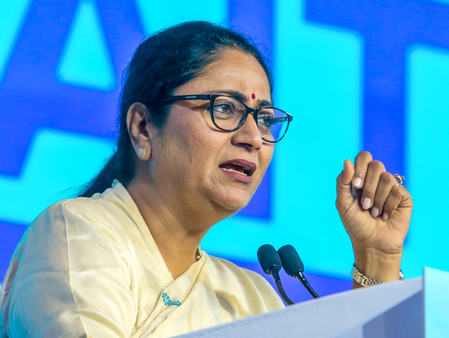
New Delhi, July 20 (IANS) The Delhi government has approved the proposal to implement and support the Central government’s PARIVARTAN to phase out over two lakh old, polluting trucks and buses and replace them with BS-VI, higher-emission-standard or electric vehicles, Chief Minister Rekha Gupta said on Monday.
She said the Union Ministry of Road Transport and Highways’ PARIVARTAN (Programme for Accelerated Renewal and Incentivisation of Vehicle Assets for Reducing Transport Air Pollution and Network Emissions) scheme’s implementation in the city will reduce transport-related air pollution and emissions.
The Chief Minister said the scheme is expected to benefit around 2.07 lakh truck and bus owners in Delhi-NCR. It will replace many old, highly polluting commercial vehicles with cleaner, more modern ones, reducing air pollution.
PARIVARTAN scheme applies to the Delhi-NCR region and has been implemented there simultaneously. Under this scheme, the state government of the region where a commercial vehicle is registered will provide the specific concessions applicable to it, said an official statement.
This approval to implement the scheme in Delhi was granted at a recent Cabinet meeting chaired by Chief Minister Rekha Gupta.
She said the scheme marks an important step towards replacing old, highly polluting trucks and buses in Delhi-NCR with BS-VI, higher-emission-standard or electric vehicles.
She said it will strengthen the capital’s clean transport system while helping modernise the commercial vehicle fleet and reduce air pollution.
The Chief Minister said that under the scheme, owners of BS-IV or older Light Goods Vehicles (LGVs) who scrap their vehicles and purchase a new electric LGV will receive a 100 per cent exemption on motor vehicle tax and registration fees for 10 years from the Delhi Government.
They will also be eligible for a 5 per cent interest subvention, an 8 per cent discount from the vehicle manufacturer (OEM), and fuel vouchers or a one-time benefit equivalent to the discounted value of the fuel vouchers, said the statement.
If, instead of purchasing a new electric LGV, the owner buys a used electric LGV, the beneficiary will receive a 50 per cent exemption on motor vehicle tax for 10 years, a 5 per cent interest subvention, and a one-time benefit equivalent to the discounted value of the fuel vouchers.
The scheme also covers Medium Goods Vehicles (MGVs) and Heavy Goods Vehicles (HGVs) that are BS-IV or older. Owners who scrap such vehicles and purchase new BS-VI, higher-emission-standard or electric goods vehicles will be eligible for a 100 per cent exemption on motor vehicle tax for 10 years, a 100 per cent waiver of registration fees, a 5 per cent interest subvention, an 8 per cent OEM discount, and fuel vouchers or a one-time benefit equivalent to the discounted value of the fuel vouchers, said the statement.
If a used BS-VI or electric goods vehicle is purchased instead of a new one, the beneficiary will receive a 50 per cent exemption on motor vehicle tax for 10 years, a 5 per cent interest subvention, and a one-time benefit equivalent to the discounted value of the fuel vouchers.
Chief Minister Rekha Gupta said the scheme also includes old BS-IV and older buses. These buses can be replaced only with BS-VI CNG or electric buses and will be eligible for the same benefits as goods vehicles.
She said eligible vehicles scrapped under the scheme will also receive relief on outstanding road tax and fitness penalty dues that have been pending for more than one year.
In addition, BS-IV vehicles covered under the scheme will not necessarily have to be scrapped. They may also be sold in non-NCAP cities outside the NCR. Non-NCAP cities are those that are not included under the National Clean Air Programme (NCAP).
She said the Delhi Government is fully committed to promoting clean transport. Keeping this objective in mind, the scheme provides that all LGVs purchased in Delhi under the scheme must be electric. For buses, only BS-VI CNG or electric (EV) vehicles will be permitted.
–IANS
rch/dan

Comments are closed.