

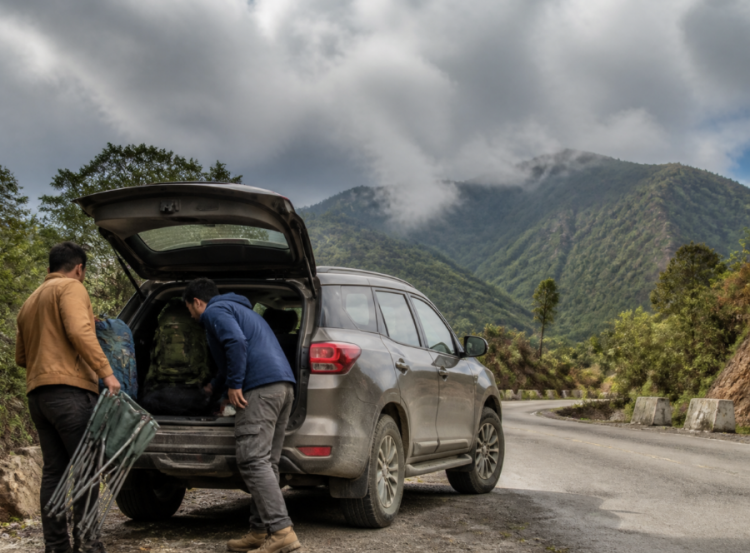
How Weekend Road Trips Are Driving Interest in Capable Used SUVs
Something shifted once long weekends became a regular fixture in office calendars. Families started leaving Friday night instead of Saturday morning. The drive itself became part of the holiday.
That quiet change rewrote what buyers actually want from a car – a hatchback that handles the school run brilliantly starts feeling out of its depth on a broken hill road with four adults, luggage, and a cooler box wedged in the boot.
What a Weekend Trip Actually Asks of Your Car
Most weekend routes are tarred, and a well-set-up crossover copes fine until it doesn’t. The trouble usually starts in the last ten kilometres: the unpaved stretch to a homestay, a flooded causeway after a heavy night, a steep gravel incline to a viewpoint everyone insists on reaching.
That’s where ground clearance, suspension travel, and torque at low revs stop being spec sheet trivia and start being the difference between arriving and turning back.
An SUV that clears speed breakers easily when empty might just scrape its underbody with five passengers and a full boot.
This is exactly why interest in best off road used cars has grown sharply among people who never intended to go rock crawling. They just want a car that doesn’t flinch when the road quality drops without warning.
Reading an SUV’s Real Ability Before You Buy
Check what drivetrain the car actually has before anything else.
Many popular SUVs are front-wheel drive with raised suspension, capable on gravel but genuinely limited in deep slush or on loose climbs. A four-wheel drive system with a low ratio transfer case is a different tool altogether, built for situations where traction disappears entirely rather than just gets patchy.
Ask yourself how far off tarmac the car realistically needs to go, then match the hardware to that answer honestly.
For most weekend travellers, three things carry the most weight:
Body-on-frame SUVs like the Scorpio and Fortuner handle sustained abuse well and shrug off rough roads in a way monocoque builds can’t replicate. Options like the Creta, Seltos, or Hector ride more comfortably across long highway stretches. Both options are built for different last miles, and knowing which last mile you’re actually driving matters more than any spec-sheet comparison.
Checking a Used Example Properly
The part nobody tells you upfront: off-road use leaves marks that a quick showroom clean won’t hide. Get underneath the car with a torch before you do anything else.
Look for fresh undercoating, which sometimes masks dents on the sump guard or floor pan from a harder-than-admitted previous life. Bent suspension arms, weeping shock absorbers, and torn CV joint boots all point in the same direction.
Steering feel tells its own story. A car that pulls consistently to one side on a straight, level road may have taken a kerb strike hard enough to knock the geometry out permanently.
Check tyre wear across the full tread width, not just the centre – uneven wear on the inner edges usually means alignment has been ignored for a long time, which creates its own chain of expensive problems downstream.
Diesel Automatics Need Extra Attention
They cost significantly more to fix when something goes wrong, and problems often hide in normal-feeling shifts during a short test drive. Warm the car up fully before pushing it into real stop-start traffic and watch for any hesitation between gears.
Anyone browsing second hand SUV cars should insist on actual service records rather than verbal assurances, specifically timing belt intervals, differential oil changes on four-wheel drive models, and any transmission service history.
A multi-point inspection process covering engine, body, electricals, interiors, and road testing gives you a structured baseline to work from. Visible sill scuffs or a scratched bumper? Don’t panic. Cosmetic damage is cheap to live with. Structural or mechanical neglect is not.
The Trade-offs Nobody Mentions Upfront
Capability comes with a bill attached. Larger SUVs drink more fuel, and that gap widens significantly in city traffic. Tyre replacements cost noticeably more when the wheels are bigger. Parking in older neighbourhoods becomes an exercise in patience.
Four-wheel drive systems add components that need servicing on a schedule, and skipping that maintenance simply defers a more expensive problem further down the road.
There’s also the question of honest usage. A comfortable, well-maintained crossover with a decent set of all-terrain tyres might serve occasional trips better than a capable SUV sitting idle most of the year.

Comments are closed.