
UNDP and HUL Partner to Scale Up Plastic Recycling & Circular Economy Across 50 Cities by 2028
TEN NEWS NETWORK
National News (27 August 2026): The United Nations Development Programme (UNDP) in India and Hindustan Unilever Limited (HUL) have announced the next phase of their partnership to strengthen India’s plastic waste management systems and accelerate the development of an inclusive circular economy.
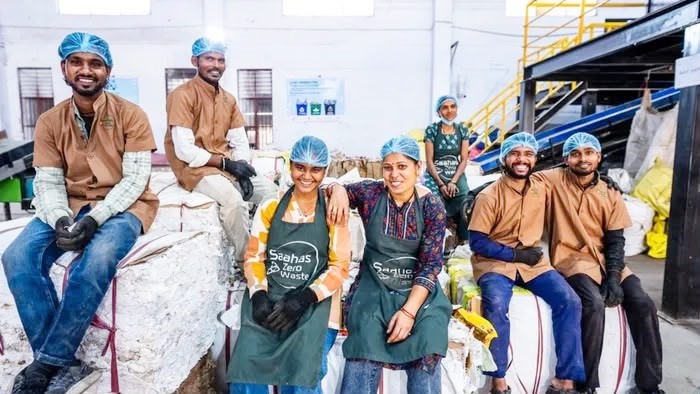
The expanded initiative aims to support 50,000 Safai Mitras, or waste workers, and strengthen waste management systems across 50 cities by 2028. The programme seeks to connect different stages of the waste-management chain, including segregation, collection, recovery, recycling and the reintegration of recovered materials into the economy.
The partnership builds on more than seven years of collaboration between UNDP and HUL. The new phase will focus on creating scalable models that can help cities and Urban Local Bodies (ULBs) develop more efficient, decentralised and resilient waste-management systems while improving the working conditions and livelihoods of frontline waste workers.
Four Key Areas of the New Partnership
The initiative will operate around four interconnected priorities aimed at strengthening both environmental sustainability and social inclusion.
Focus on Safai Mitras and Social Inclusion
A major component of the programme will be the formalisation and improvement of livelihoods for 50,000 Safai Mitras, with particular attention to increasing opportunities and support for women working in the waste-management sector.
The programme will also promote greater dignity, occupational safety and access to social-security mechanisms for waste workers who play an essential role in maintaining urban sanitation systems.
Strengthening Waste Management in 50 Cities
The partnership will work with 50 cities and Urban Local Bodies to improve circular-economy infrastructure. The objective is to develop systems capable of handling waste more efficiently from the point of generation through collection, recovery and recycling.
The partners aim to demonstrate decentralised and resilient approaches that can subsequently be adopted and scaled by other cities across India.
Improving Waste Segregation and Recycling
Another key priority is increasing the efficiency of material recovery and recycling. The programme will encourage better segregation at source and promote circular practices throughout the waste value chain.
By strengthening connections between waste collection, recovery and recycling, the initiative seeks to ensure that more recyclable material remains within productive economic use instead of ending up as unmanaged waste.
Sharing Knowledge and Practical Tools
UNDP and HUL will also develop open-source toolkits and practical resources that can be used by government agencies, research institutions and other stakeholders.
The knowledge-sharing component is intended to help different cities replicate successful approaches and strengthen their own waste-management strategies.
Project Circular Bharat and Project Utthaan
The expanded partnership forms part of Project Circular Bharat (PCB), an HUL initiative focused on advancing plastic circularity through financially viable, end-to-end recycling models.
UNDP will serve as an institutional partner, supporting policy alignment, implementation and the strengthening of systems needed to take these models to a larger scale.
The collaboration also includes Project Utthaan, which focuses specifically on the social inclusion of Safai Mitras. The initiative seeks to address issues related to dignity, occupational safety and social security for waste workers.
The programme is aligned with the Ministry of Social Justice and Empowerment (MoSJE) and is being implemented in coordination with the Ministry of Housing and Urban Affairs (MoHUA).
Leaders Highlight Importance of Inclusive Circular Economy
B.P. Biddappa, Executive Director and Chief People, Transformation and Sustainability Officer at Hindustan Unilever, said the continued partnership with UNDP would focus on expanding circular-economy solutions while ensuring that Safai Mitras receive greater social support, dignity and workplace safety.
He emphasised the importance of collective action in developing models that can be replicated across cities and deliver long-term systemic impact.
Angela Lusigi, Resident Representative, UNDP India, said the partnership demonstrates how environmental sustainability and social equity can be addressed together.
She highlighted the critical role played by Safai Mitras in keeping urban waste systems operational and said the initiative would work with cities, ULBs, institutions and communities to build more inclusive and resilient urban systems.
Seven Years of Partnership
The latest announcement builds on work carried out by UNDP and HUL over the past seven years. During this period, the partnership has supported 24,000 Safai Mitras and facilitated waste segregation across 120,000 households through more than 20 partners in five states.
The new phase significantly expands the intended reach, with the target of supporting 50,000 waste workers and strengthening waste-management systems in 50 cities by 2028.
The initiative also contributes to the objectives of the Government of India’s Swachh Bharat Mission-Urban 2.0 and supports the United Nations Sustainable Development Goals, particularly SDG 11 on Sustainable Cities and Communities and SDG 12 on Responsible Consumption and Production.
With a combined focus on plastic recycling, stronger urban waste infrastructure and improved livelihoods for waste workers, the UNDP-HUL partnership aims to create a model for an inclusive and scalable circular economy in India.
Dear Readers and Viewers, Please note that tennews.in: National News Portal daily publishes latest and top ten news from government, politics, national, business, education, technology, lifestyle, entertainment, health etc ten categories. You may submit your e mail and subscribe it to get updates on your e mail. Please also subscribe TEN NEWS NATIONAL YouTube Channel.

Comments are closed.