

Bihar’s prohibition fails to curb narcotics as ‘kota’ spreads to rural areas: Report
Patna, Oct 22 (IANS) Bihar’s prohibition policy has coincided with a sharp rise in narcotics-related cases registered under the Narcotic Drugs and Psychotropic Substances (NDPS) Act, with cases increasing from 697 in 2019 to 1,905 in early 2026, according to a recent investigative report in a leading daily.
Seizures of drug pills have reportedly increased 30-fold, while heroin use is also on the rise, according to an investigative report published by The Indian Express.
The investigation has highlighted the emergence of a new drug, locally known as ‘kota’, which is reportedly smuggled into Bihar from Nepal and the Northeast. The substance is transported in everyday items such as soap boxes and clothing before reaching consumers, including those in rural areas.
At the same time, de-addiction centres are struggling to cope with demand, with some facilities reportedly serving up to 20 times their intended number of patients, the report shows.
According to the report, although police seize thousands of litres of illicit liquor every day, the narcotics trade has continued to expand across the state. The growing availability of drugs has also raised concerns about increasing substance use among juveniles, highlighting a possible shift from alcohol consumption towards more dangerous intoxicating substances.
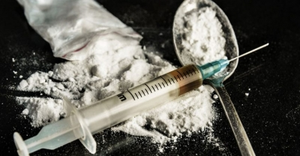
The report points out that the spread of drugs has received less attention than the movement of illicit liquor. Beyond smuggled bottles, a parallel network of intoxicants is taking shape, involving pocket-sized packets, strips of tablets, heroin, the distinctive variant known as ‘kota’, small vials and drugs concealed in soap boxes or even folds of clothing such as petticoats.
Experts cited in the investigation have also pointed to a change in the profile of people seeking treatment for substance dependence.
The concern, they said, is not limited to the growing number of patients, as the types of substances being consumed are changing as well. Earlier, a larger proportion of users depended on cannabis and other plant-based substances; this is now shifting rapidly towards semi-synthetic and synthetic drugs, with an increasing number of patients reportedly seeking help for heroin dependence.
The investigation further underlines the significant role played by geography in shaping Bihar’s narcotics trade, with the state’s location making it vulnerable to drug trafficking routes from neighbouring countries and the Northeast.
Describing the network as a ‘Death Triangle’, the report examines how heroin, the raw-heroin variant ‘kota’ and synthetic drugs enter Bihar through the Northeast, while also tracing the routes through which ganja and poppy husk reach the state, based on information provided by police.
The ‘Death Triangle’ refers to the Golden Triangle region of Myanmar, Laos, and Thailand, which has increasingly shifted its illegal production from traditional opium and heroin toward synthetic drugs like methamphetamine and a raw heroin variant known locally as ‘kota’, according to the report.
It notes that clandestine laboratories in Myanmar manufacture methamphetamine. Boxes containing ‘kota’ are reportedly transported from Myanmar in ready-made form.
It further shows that high-grade heroin, methamphetamine and ‘kota’ enter India through porous stretches of the borders adjoining Mizoram and Manipur. From there, consignments are transported along the Champhai-Aizawl-Silchar route into Assam. A relatively new supply route, reportedly running from Changlang to Tinsukia, is also believed to help traffickers bypass existing checks.
According to the report, carriers travel to the Northeast, collect boxes containing drugs and return by train. Some consignments are routed through districts in Bihar, including East Champaran, Kishanganj, Vaishali and Bhojpur. Once inside the state, the substances are distributed through tea shops, paan and cigarette outlets, as well as roadside sellers.
The investigation reveals that ganja enters Bihar through multiple routes, including Nepal, Tripura, Odisha and Andhra Pradesh; poppy husk is sourced from Nepal, Jharkhand and locations within Bihar itself, and charas is reportedly sourced mainly from Nepal and largely transported onwards rather than retained within Bihar.
Within this expanding trade, police officers and social workers have identified ‘kota’ as a new substance appearing in Bihar’s drug market. The report quoted a narcotics officer explaining how the term may have originated and gradually become associated with the substance itself.
“The name appears to have originated from the word ‘dose’. In local parlance, addicts and peddlers refer to a drug dose as a ‘quota’, and over time, the substance itself came to be known among users as ‘kota’,” the officer was quoted as saying.
The police are particularly concerned about the spread of inexpensive drugs among economically disadvantaged communities, especially juveniles. Social workers who work with street children in Patna have repeatedly raised concerns about the growing accessibility of intoxicating substances to vulnerable young people, according to the report.
The investigation also highlighted that a national survey cited in a 2023 report of the Parliamentary Standing Committee on Social Justice and Empowerment provides one of the closest broad estimates of substance use among juveniles in Bihar. The survey estimated that around 99,000 children aged between 10 and 17 years in the state used cannabis, while approximately 40,000 used opioids and 29,000 used inhalants. It also estimated that about 8,000 children in the same age group used sedatives.
The Opposition raised concerns over the reported spread of narcotics in Bihar and questioned the lack of attention given to drug-related problems in Bihar.
Tagging Union Home Minister Amit Shah, Rashtriya Janata Dal (RJD) MP Manoj Jha took to X to react to the development, writing, “Don’t stop talking about Punjab but look at Bihar too.”
Speaking to IANS, Jha said, “An entire generation has been ruined. This is what happens when the government has no control. The situation here is completely out of control. The government here has lost control of the situation.”
“I want people to give undivided attention to this issue. This problem is wiping out an entire generation of the state. That is why I tagged HM Shah in my post and urged him to give attention to Bihar also,” he added.
–IANS
sd/dpb

Comments are closed.