

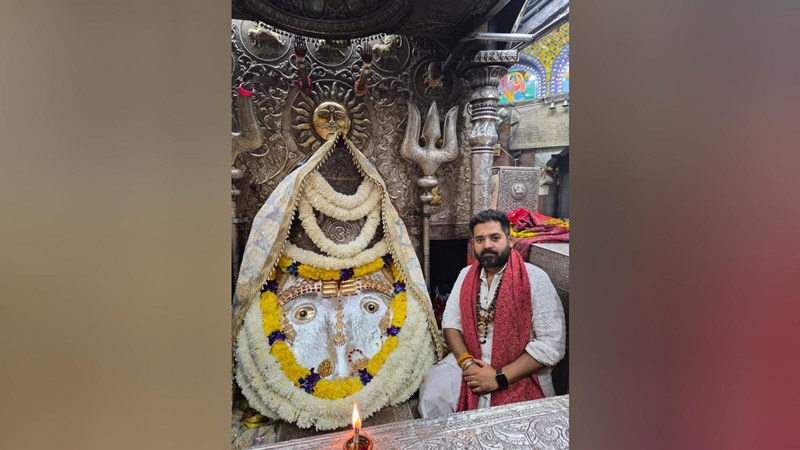
New Delhi (23/11/2026): As a proud Indian and a devout Sanatani, my heart swells with pride when I reflect upon the rich traditions, customs and festivals that define our civilisational heritage. India stands apart as a remarkable melting pot of diverse cultures, faiths, festivals and rituals, bound together by the enduring spirit of unity in diversity.
Coming from a family belonging to the priestly lineage of Siddhpeeth Shri Kalkaji Temple in New Delhi, I have witnessed first-hand the profound relationship between faith, tradition and society. Believed to have a history spanning thousands of years, Kalkaji Mandir remains one of the most revered spiritual centres in the national capital, attracting countless devotees, particularly during major festivals.
Whether it is the nine auspicious nights of Navratri, Dhanteras, Diwali, Holi, Makar Sankranti, Teej or Baisakhi, the temple witnesses an overwhelming influx of devotees from across India and beyond, all seeking the divine blessings of Maa Kalka. There is a deeply cherished belief among devotees that no one returns empty-handed from the sacred portals of Maa Kalka. Those who approach the Goddess with unwavering faith, a pure heart and a clear conscience seek not merely material prosperity but also strength, wisdom and the courage to walk the righteous path. Maa Kalka is revered by many as the Goddess of Justice, symbolising the triumph of righteousness over evil.
The temple also holds immense mythological significance. According to popular religious tradition, the mighty Pandavas worshipped Goddess Kalka and sought her blessings before embarking upon the epic Mahabharata war. Their prayers are believed to have been answered with the divine boon of victory. Such stories are deeply embedded in India’s cultural consciousness and continue to inspire generations.
However, beyond the rituals, traditions and mythological narratives lies a larger message that deserves greater attention: faith and development are not competing forces; they are complementary pillars of a progressive and prosperous society.
As someone who identifies both as a priest and a rationalist, I firmly believe that faith and modern development must go hand in hand. Development is undoubtedly a key indicator of a nation’s progress, reflected in its economic strength, infrastructure, technological capabilities and quality of life. Faith, on the other hand, nurtures the moral, ethical and spiritual dimensions of human existence. It provides individuals with a sense of purpose, belonging and responsibility.
Across religions and spiritual traditions, the underlying teachings emphasise compassion, honesty, peace, self-discipline and service to humanity. When practised in their true spirit, faith and religious values can help individuals become more responsible citizens and compassionate human beings. They strengthen character, encourage social harmony and foster a sense of brotherhood. These are not merely personal virtues; they are essential ingredients of nation-building.
In an increasingly uncertain world, marked by geopolitical tensions, conflicts in the Middle East and instability across several regions, the importance of national unity and social cohesion cannot be overstated. At such a critical juncture, it is imperative that we rise above divisive considerations, remain united and place the national interest above everything else.
India’s development journey in recent years has been particularly encouraging. The country has steadily strengthened its position as a formidable global power, both in terms of defence capabilities and economic potential. Initiatives such as Make in India have given a significant impetus to indigenous manufacturing, domestic production and self-reliance. Meanwhile, sustained investments in infrastructure, connectivity and capital expenditure are reshaping the country’s economic landscape.
Skill India and Digital India have emerged as important pillars of this transformation, empowering citizens with new opportunities and preparing the workforce for an increasingly technology-driven future. India’s expanding capabilities in defence manufacturing, exports and indigenous innovation further reinforce its ambition to emerge as a global economic and technological powerhouse.
We are witnessing an India that is increasingly confident in its capabilities. From the indigenous BrahMos missile and advanced drone technology to a thriving start-up ecosystem, unicorn enterprises, artificial intelligence, data science and semiconductor manufacturing, the country’s technological aspirations are reaching new heights. Initiatives in green hydrogen, biogas, renewable energy and the circular economy further demonstrate India’s commitment to sustainable and future-ready growth.
What makes this transformation particularly noteworthy is that India’s development agenda is not confined to economic growth and physical infrastructure alone. There is also a conscious emphasis on preserving cultural heritage, rejuvenating religious sites, developing pilgrimage infrastructure and promoting spiritual tourism.
The recent Maha Kumbh in the holy city of Prayagraj was a remarkable illustration of this convergence. Drawing an extraordinary congregation of devotees, pilgrims and visitors from across India and around the world, the event showcased the enduring strength of India’s spiritual traditions. At the same time, it highlighted the country’s capacity to organise large-scale infrastructure, transportation, sanitation, security and public-service arrangements for an event of unprecedented magnitude.
This is precisely the balance that modern India must strive to achieve: preserving its civilisational roots while embracing the opportunities of the future.
We must remember that economic prosperity without ethical values can become hollow, just as faith without a commitment to progress can limit society’s potential. A truly developed nation is one that advances technologically and economically while remaining rooted in compassion, cultural confidence, social harmony and moral responsibility.
India’s strength lies in its ability to move forward without forgetting where it comes from.
Faith gives us our values, development gives us opportunities, and unity gives us the collective strength to achieve our aspirations. When these forces work together, they create the foundation for a stronger, more inclusive and prosperous nation.
The India of tomorrow must therefore be modern in its outlook, progressive in its ambitions and deeply connected to its cultural and spiritual roots.
Because faith and development must not merely coexist; together, they must propel India towards peace, progress and prosperity.
Dear Readers and Viewers, Please note that tennews.in: National News Portal daily publishes latest and top ten news from government, politics, national, business, education, technology, lifestyle, entertainment, health etc ten categories. You may submit your e mail and subscribe it to get updates on your e mail. Please also subscribe TEN NEWS NATIONAL YouTube Channel.

Comments are closed.