
How India’s Homegrown Blazer Brands Are Closing the Gap With Premium Labels

Indian menswear is no longer split as clearly between expensive premium labels and low-cost formalwear. A growing group of homegrown blazer brands in India is using sharper sourcing, leaner distribution and fit choices built for local buyers to offer structured blazers at more accessible prices.
The shift matters beyond style. It reflects how India’s apparel supply chain, online retail channels and domestic brand confidence have matured enough for newer labels to compete with older names that once relied heavily on imported cloth, physical retail networks and long-standing brand equity.
Why the Old Premium-Import Formula Is Breaking Down
The Shifting Profile of the Indian Office-Goer
The blazer buyer today is often more occasion-driven than the office-goer of a decade ago. A blazer may be needed for client meetings, interviews, business travel, weddings or formal events, not necessarily for daily office wear. That makes the buyer more willing to compare fit, return policies and visible finishing details before committing to a brand.
Online reviews, styling videos and exchange policies also narrow the trust gap between established labels and newer entrants. A homegrown brand no longer needs decades of retail history to look credible, but it does need consistent sizing, clean product presentation and a return process that lowers the risk of trying a new label.
What “Premium” Used to Mean — and Why It’s Changing
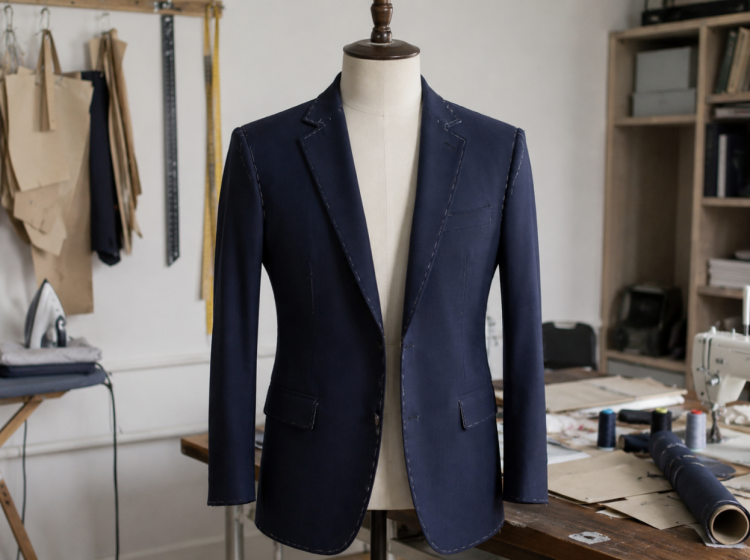
Premium used to be shorthand for imported wool, Italian tailoring references, and a higher price built around sourcing, retail positioning and brand history. None of that is gone, but it no longer defines the only path to a blazer that looks and feels structured. Buyers increasingly judge a blazer on drape, stitching consistency, and how it holds shape after a few wears, criteria that a well-run domestic operation can meet without relying only on imported labels.
The Three Levers Homegrown Brands Are Pulling
Smarter Sourcing Without Cutting Corners
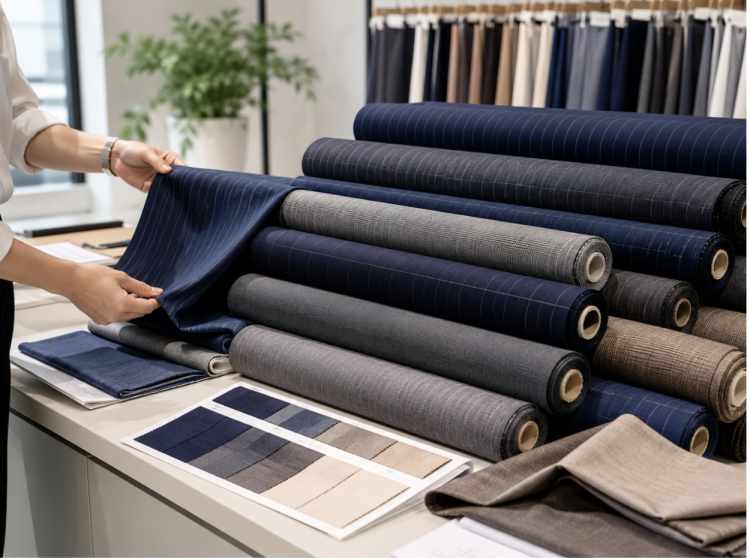
Sourcing decisions at this stage, from fiber blend to weight, end up shaping the blazer’s structure as much as the cut does. A brand exploring blazer-grade fabric options at scale can compare weight, drape, and finish before committing to a production run, rather than locking in a single supplier on assumption alone.
This is also where corner-cutting shows up fastest if a brand gets it wrong. A blazer that loses shape after repeated wear or cleaning can create more return pressure and weaker reviews than one that costs slightly more but holds its structure. Better-run brands treat fabric sourcing as a margin decision, not just a cost line.
Channel Discipline Over Retail Sprawl
Heritage brands built their margins around a network of standalone stores and shop-in-shops, a model with high fixed costs that gets passed straight into the retail price. Newer entrants have generally skipped that step, selling primarily through their own websites and a handful of marketplace listings instead of opening physical stores in every city.
That discipline keeps overhead low enough to hold a lower price point without compressing the materials budget, which is the trade-off that sinks brands trying to do both store expansion and aggressive pricing at the same time.
Designing for Local Fit Expectations and Climate
A blazer pattern developed for one market does not always translate well to another, especially when wear conditions include humidity, commuting, formal events and long hours in air-conditioned offices. Brands gaining ground here have invested in fit blocks built around their actual customer base, rather than adapting a generic pattern after the fact.
The payoff shows up in fewer alterations and fewer returns, both of which matter more to a lean operation’s margin than they do to a heritage brand with decades of buffer built into its pricing.
Two Market Plays Behind the Same Shift
Legacy Brands Creating Entry Lines
Some established formalwear names have responded by introducing lower-tier lines that keep the brand name but shift sourcing and finishing standards to hit a more accessible price band. The risk in this play is brand dilution: a buyer who associates the name with a certain quality tier can feel shortchanged if the lower-tier line is too visibly different.
DTC Challengers Building Trust Without Showrooms
The newer playbook skips the legacy-name problem entirely. A challenger brand with no retail history builds trust through fit guarantees, clear product information, and a return policy generous enough to offset the absence of a showroom experience. The trade-off is slower brand recognition, but the unit economics are often healthier because there is no legacy retail footprint to subsidize.
Where the Pricing Trap Still Catches Homegrown Blazer Brands Off Guard
Racing to the Bottom vs Racing on Value
The brands that stumble are usually the ones that treat “affordable” as a race to the lowest price rather than the best value at a given price. Cutting fabric weight, skipping a lining layer, or rushing a finishing step saves a small amount per unit but shows up quickly in wear-and-tear complaints, which is a far more expensive problem to fix than a slightly thinner margin.
The difference between the two approaches is easiest to see side by side:
| Decision Point | Race to the Bottom | Racing on Value |
| Fabric weight | Lightest available, regardless of drape | Matched to the structure needed for the cut |
| Lining | Skipped or reduced to cut costs | Kept where structure and comfort require it |
| Post-purchase risk | Complaints rise after repeated wear or cleaning | Fit and finish stay consistent enough to support repeat purchases |
The brands holding their ground for a year or two tend to be the ones in the right-hand column.
What separates the brands gaining lasting traction from the ones that fade after a promising launch is not the price tag on day one. It is whether the fit, stitching and cloth still hold their shape after real use. That consistency is harder to fake than a low price, and it usually comes from treating the supply chain seriously from the sampling stage, including where early development teams source fabric by the yard before scaling into larger production. For homegrown blazer brands in India, that quieter discipline, not the headline discount, is what is actually closing the gap with premium labels.

Comments are closed.