

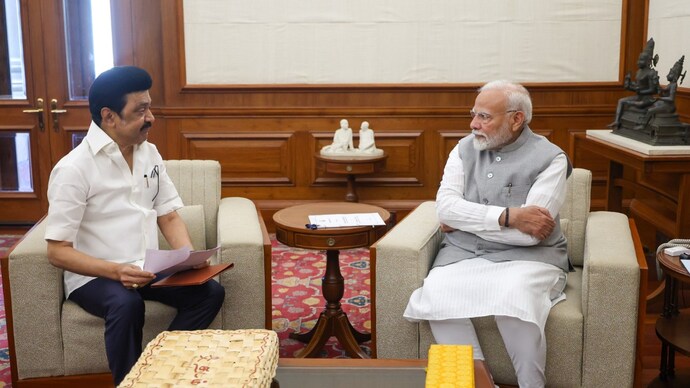
M. K. Stalin Writes to PM Narendra Modi, Urges Withdrawal of Proposed FCRA Amendment Bill
TEN NEWS NETWORK
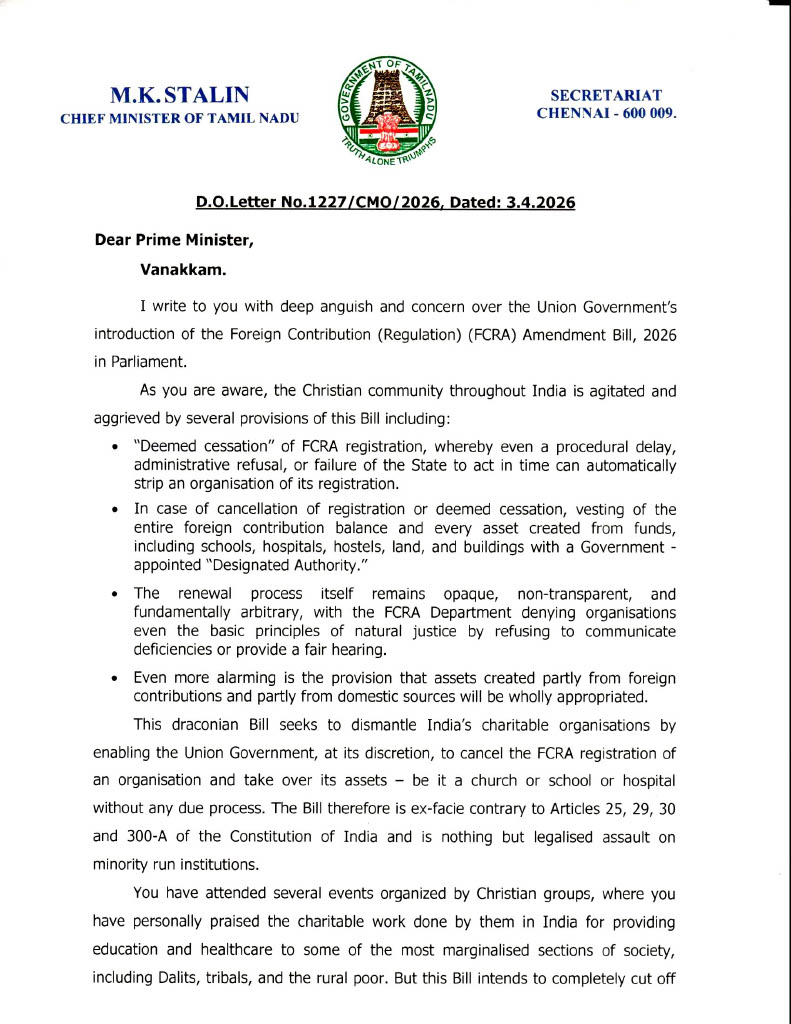
National News (03/04/2026): Tamil Nadu Chief Minister M. K. Stalin has written a detailed letter to Prime Minister Narendra Modi expressing strong opposition to the proposed Foreign Contribution (Regulation) Amendment Bill, 2026. In the letter dated April 3, M. K. Stalin voiced serious concerns over the provisions of the proposed legislation, warning that it could significantly impact charitable institutions and minority-run organisations across the country.
Addressing the Prime Minister, the Chief Minister said he was writing with “deep anguish and concern” over the Union government’s decision to introduce amendments to the Foreign Contribution (Regulation) Act. He stated that several provisions in the proposed Bill have triggered widespread apprehension among Christian organisations and other charitable bodies that depend on foreign funding to carry out welfare activities.
M. K. Stalin highlighted the provision of “deemed cessation” of FCRA registration, which, according to him, could automatically terminate an organisation’s registration even in cases of procedural delays, administrative lapses, or delays on the part of government authorities. He argued that such a mechanism could lead to organisations losing their legal status without adequate due process.
The Chief Minister also raised concerns about another provision in the Bill that allows the government to take control of all assets created through foreign contributions in the event of cancellation or cessation of FCRA registration. According to him, this could include institutions such as schools, hospitals, hostels, land holdings and buildings that were established with foreign donations. These assets, he noted, would be transferred to a government-appointed “designated authority”.
M. K. Stalin further criticised the current FCRA renewal process, describing it as opaque and lacking transparency. He alleged that many organisations are denied a fair opportunity to respond to deficiencies or irregularities during the renewal process, as the authorities often fail to communicate the reasons for rejection or provide an adequate hearing.
Another point of contention raised in the letter relates to assets that were developed using both foreign and domestic funding. Stalin said the proposed amendment could allow the government to appropriate such assets entirely, even if only a portion of the funding came from foreign contributions.
Calling the proposed legislation “draconian,” the Chief Minister warned that it could enable the central government to cancel the registration of organisations at its discretion and subsequently take over their assets without adequate procedural safeguards. He argued that such provisions could conflict with constitutional protections, including those relating to religious freedom, minority rights and property rights under Articles 25, 29, 30 and 300-A of the Constitution.
M. K. Stalin also pointed out that charitable institutions run by Christian organisations have historically played a significant role in providing education and healthcare services to marginalised communities, including Dalits, tribal populations and economically weaker sections. He said restricting foreign funding could severely affect the functioning of these institutions.
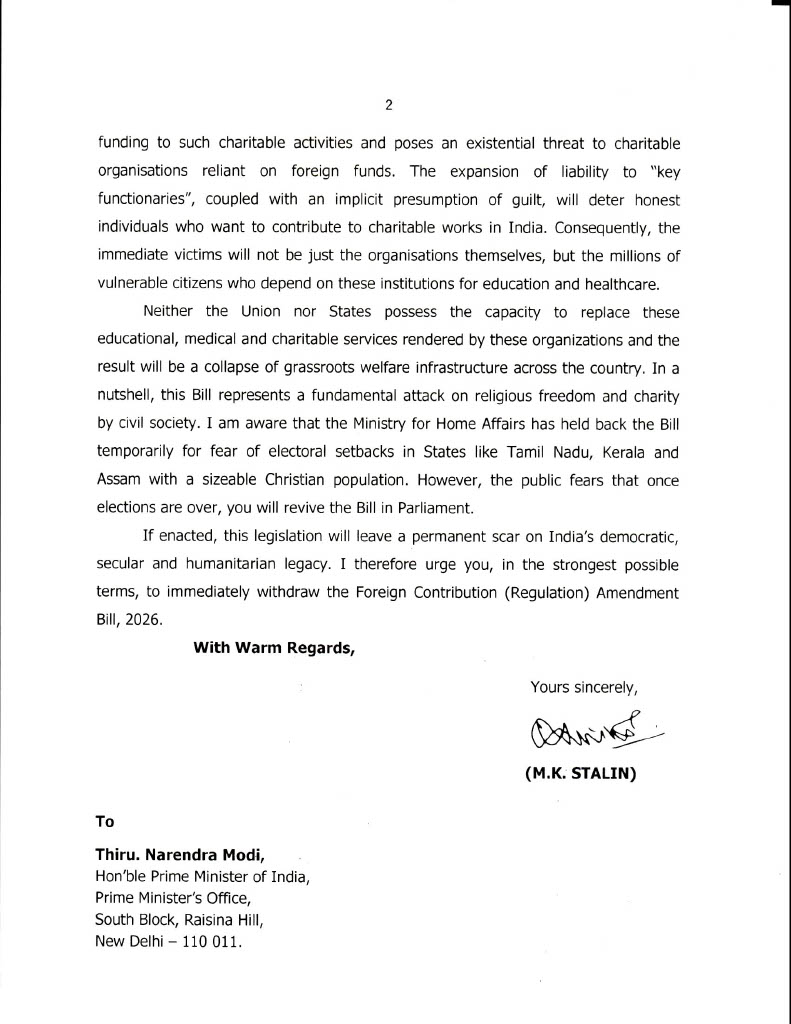
In his letter, M. K. Stalin cautioned that the proposed provisions expanding legal liability to “key functionaries” of organisations could create an environment of fear and discourage individuals from participating in charitable work. As a result, he said, the ultimate impact would be felt not only by the organisations but also by millions of people who rely on their services.
The Chief Minister further stated that neither the central government nor state governments currently possess the infrastructure or capacity to immediately replace the educational, medical and social services provided by these institutions. He warned that if the Bill becomes law, it could weaken grassroots welfare systems across the country.
Referring to concerns circulating among civil society groups, M. K. Stalin also mentioned that the Union Home Ministry had reportedly delayed moving forward with the Bill due to political sensitivities in states with sizeable Christian populations, such as Tamil Nadu, Kerala and Assam. However, he said there remains apprehension that the Bill may be revived after elections.
Concluding his letter, M. K. Stalin appealed to the Prime Minister to reconsider the proposal and withdraw the amendment Bill altogether. He said that if enacted, the legislation could leave a lasting negative impact on India’s democratic, secular and humanitarian traditions. The letter reflects growing debate over the proposed changes to the Foreign Contribution (Regulation) Act, which governs the receipt and utilisation of foreign funds by NGOs, charitable organisations and civil society institutions in India.
Dear Readers and Viewers, Please note that tennews.in: National News Portal daily publishes latest and top ten news from government, politics, national, business, education, technology, lifestyle, entertainment, health etc ten categories. You may submit your e mail and subscribe it to get updates on your e mail. Please also subscribe TEN NEWS NATIONAL YouTube Channel.

Comments are closed.