

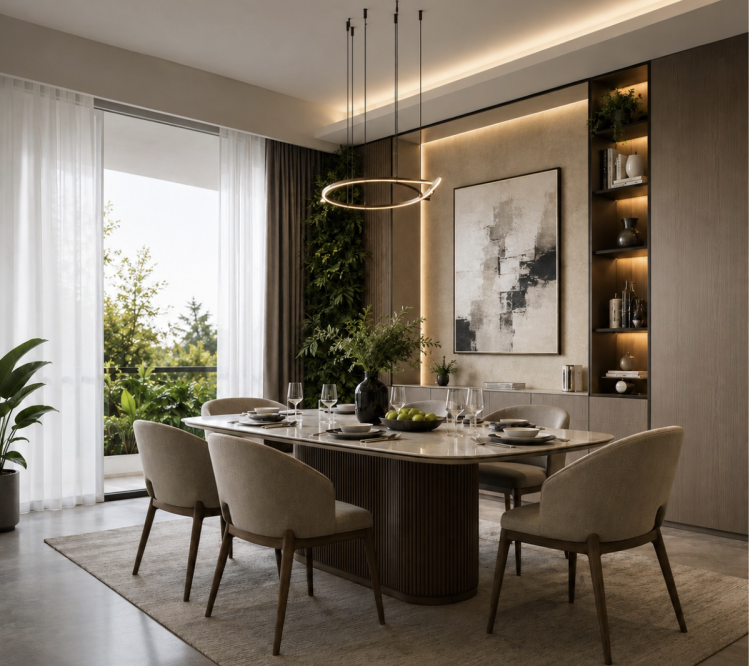
Next Gen Dining Space Trends for Smart Interiors
There was a time when dining spaces were used mostly during lunch or dinner. The rest of the day, the chairs stayed empty and the table became a place where random things were collected.
That has changed in a lot of homes now.
The dining area is no longer only for meals. Someone sits there with tea in the morning while replying to office messages. Children spread books across the table after school. Grocery bags land there for a few minutes and somehow stay till evening. At night, family conversations continue there long after dinner finishes.
Without planning it intentionally, this part of the house quietly becomes one of the busiest spots every single day.
That is why people have started thinking differently about dining furniture and layout now. The goal is not creating a space that only looks polished when guests arrive. It is about making the area comfortable enough to handle real life daily.
A good dining setup should feel natural to use repeatedly without becoming tiring or crowded.
Dining Spaces Feel Different When Comfort Comes First
A lot of older dining setups focused mainly on appearance. Large tables, stiff chairs, and heavy furniture looked formal, but many of those spaces were not actually comfortable enough for people to spend long hours there.
Modern homes are shifting away from that. Now people want dining areas where they can sit comfortably beyond mealtimes. Since work, conversations, reading, and everyday routines happen there too, comfort has become just as important as functionality.
This is why softer seating styles are becoming more common around dining spaces. A corner sofa set bed changes the feeling of the area completely because it makes the space feel more relaxed instead of strictly formal. People naturally stay longer in spaces that feel softer and less rigid.
Families especially prefer flexible seating because routines keep changing throughout the day. One person may work there in the afternoon while someone else relaxes there during the evening.
The furniture needs to support all of that without making the room feel overloaded. Smaller homes feel crowded very quickly once bulky furniture enters the space. Simpler arrangements usually work much better long term.
Layout Matters More Than Decoration
Many people focus heavily on furniture design but ignore how movement feels after everything gets placed inside the room. That is usually when problems begin. Chairs start hitting walls. Walking space becomes narrow. Corners feel blocked. Even getting up from the table begins feeling awkward after a while.
A comfortable layout should feel easy without demanding attention constantly. This matters even more in smaller apartments where dining and living spaces often connect directly together. Every furniture decision affects how open or restricted the house feels afterward.
Round tables work especially well in compact layouts because they improve movement naturally. A round dining table and chair set usually allows smoother walking space compared to sharp edged layouts that interrupt flow in tighter rooms.
People also interact differently around round tables. Conversations feel more connected because nobody sits too far apart or gets pushed into corners awkwardly. The important thing is leaving enough breathing space around furniture. A room does not need to be filled completely to feel finished. Homes generally feel calmer when movement stays simple.
Living And Dining Areas Now Blend Together
In many apartments today, separate formal rooms barely exist anymore. The living room and dining space often share the same layout completely. That can either make the house feel open or make it feel chaotic depending on how the setup is planned.
The biggest mistake people make is trying to separate everything too aggressively. Too many shelves, cabinets, or bulky furniture pieces break the room visually and make smaller homes feel tighter. Instead, softer zoning usually works much better.
A rug under the seating area, different lighting above the dining table, or slight furniture positioning changes can separate spaces naturally without using walls.
That balance matters.The room should still feel connected while allowing each area to have its own purpose quietly. Mixing different seating styles also helps the house feel less stiff. Softer seating near the dining area makes the space feel more relaxed and lived in instead of looking untouched all the time. People spend more time in these spaces now, so the setup needs to support daily comfort instead of only appearance.
Smaller Homes Need Furniture That Adjusts Easily
A lot of homes today cannot afford furniture that serves only one purpose. Every piece needs to justify the amount of space it occupies. This is one reason adaptable furniture is becoming more practical now. Flexible seating, movable chairs, compact tables, and furniture with hidden storage help homes stay manageable without making rooms feel overcrowded.
People also change routines more frequently now. Someone may host guests one weekend and need extra floor space the next. Work from home setups appear temporarily during weekdays and disappear again later. Furniture therefore needs to support movement instead of locking the room into one rigid arrangement forever.
Heavy setups become frustrating quickly in smaller homes because even simple cleaning or rearranging feels difficult afterward.
Lighter layouts usually feel easier to live with. The smartest interiors are often the ones where everything quietly supports everyday life without drawing constant attention to itself.
Good Design Rarely Feels Forced
Some homes look impressive for five minutes and exhausting after that. Usually it happens when every corner tries too hard to stand out. Rooms tend to feel more comfortable when colours, materials, and textures connect naturally instead of competing constantly. Softer shades, warm wood, simple fabrics, and balanced lighting usually create a calmer atmosphere without much effort. People also underestimate how important empty space is.
Not every wall needs decoration. Not every surface needs accessories. Once furniture and décor begin filling every corner, the house starts feeling mentally heavy. Dining spaces especially need openness because people gather there repeatedly throughout the day.
Good lighting changes the feeling of the room too. Harsh white lights often make spaces feel colder during evenings, while softer warm lighting creates a more relaxed atmosphere almost immediately. The best designed homes are usually the ones that feel easy to stay in for long hours.
Homes Work Better When Furniture Supports Real Life
A lot of furniture trends disappear quickly because they focus only on appearance. What people continue appreciating long term is practicality. Furniture that moves easily, seating that feels comfortable daily, layouts that improve movement, and spaces that stay manageable even during busy routines usually matter far more after a few months of living there.
Homes today need flexibility because lifestyles keep changing constantly. Guests arrive unexpectedly. Work routines shift. Families grow. Smaller apartments need to support more activities than before.
That is why smart interiors are less about adding more things and more about making existing space work better. At the end of the day, people remember homes that feel comfortable much longer than homes that simply look expensive.

Comments are closed.