
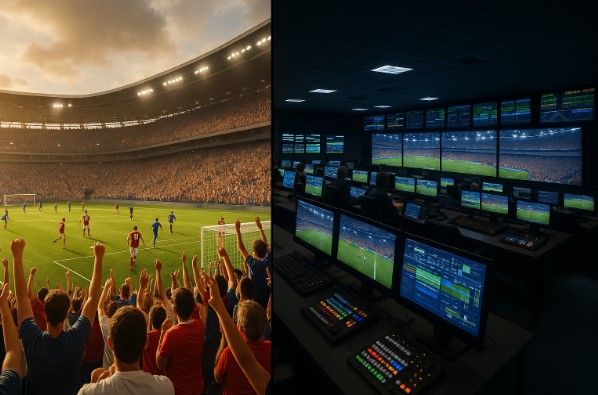

Television contracts now determine which sports leagues thrive and which just survive. The just-signed 11-year, $113 billion NFL media rights package illustrates how broadcast rights are now the dominant source of revenue in professional sports. This has created a landscape in which entertainment platforms like 1xbet casino roulette are just a portion of the general sports entertainment economy that broadcasting deals have made possible.
The Economics of Broadcasting Agreements
Today’s trends in sport media show phenomenal monetary figures that redefine entire leagues. Sports broadcasting revenue analysis shows the direct correlation between broadcasting contracts and league growth. The new broadcasting agreement of the Premier League adds £1.6 billion annually, distributed to clubs on a performance and viewership basis.
The main accelerators of broadcasting income are:
- Expansion of the international market and global distribution of audiences
- Digital streaming rights and multi-platform distribution
- Prime-time scheduling and audience metrics
- Exclusive content creation and behind-the-scenes productions
- Interactive features and real-time viewer engagement integrations
Future-Focused Training Methods Uncover Athletic Performance
The connection between athletic growth and media revenue is logical when one considers innovative training strategies. Innovative athletic development strategies increasingly use advanced technologies to maximize player performance, investments supported by growing broadcasting revenues.
Sports Broadcasting Innovation Goes Digital
Most fascinating about today’s broadcasting deals is their digital component. Streaming sports content analysis shows that 35% of sports viewing is through streams, more or less turning media contracting on its head for leagues.
Leagues invest broadcasting revenue in various locations: youth development programs, infrastructure renovation, and application of technology. The partnership of the NBA with various streaming platforms brought an additional $2.6 billion more than usual TV deals, funds that directly cover youth development programs and international expansion campaigns.
Revenue Sharing and League Development Trends
Broadcasting revenue flows through leagues in complicated patterns that affect competitive balance. Structures for distributing revenues vary enormously between leagues, some of them distributing media money proportionally and others connecting payments with market size and levels of performance.
The TV model of the English Premier League provides each club with a basic payment of £84 million, in addition to bonuses on the basis of final league position and television appearances. The model maintains competitive balance and rewards success, a template other leagues adopt and follow.
International broadcasting rights are the highest revenue-growing sector. The Premier League makes more money from international rights than from domestic contracts and receives more than £400 million annually from Asian markets alone. Such international reach turns competitions within local regions into global entertainment commodities.
Studies show that leagues with diversified portfolios of broadcasting exhibit greater financial stability. Organizations making use of one-market contracts lose their revenue stability in times of contract expirations, whereas international-contracted leagues maintain more stable revenues.
The problem that emerges from this examination is sustainability. Is broadcasting revenue capable of continuing to grow at current rates, or does market saturation force leagues to pursue alternative streams of revenue? What becomes clear from examining these financial frameworks is that broadcasting agreements have transformed the professional sports business model, creating opportunities and dependencies that were absent in earlier decades.
Current broadcasting contracts are more than simple media contracts—each is the financial foundation of modern professional sport. The statistics reveal that leagues have been able to transform sports programming into premium entertainment product, generating revenue streams that not only support current activities but development plans for decades to come well outside established parameters.

Comments are closed.