

Tales of two Kashmir: One marches ahead, other remains on tenterhooks
New Delhi, Aug 6 (IANS) As the nation observes the seventh anniversary of the constitutional changes effected on August 5, 2019, the two contrasting tales — one of development and the other of widespread havoc, both pertaining to Jammu and Kashmir along the Line of Control (LoC), take the centrestage.
Jammu and Kashmir and the Pakistan-occupied Jammu and Kashmir (PoJK), separated by the Line of Control (LoC), depict contrasting tales of prosperity and despondency.
If Jammu and Kashmir reflect the striking turnaround in its fortunes in recent years, other side across the line presents poignant tales of regression, followed by state apathy and repression.
With growing road and railway networks, the pace of transformation in is emphatically visible in Jammu and Kashmir while the PoJK remains plagued by protests, public marches — putting the region perennially on tenterhooks.
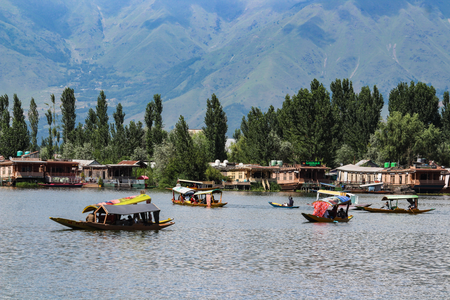
Zojila Tunnel project, Chenab bridge inauguration and the fast-booming tourism sector in the Valley have come to re-define the Valley’s economic outlook.
Jammu and Kashmir received more than two crore visitors in year 2024, as per official records — creating a record of its own.
Contrary to this, the other side of LoC administered by Pakistan remains beset with repeated demonstrations, shutdowns and public-police clashes linked to questions of public representation.
The chaos that gripped the PoJK recently has seen more than two dozen deaths till now, as per a global agency.
The unrest in PoJK intensified around Joint Awami Action Committee (JAAC) and the controversy over 12 Assembly seats reserved for refugees living outside the territory.
The juxtaposition has become more apparent as the two sides don’t look delinked from each-other but their growth trajectories have also gone remarkable shift.
Analysing the disparate growth trajectory in both Kashmirs, a leading news portal ‘Asian Lite’ opines, “On the Indian side, infrastructure is creating a new economic geography while on the other side, political mobilisation continues to dominate public life.”
“The 13.153-kilometre Zojila tunnel, built at an estimated cost of Rs 6,809.69 crore, will serve as the all-weather connectivity between Jammu and Kashmir and Ladakh through one of the most challenging Himalayan corridors,” it said while highlighting the vulnerability of Zojila Pass in extreme weather conditions.
Chenab Rail Bridge, the world’s highest railway arch bridge, and the Anji Khad Bridge, India’s first cable-stayed railway bridge are other notable projects that will re-define the connectivity in the region.
This year, the Indian Railways also extended Jammu-Srinagar Vande Bharat service to Jammu Tawi and increased the train from eight to 20 coaches.
The railway network is also continuing to expand. Detailed project reports have been prepared for doubling the 118-km Qazigund-Srinagar-Budgam section and for a 40-km Baramulla-Uri railway line.
Tourism sector, forming the mainstay of Jammu and Kashmir residents, received a firm impetus with the numbers of pilgrims visiting the Valley rising exponentially in recent years.
The Union Territory recorded more than 20 million domestic tourist visits to the Jammu region alone in 2024, alongside international visitors, according to figures cited by the Union Tourism Ministry. In 2024 alone, the region recorded more than 2.3 crore tourist arrivals.
“The contrast becomes deeper when developments in PoJK are viewed alongside this expansion,” says the news portal.
It is this deepening contrast, that is illuminated by August 5, the day marking the anniversary of Article 370 abrogation.
On one side of the LoC, the region is getting wired to national highways, equipped with modern institutions and strengthening democratic values while on the other, the territory struggles to keep pace with development and watches street protests then and now, followed by blackouts and government repression.
“The mountains have not changed. The LoC has not moved. But the development story around it is changing. And perhaps the most important feature of the present moment is that Kashmir is increasingly being judged not only by the politics of its past, but also by infrastructure, connectivity, economic activity and opportunities being built for its future,” the report says.
–IANS
mr/khz

Comments are closed.