

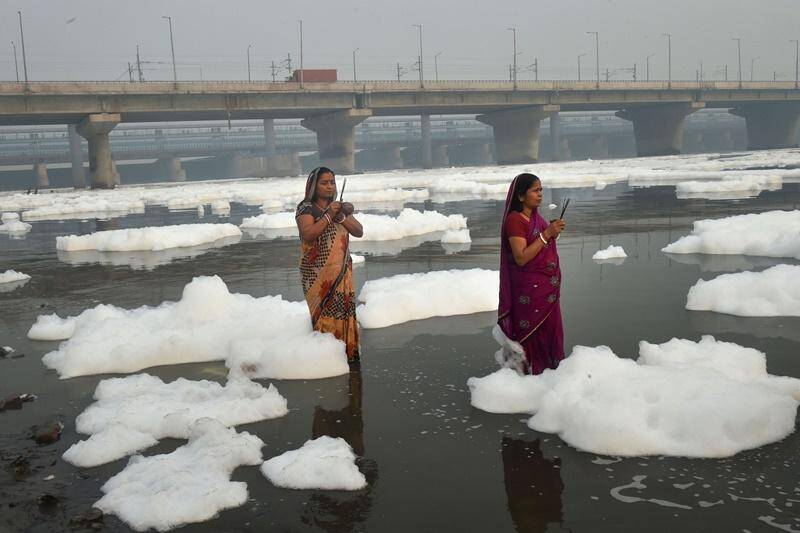
As a thick layer of toxic foam continues to float on the surface of the Yamuna river in the national capital on Tuesday on the second day of the Chhath puja festival.
Environmentalists, political parties and people of Delhi have raised concerns over the appaling situation. The hazardous foam floating on the Yamuna river is the result of increased ammonia levels and high phosphate content that is caused by the discharge of industrial pollutants including detergents into the river.
Meanwhile, Chhath devotees were seen standing in the toxic foam-laden Yamuna river near Delhi’s Kalindi Kunj to offer prayers to the Sun God on the second day of the Chhath puja festival. “We know that the Yamuna river water is dirty and it could be hazardous. But there is no option as prayers are offered to the Sun God while standing in flowing waters of a river,” says a devotee at the Yamuna ghat near Kalindi Kunj.
Social activist Varun Gulati said that the thick layer of toxic foam is a result of chemical waste used to dye denim being dumped by illegal jeans-making units set up close to the river banks. “Illegal denim factories are the main issue behind the foaming water which is polluting the Yamuna river. The dying setup is releasing contempt water direct into Sewage Treatment Plant (STP) and from the plant, it is releasing into the Yamuna river directly and everyone is witnessing the foaming of water but no one wants to know what is the real source behind this and it is actually the denim dying units.”
However, the political blame game has continued over this issue as the Delhi Jal Board Vice Chairman and Aam Aadmi Party (AAP) Raghav Chadha expressed his anguish at the BJP-ruled governments of Uttar Pradesh and Haryana for releasing untreated wastewater into the river.
Chadha said in a statement, ”The Okhla Barrage is under the UP Irrigation Department, and because of its lackadaisical attitude, water hyacinth plants grow all around. One needs to understand that when these hyacinth plants decompose, they release surfactants like phosphates. When this water, filled with huge amounts of surfactants like phosphates, falls in Kalindi Kunj from a height, it produces foam, which gradually accumulates and floats on the surface of the water. This foam gets difficult to remove.”
