
GIMS Launches ‘Doctors’ Idea of India’, the Country’s First Innovation Cohort
Ten News Network
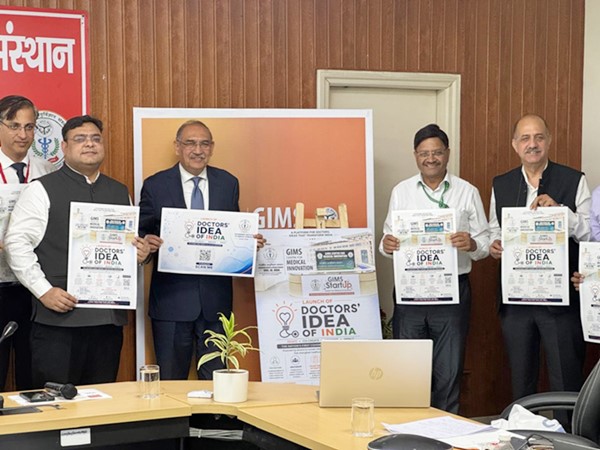
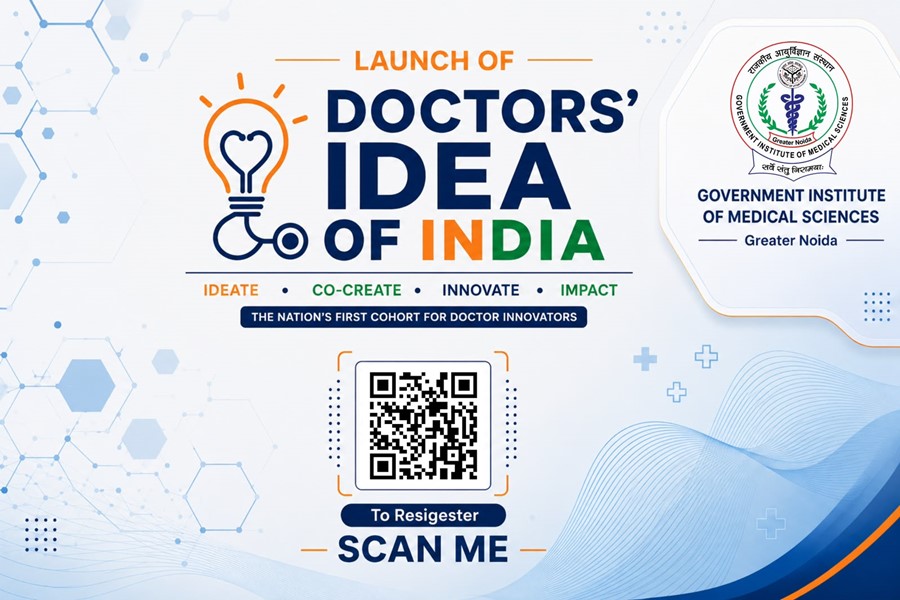
Greater Noida News (02/06/2026): In a significant step towards fostering clinician-led innovation in India, the Government Institute of Medical Sciences (GIMS), Greater Noida, through its Centre for Medical Innovation (CMI-GIMS), launched “Doctors’ Idea of India”, the country’s first dedicated innovation cohort designed exclusively for doctors. The initiative was unveiled during the GIMS AI Roundtable 2026, a national-level gathering focused on exploring the transformative role of Artificial Intelligence in healthcare.
The programme was inaugurated by Padma Shri Dr. Harsh Mahajan, Founder and Chairman of Mahajan Imaging and one of India’s most respected radiologists, often referred to as the “MRI Man of India.” The launch marked a key milestone in GIMS’ efforts to create a robust ecosystem that encourages healthcare professionals to drive innovation from within the clinical environment.
The newly launched cohort seeks to empower doctors to convert their clinical observations, research insights, and firsthand understanding of healthcare challenges into practical and scalable solutions. Participants will receive support through structured mentorship, clinical validation opportunities, incubation assistance, intellectual property guidance, industry collaborations, and access to potential funding avenues. The initiative aims to build a nationwide network of doctor innovators capable of developing impactful healthcare technologies and solutions.
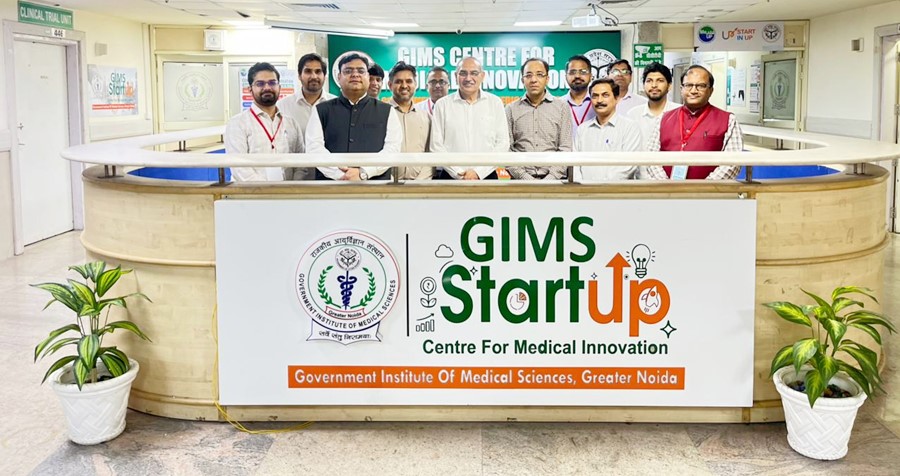
The launch coincided with the second foundation day celebrations of the Centre for Medical Innovation (CMI-GIMS), which has emerged as a pioneering hospital-based innovation and incubation platform. Over the past two years, the centre has actively supported healthcare startups, digital health ventures, medical device innovations, and AI-driven healthcare solutions by connecting innovators with clinical expertise and validation opportunities.
Earlier in the day, noted radiologist and educator Dr. Harsh Bhayana conducted a Faculty Development Programme on Artificial Intelligence in Medical Education. The session introduced faculty members and clinicians to emerging AI applications in teaching, research, diagnostics, and patient care, highlighting the growing integration of technology into medical practice and academic healthcare institutions.
The AI Roundtable 2026 brought together a diverse group of stakeholders, including clinicians, researchers, policymakers, healthcare administrators, industry experts, entrepreneurs, and startup founders. Discussions focused on key issues surrounding the adoption of AI in healthcare, including clinical deployment, regulatory preparedness, patient safety, ethical considerations, and the future of technology-enabled healthcare delivery in India.
A major attraction of the event was the presentation of innovative solutions by startups participating in the GIMS AI Startup Clinic. The startups showcased AI-powered technologies spanning diagnostics, clinical decision support systems, workflow optimization, patient engagement tools, medical education platforms, and digital healthcare services. The presentations provided an opportunity for innovators to interact directly with clinicians, investors, researchers, and healthcare decision-makers.
Addressing the gathering, Brig. (Dr.) Rakesh Gupta, Director of GIMS Greater Noida, emphasized the importance of collaboration between medicine and technology in shaping the future of healthcare.
“India’s healthcare transformation will be driven by the convergence of medicine, technology, and innovation. GIMS is committed to creating an ecosystem where doctors, researchers, startups, and industry leaders work together to develop solutions that improve healthcare outcomes for millions of people,” he said.
Speaking about the newly launched programme, Dr. Rahul Singh, Chief Executive Officer of CMI-GIMS, said that doctors possess unique insights into healthcare challenges because of their direct engagement with patients and healthcare systems.
“Every doctor encounters unmet clinical needs and operational challenges in their daily practice. ‘Doctors’ Idea of India’ is designed to convert those observations into innovations that can strengthen healthcare systems and improve patient care. Our vision is to nurture a new generation of medical innovators who can create solutions not only for India but also for global healthcare markets,” he said.
Built around the theme “Ideate • Co-Create • Innovate • Impact,” the programme aims to establish a strong pipeline of healthcare innovations emerging directly from India’s medical community. By bridging the gap between clinical practice and innovation, the initiative seeks to position doctors at the forefront of healthcare transformation.
The event witnessed participation from representatives of medical colleges, healthcare institutions, government agencies, startup ecosystems, research organizations, investors, and innovation leaders from across the country. The wide-ranging participation underscored GIMS’ growing reputation as a national hub for healthcare innovation, translational research, and clinical validation.
The Centre for Medical Innovation (CMI-GIMS) is a hospital-based innovation and incubation ecosystem dedicated to advancing healthcare innovation through startup incubation, clinical validation, translational research, medical devices, digital health technologies, and Artificial Intelligence. Leveraging the clinical strengths and academic ecosystem of GIMS, the centre provides a platform for doctors, researchers, entrepreneurs, and startups to develop, test, and deploy transformative healthcare solutions.
Dear Readers and Viewers, Please note that tennews.in: National News Portal daily publishes latest and top ten news from government, politics, national, business, education, technology, lifestyle, entertainment, health etc ten categories. You may submit your e mail and subscribe it to get updates on your e mail. Please also subscribe TEN NEWS NATIONAL YouTube Channel.

Comments are closed.