
India stands at a pivotal crossroads. With one of the largest youth populations in the world, the nation’s future relies heavily on the strength of its higher education ecosystem. As we navigate the complexities of the 21st century, driven by rapid technological shifts and global interconnectedness, our educational institutions must evolve from mere degree-granting factories into hubs of innovation, character, and world-class capability.
To truly architect a future where India leads on the global stage, the education sector must anchor itself to three non-negotiable pillars: Excellence, Integrity, and Trust. Central to this framework is a robust, foolproof mechanism for testing and evaluation, ranging from routine school and college level assessments to high-stakes entrance examinations for professional courses. The track record of entrance examinations and even of the central secondary examinations leaves a lot to be desired. The emergent crisis of integrity and trust cannot be over emphasized given the monumental challenge posed by the recent CBSE mismanagement of scanning of the answer sheets and paper leak of the national level entrance examination like NEET.
Let us take a close look at the three important pillars of education and examination systems that our forefathers considered absolute must for the education ecosystem in the Gurukuls of ancient India that Made India the Viswa Guru then. Excellence, Integrity, and Trust were non-negotiable to the Gurukul system of education in ancient India and so was the emphasis on character building in those who seek education and empowerment of knowledge and skills of science and technology.
1. The Pillar of Excellence: Redefining Academic Standards
For decades, education in post-independence India was largely defined by rote learning, rigid disciplinary silos, and a hyper-focus on memorization. The examinations were also to assess what was taught from the books of knowledge and the assessment was of your memory and at best the speed with which you could remember and describe. Achieving true excellence requires a paradigm shift in how we approach both learning and assessment.
Interdisciplinary Flexibility: The rigid walls between science, commerce, and the humanities are dissolving. A software engineer today is open to trying out his capabilities of software and application development over a wide spectrum of activities and sectors of human endeavour. Be it market intelligence, large data analytics or m optimizing supply chain or optimizing designs for sustainability or mange organizations and their work flow at a global scale, everywhere you find a software engineer today and an AI Expert Agent tomorrow making the system work more efficiently and in conformance with the growing demands for compliance of sustainability and data integrity and cyber security, A historian likewise thrives with data analytics. Fully realizing the multi-disciplinary approach outlined in the National Education Policy (NEP) 2020 is therefore crucial and thus required building interdisciplinary flexibility in designing the academic curriculum and extending learning beyond set disciplinary requirements.
We need not over emphasize that interdisciplinary team work has resulted into demonstrable high gains in organizations like ISRO, BARC and DRDO in India where interdisciplinary pursuit has been the hall mark of mission orientation for pathbreaking success that receive global recognition and acclaim for India’s science and technology prowess, for Chandrayan and Space Dex and also for India’s highly impressive Missile program as also for the IT industries worldwide.
Modernizing Assessment Paradigms: Excellence in education cannot be measured by a student’s ability to reproduce a textbook in a three-hour exam. At the school and college levels, examinations must shift from testing memory to evaluating critical thinking, conceptual clarity, and problem-solving abilities. An important element of the assessment system should also access the honesty and integrity of the students and their inner strength to serve the humanity and Mother Nature with delight and distinction.
Research and Innovation Integrity: Universities must foster a culture of inquiry, securing better funding for research, encouraging patent generation, and solving localized, as well as both local and global real-world challenges. Here again nurturing ethical and moral dimensions of both the knowledge base and that of the researchers should form an important aspect of research methodology and assessment of research outcomes by the examiners. Reliability and integrity of data sets and tools used for research are also the areas that the assessment of research needs to focus.
2. The Core of Integrity: Securing the Sanctity of Examinations and Research
Excellence without integrity is hollow. If the mechanisms that measure and reward merit are compromised, the entire intellectual capital of the nation is devalued. High-stakes entrance exams, such as those for engineering, medicine, and central universities, serve as the gateways to opportunity for millions of youths. Preserving their sanctity requires deep systemic reforms and positioning of people of high integrity and track record of managing this vital activity and its systems with a firm resolve and an uncompromising spirit. It is doable provided the organizations like NTA are headed by people of exemplary conviction and resolve. After all, one TN Seshan was enough to ensure integrity and sanctity of the Election Commission of India.
3. Cultivating Trust: Building Stakeholder Confidence in Evaluation and Outcomes
Trust is the social contract that binds students, parents, employers, and the government to the educational system. If stakeholders lose faith in the fairness of testing, the credibility of our entire human capital index collapses.
The prime question, however, is how to build trust that we have lost in our education for employability and for nurturing curiosity and character. Same question applies to examination and assessment system of today.
It is ironical that when I (Prof PB Sharma) was born, there was no such loss of trust in the education and examination system. The teachers were teachers of conscience and of high integrity. For them education was not a career but a service to humanity to build competence and character in their students. They never cared for their promotion or choice postings and even salaries. For them respect and trust of people in their nobility and integrity was their richest wealth that they cherished. Remember those were 1950s and 1960s early years after independence of our great nation. But do not forget that those were also the days when people in society were aligned to truth and righteous behaviour and practiced human values of integrity and honesty as their biggest values and virtues. The duration system that we were handed over by the British could not make people of India to move away from Satyamev Jayate, nor could destroy the integrity and honesty of the character of the people at large. Telling a lie was the biggest sin, adharma and engaging in theft of information or copying in examinations was not heard of. Today, 78 years after independence, we are searching for ways to nurture truthfulness and integrity in public and professional life!. It may sound radical, but the fact is that no one from outside India but we ourselves have destroyed integrity and trust in our education and examination system.
I myself went out on National scholarship to study in UK for my master’s and doctorate in engineering. There also I found highest levels of integrity and ultra-fairness in examinations and assessment. The temples of learning cannot afford to do wrong and allow loss of integrity and trust in schools, colleges and universities there. Paper leaks were unheard of, examiners were the ‘examiners of integrity’ and teachers were the noblest ‘citizens of conscience’. Same was the case with all developed nations. That is why nobility, integrity and trust were and still are non-negotiable for teaching and research positions there.
I remember asking there my British friends, which are the jobs where utmost care and robust scrutiny is applied in selections. The answer was the teachers and the police constables. That shows the regard for the nobility and integrity of these two services. Here in India, we perhaps paid scant regards to the nobility and integrity in recruitment of these two cadres of services, knowing very well that the future of the nation is nurtured by the nobility and integrity of its teachers and internal security and safely is assured by the integrity and devotion of police constables. India needs to take heed from the mistakes of the past and apply corrective actions to pay highest attention to nurturing nobility and integrity in education, health care and in civic services including police and governance,
4. The Road Ahead
Considering the rot that has set in education at all levels and the visible nexus of mediocracy and coaching and entrance examination mafia, India needs to adopt both the crash measures as well as medium and long term measures to put the education and examination system on tracks of excellence powered by integrity and trust. The crash measure would require positioning persons of unmatched writ, insight and integrity like Shri TN Seshan to head the organizations like NTA and CBSE and State Boards of Education and give the full freedom to rebuild trust and foster excellence and integrity in education system in the country at the central and the state levels. There is no dearth of persons of unmatched writ, insight and integrity in a vast nation like India, but it requires the national and state leadership to make a firm resolve to overnight amend the wrong of mediocracy and inaptness that has been going on for decades in education system in India.
On a medium and long term basis, once the crash measures begin to produce tangible results in respect of reestablishing the trust and creating islands of integrity and excellence, systemic reforms could be conceived and implemented to sustain the tempo of excellence and integrity.
Let us conclude that the time is right for emergent crash measures to put education and examination system on tracks of integrity and trust. By demanding uncompromised excellence in our classrooms, embedding rigorous, tech-driven integrity into our national testing portals, and fostering trust through supportive, fair, and equitable examination formats, India can transform its massive demographic dividend into a global powerhouse of talent, innovation and enterprising spirit as the young India is inspired and innovative to cocreate a bright future for the current and future generations and be the crusaders of creating Viksit Bharat@2047.
_________________________________________________________________________
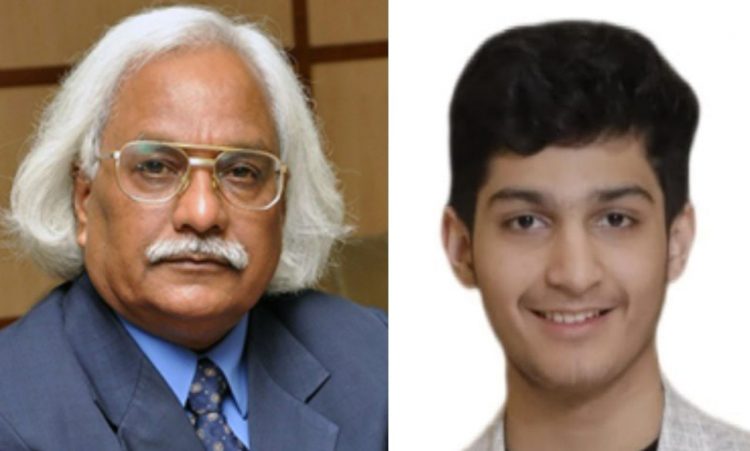
*The Authors, Prof PB Sharma is a visionary thought leader, founder Vice Chancellor of DTU and Past President of AIU, currently Vice Chancellor of Amity University Gurugram and Sanskrit Sharma is a tech savvy 12th Standards STEM student at Amity International School. The views expressed are the personal views of the authors.

Comments are closed.