

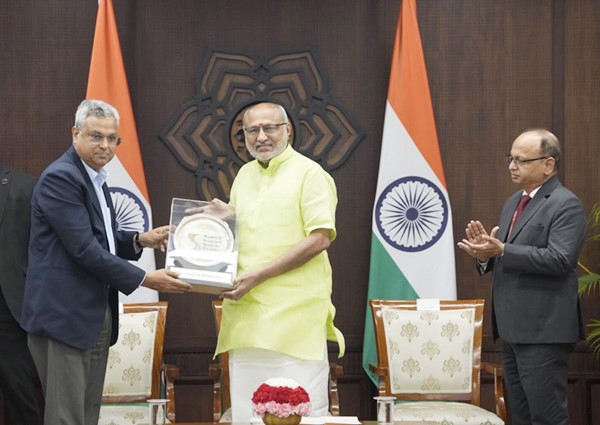
Accurate Data Vital for Effective Governance, Targeted Welfare Delivery and Building a Data-Driven India: Vice-President
TEN NEWS NETWORK
New Delhi News (19 August 2026): Vice-President C. P. Radhakrishnan on Tuesday underscored the indispensable role of accurate, timely and reliable data in effective governance, policy formulation and delivery of government welfare schemes, asserting that flawed data can lead to flawed decisions and inefficient use of public resources.
The Vice-President was interacting with the Officer Trainees of the 2026 batch of the Indian Statistical Service (ISS), who called on him at Uprashtrapati Bhavan. Congratulating the 34 young officers, including 16 women, on joining the prestigious service, he said the growing participation of women in the workforce reflects India’s transition from women’s empowerment towards women-led development.
Emphasising the importance of data in governance, C. P. Radhakrishnan said that the quality of every major policy decision depends fundamentally on the accuracy of the information on which it is based. He stressed that reliable data is essential for sound planning, effective allocation of resources and successful implementation of government programmes.
The Vice-President cautioned that inaccurate foundational data can result in eligible beneficiaries being overlooked while resources may be directed towards unintended recipients. He therefore called for data to be collected with precision, maintained systematically and made available at the appropriate time.
C. P. Radhakrishnan observed that official statistics are far more than numerical figures; they are vital instruments of governance that enable the government to assess the condition of the nation and understand the circumstances of different sections of society.
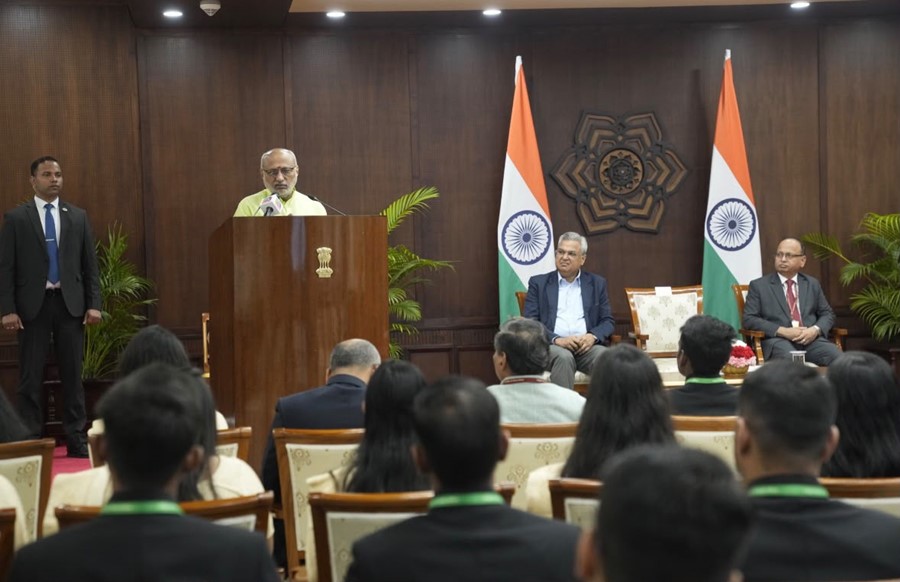
Highlighting the importance of field exposure, he said statisticians must go beyond theoretical knowledge and develop a clear understanding of ground realities. Direct field experience, he noted, enables officers to appreciate the actual circumstances behind the numbers and improves the quality and relevance of statistical information.
He further emphasised that accurate data collection, proper maintenance of databases and timely dissemination of information are critical to determining the effectiveness of government schemes. The quality of data, he said, can significantly influence whether a programme succeeds in achieving its intended objectives and whether its benefits reach the people for whom they are designed.
The Vice-President also highlighted the rapid transformation of India’s statistical and administrative data ecosystem, pointing to the growing importance of digital databases, GST information and high-frequency economic data in understanding economic activity and supporting evidence-based policymaking.
Referring to the significant expansion of digital transactions in the country, C. P. Radhakrishnan credited the visionary leadership of Prime Minister Shri Narendra Modi with accelerating India’s digital transformation. He said the rapid adoption of digital transactions has also contributed to reducing the scope of the parallel economy.
He stressed the need for appropriate base years and robust statistical methodologies while calculating economic indicators, noting that accurate measurement is essential for obtaining a realistic assessment of the country’s growth trajectory. At the same time, he pointed out that economic indicators alone do not provide a complete picture of human well-being. Factors such as happiness, quality of life and broader social outcomes must also be considered while assessing development.
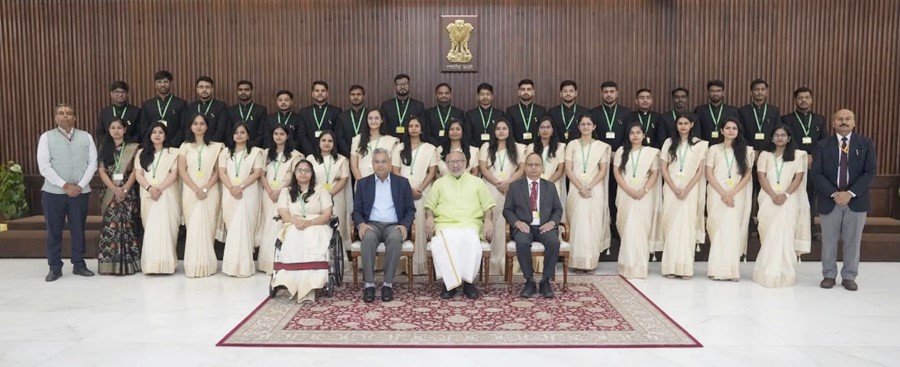
Calling trust the foundation of statistics, the Vice-President urged the young officers to maintain the highest standards of professional and ethical conduct. He emphasised the importance of political neutrality, confidentiality, impartiality and professional independence in the discharge of their responsibilities.
He advised the Officer Trainees to cultivate a habit of continuous learning and remain receptive to knowledge gained from seniors, colleagues and subordinates. He also encouraged them to make field experience an integral part of their professional development and to remain curious, analytical and open to innovation.
C. P. Radhakrishnan further stressed that efficiency, sincerity and the responsible discharge of official duties are the most meaningful ways for public servants to demonstrate respect for their institution and seniors, rather than relying merely on customary formalities.
Calling upon the young statisticians to safeguard their professional independence, he said that “Data for Development” and data-driven decision-making will play a decisive role in building a strong statistical ecosystem for Viksit Bharat@2047.
The Vice-President expressed confidence that the 2026 batch of the Indian Statistical Service would uphold the service’s finest traditions and make a meaningful contribution towards strengthening evidence-based governance and ensuring that government policies translate into tangible benefits for citizens.
Secretary, Ministry of Statistics and Programme Implementation, Dr. Saurabh Garg; Director General, Data Governance, P. R. Meshram; senior officials of the Ministry and the Officer Trainees were present during the interaction.
Dear Readers and Viewers, Please note that tennews.in: National News Portal daily publishes latest and top ten news from government, politics, national, business, education, technology, lifestyle, entertainment, health etc ten categories. You may submit your e mail and subscribe it to get updates on your e mail. Please also subscribe TEN NEWS NATIONAL YouTube Channel.

Comments are closed.