

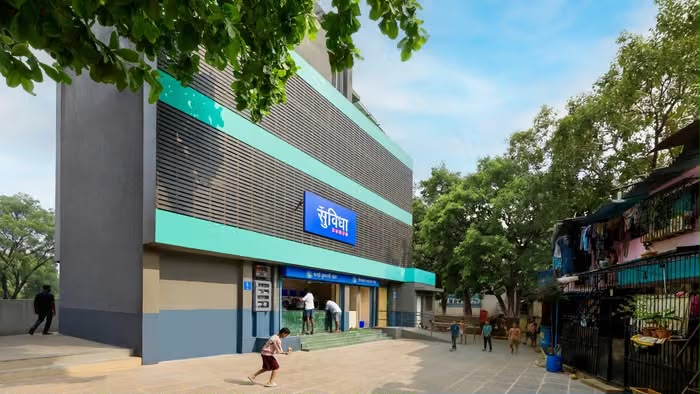
Suvidha Showcased at World Water Week 2026 as a Model for Climate-Resilient Urban Sanitation
TEN NEWS NETWORK
National News (27/08/2026): Suvidha, a flagship social innovation model focused on urban sanitation and access to essential hygiene services, was showcased at World Water Week 2026 as an example of how cities can strengthen sanitation systems to withstand the growing challenges posed by climate change.
A special session titled “Building Resilient Cities through Climate-Smart Sanitation” was co-hosted by Suvidha and Dalberg Advisors during the global water conference. The session brought together policymakers, development organisations, sanitation experts and practitioners to discuss how urban WASH (Water, Sanitation and Hygiene) systems can remain reliable amid flooding, water shortages, contamination and increasing public health risks.
Since its launch in 2016, Suvidha has been providing essential services including clean and accessible toilets, safe drinking water, showers and laundry facilities under one roof. The initiative currently serves more than 600,000 residents every year in some of Mumbai’s most densely populated communities.
One of the key features highlighted during the event was Suvidha’s ability to continue operating during extreme weather and other disruptions. The facilities have remained functional during floods, water shortages and heatwaves, demonstrating the importance of sanitation infrastructure designed with climate resilience in mind.
During the session, Dalberg Advisors also released its report, “Realising the Potential of Climate-Smart Sanitation for the Cities of Tomorrow.” The paper examines sanitation approaches from countries including South Africa, Peru, Kenya and Bangladesh, along with various models from India, and identifies Suvidha as a strong example of climate-smart sanitation being implemented at the community level.
The discussion took place against the backdrop of growing climate-related risks faced by cities worldwide. The organisers highlighted that 13 of the world’s 20 most climate-vulnerable cities are located in India, underlining the urgent need to make urban water and sanitation systems more resilient.
Experts Highlight Community-Centred Approach
The panel was moderated by Shruti Goyal of Dalberg Advisors and brought together perspectives from government, international development and the private sector.
Dr V.K. Chaurasia, Adviser-in-Charge at the Ministry of Housing and Urban Affairs (MoHUA), outlined India’s progress in urban sanitation and water infrastructure through initiatives such as the Swachh Bharat Mission-Urban (SBM-U) and the Atal Mission for Rejuvenation and Urban Transformation (AMRUT).
He also highlighted the value of innovative community-based models such as Suvidha. According to the discussion, MoHUA has partnered with Hindustan Unilever (HUL) through the Centre for Hygiene and Sanitation Excellence to document successful practices and explore ways to expand such approaches across Indian cities.
Yusuf Kabir of UNICEF India focused on the relationship between climate-related shocks and public health. He noted that the effects of climate events are not distributed equally, with children and low-income communities often facing a disproportionate share of the risks. He emphasised that infrastructure development needs to be accompanied by behavioural change and community participation.
Fiona Duggan of Unilever discussed the broader impact of climate change on WASH systems across different regions. She pointed to the growing importance of locally driven solutions and community-led approaches in achieving global sustainability and resilience goals.
A common theme emerging from the panel was that climate-resilient sanitation cannot depend solely on physical infrastructure or community participation. Instead, both elements need to work together to create systems capable of continuing to serve people during periods of environmental and climate stress.
Suvidha’s Community-Based Model
Suvidha’s experience in Mumbai was presented as an example of this approach in action. Its facilities are designed not only to provide essential sanitation and hygiene services but also to operate in partnership with the communities that depend on them.
The model demonstrates how reliable services, local participation and climate-conscious infrastructure can combine to create sanitation systems that remain functional even when cities face extreme weather conditions.
World Water Week, convened annually by the Stockholm International Water Institute, is one of the world’s leading international platforms for discussions on water, sanitation and sustainable development. The 2026 edition was held under the theme “Water for People and Progress,” examining the role of water in improving health, livelihoods, resilience and sustainable development.
The showcasing of Suvidha at the global forum has provided an opportunity to highlight how solutions developed within Mumbai’s densely populated communities can offer practical lessons for other cities dealing with climate change, water stress and sanitation challenges.
Dear Readers and Viewers, Please note that tennews.in: National News Portal daily publishes latest and top ten news from government, politics, national, business, education, technology, lifestyle, entertainment, health etc ten categories. You may submit your e mail and subscribe it to get updates on your e mail. Please also subscribe TEN NEWS NATIONAL YouTube Channel.

Comments are closed.