

Which Stone Is Actually Best for a Kitchen Slab? A Practical Comparison
Ask ten homeowners which surface makes the best kitchen slab, and you will get ten confident answers. The truth is less tidy. There is no single stone for kitchen slab use that outperforms the rest in every situation, since the right choice depends on how a kitchen is used and what its owner is willing to maintain.
A useful comparison sets appearance aside for a moment and starts with performance. Once the practical criteria are clear, the field narrows quickly, and the decision becomes far easier to make with confidence.
How to Choose the Right Kitchen Surface Material
There is no single material that is ideal for every kitchen. The right choice depends on balancing durability, maintenance, appearance, and budget with the way your kitchen is used every day.
A well-performing kitchen surface should withstand heat, stains, scratches, and moisture while remaining easy to clean and maintain. At the same time, factors such as installation requirements, slab size, and long-term value also influence the overall decision. Comparing the strengths and limitations of each stone for kitchen slab helps ensure the final choice matches both your cooking habits and long-term maintenance expectations.
Rather than focusing on one feature alone, compare each material based on your cooking habits, maintenance expectations, and design preferences. Choosing a surface that aligns with your lifestyle will deliver better performance and satisfaction over the years.
Popular Kitchen Surface Materials Compared
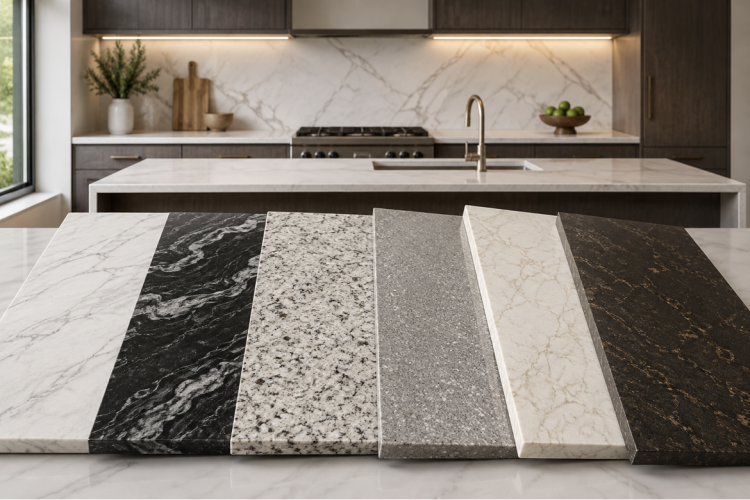
Four choices account for most kitchen slabs, and each earns its place for a different reason. The sections below set out where each one is strong and where it asks for compromise.
Sintered Surfaces
Sintered surfaces are engineered by compressing natural minerals under extremely high heat and pressure, resulting in a dense, non-porous material with exceptional durability. They are highly resistant to heat, stains, scratches, moisture, and UV exposure, making them particularly suitable for the demands of Indian kitchens.
Their large-format slabs also minimize visible joints, creating a cleaner, more seamless countertop. For example, Brands such as Neotra Surfaces demonstrate how large-format engineering can combine performance with contemporary design. With slabs available in varied looks and designed to resist heat, stains, and frost, Neotra Surfaces also offers a practical, low-maintenance option for kitchen applications.
Granite
Granite has been a trusted choice for kitchen countertops due to its natural strength, durability, and timeless appeal. It handles high temperatures, everyday wear, and regular cooking activities with ease, making it well suited for Indian kitchens. Each slab features unique natural patterns, giving every countertop a distinctive appearance.
As a porous natural stone, granite requires periodic sealing to prevent oil, water, and coloured liquids from penetrating the surface. With proper maintenance, it offers excellent long-term performance at a competitive price.
Quartz
Engineered quartz is made by combining natural quartz with resins to create a non-porous, low-maintenance surface. It resists stains, does not require sealing, and offers consistent colors and patterns that suit both contemporary and classic kitchen designs.
While quartz is highly durable, it is less resistant to direct heat than natural stone because of its resin content. Using trivets or heat pads helps protect the surface, making quartz an excellent choice for homeowners seeking durability with minimal upkeep.
Marble
Marble is valued for its elegant veining and timeless character, making it a popular choice for luxury kitchens. Its naturally cool surface is also well suited for baking and food preparation.
However, marble is softer and more porous than granite or quartz. Acidic ingredients can cause etching, while regular use may lead to scratches and the development of a natural patina. For homeowners who appreciate the evolving beauty of natural stone, marble remains a distinctive option despite its higher maintenance requirements.
A Simple Way To Shortlist
Choosing the right kitchen surface becomes much easier when you match the material to your everyday needs. Instead of comparing every feature, focus on the factors that matter most for your kitchen and lifestyle.
- Frequent, high-heat cooking: Choose materials with excellent heat resistance, such as granite or sintered surfaces.
- Low-maintenance preference: If you want to avoid periodic sealing, quartz or sintered surfaces are practical options.
- Natural vs. uniform appearance: Granite and marble showcase unique natural patterns, while quartz and sintered surfaces offer more consistent colors and designs.
- Seamless countertop design: Large-format sintered surfaces minimize visible joints, creating a cleaner and more continuous finish.
Considering these priorities early helps narrow your choices and makes it easier to select a kitchen surface that balances durability, maintenance, aesthetics, and long-term value.
Cost, Fabrication, And Longevity
The cost of a kitchen surface extends beyond the price of the slab. Fabrication, edge finishing, transportation, and professional installation all contribute to the overall investment, so evaluating the total project cost provides a more accurate comparison.
- Granite: Available across a wide price range, with premium varieties costing more. Periodic sealing adds to its long-term maintenance.
- Quartz: Typically falls in the mid-to-premium price segment, offering low maintenance and predictable long-term performance.
- Marble: Premium marble commands a higher price and requires regular care to maintain its appearance.
- Sintered surfaces: Generally involve a higher upfront investment but offer exceptional durability, minimal maintenance, and long service life.
Longevity is equally important. Non-porous, highly durable materials such as sintered surfaces require very little upkeep while maintaining their appearance for years. Properly sealed granite also performs exceptionally well, whereas marble may develop scratches, etching, and a natural patina with regular use.
Before making a final decision, also check material availability and installation timelines. Granite and marble are widely available across India, while certain quartz and large-format sintered surfaces may require advance ordering. Viewing the actual slab before fabrication is recommended, particularly for natural stones, as every slab has unique colors and patterns. This ensures the finished countertop matches your expectations.
Conclusion
There is no universal best stone for kitchen slab use, only the material that best fits a particular kitchen. Granite offers durable natural character with a sealing routine, quartz offers low-maintenance consistency with care around heat, marble offers a classic look that ages with patina, and sintered surfaces offer broad resistance in large formats at a higher price. Define how you cook and how much upkeep you will accept, weigh the total cost rather than the slab price alone, and the answer that suits your kitchen will become clear.

Comments are closed.