

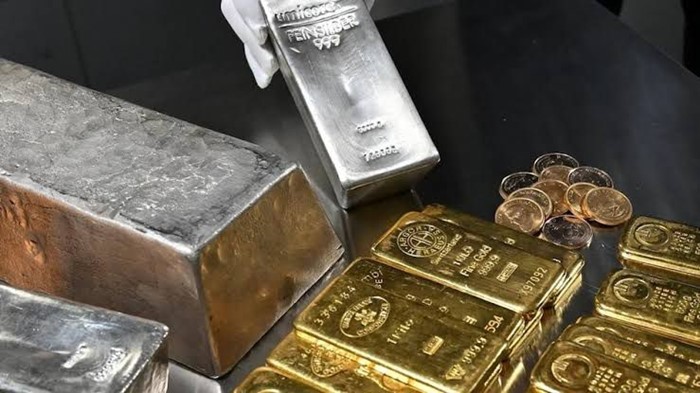
National News (12 September 2026): Gold and silver prices have shown signs of a modest recovery in Indian as well as overseas markets after suffering a steep decline in the previous session. The rebound, however, remains limited as investors continue to assess stronger-than-expected US inflation signals, elevated crude oil prices, movements in the US dollar and the outlook for Federal Reserve interest rates.
The latest movement in bullion comes after a sharp sell-off that erased a significant portion of recent gains. Market participants are now watching whether the latest recovery develops into a sustained rebound or merely represents a short-term correction following the heavy fall.
Gold prices recover after sharp decline
In the Indian retail market, 24-carat gold is trading at around ₹15,458 per gram, while the rate for 22-carat gold stands near ₹14,170 per gram. The price of 18-carat gold is approximately ₹11,594 per gram.
The latest levels indicate a slight recovery after gold prices came under substantial pressure. The precious metal had recently witnessed a decline of nearly ₹10,900, highlighting the scale of volatility currently affecting the bullion market.
Silver has also managed to regain some ground. The metal is currently priced at approximately ₹245 per gram, or ₹2,45,000 per kilogram, according to the rates cited in the latest market updates.
MCX bullion contracts remain volatile
Trading on the domestic futures market has also reflected the heightened volatility. Gold futures on the Multi Commodity Exchange (MCX) are hovering around ₹1,52,065 per 10 grams, while silver futures are near ₹2,32,999 per kilogram.
The gap between physical-market prices and futures quotations reflects differences in contract specifications, market timing and other trading factors. Investors are therefore closely monitoring both spot prices and futures contracts before assessing the broader direction of bullion.
US inflation emerges as a major market trigger
One of the principal factors influencing the latest price swings is the trajectory of US inflation.
Recent US consumer-price data have reinforced concerns that inflationary pressures could remain persistent. A firmer inflation outlook can complicate the Federal Reserve’s policy path because policymakers must balance price stability against economic growth.
For gold, the direction of US interest rates is particularly important. When investors anticipate higher interest rates or stronger yields on US government securities, non-interest-bearing assets such as gold can become relatively less attractive. Conversely, expectations of lower rates generally improve the appeal of bullion.
The latest inflation-related developments have therefore encouraged investors to reassess their expectations for the Federal Reserve’s upcoming decisions.
Dollar and Treasury yields limit bullion’s recovery
The recovery in precious metals has remained restrained by strength in the US dollar and relatively elevated Treasury yields.
A stronger dollar can make dollar-denominated commodities more expensive for buyers using other currencies, potentially reducing international demand. Higher bond yields can similarly increase the opportunity cost of holding gold and silver because bullion does not provide an interest income.
This combination has prevented the latest rebound from developing into a stronger upward move.
Oil prices and geopolitical risks add another layer of uncertainty
Crude oil has also become an important variable for precious-metal markets. Rising energy prices can add to inflationary concerns, particularly if higher fuel and transportation costs begin feeding through into broader consumer prices. At the same time, continuing tensions in the Middle East are keeping investors alert to the possibility of further disruptions in energy markets and global trade.
Geopolitical uncertainty can provide support to gold because the metal is traditionally viewed as a defensive asset during periods of heightened financial and political risk. However, that support can be offset when rising inflation expectations push bond yields and the dollar higher.
Gold and silver outlook remains sensitive to US data
The immediate direction of bullion is likely to depend on incoming US economic indicators and changing expectations surrounding monetary policy.
If inflation remains stubbornly high, markets could continue to price in a less accommodative Federal Reserve stance, potentially limiting gains in gold and silver. On the other hand, evidence of cooling price pressures or weakening economic activity could revive expectations for easier monetary policy and provide fresh support to precious metals.
Silver may remain particularly sensitive to these developments because, unlike gold, it has significant industrial demand in addition to its investment and safe-haven characteristics.
Indian investors also need to watch currency movements
For Indian buyers, international bullion trends are only part of the price equation. Movements in the Indian rupee against the US dollar can have a significant influence on domestic gold and silver prices. Even when international gold prices remain stable, a weaker rupee can increase the local cost of imported bullion. Conversely, a stronger rupee can provide some relief to domestic prices.
This means Indian bullion prices may not always move in exactly the same direction or at the same pace as international quotations.
What investors should watch next
Market participants are likely to focus on four key factors in the coming sessions:
US inflation data: Any indication of persistent price pressures could influence expectations for Federal Reserve policy.
Treasury yields: A sustained rise in yields could continue to weigh on non-yielding precious metals.
US dollar movements: Further dollar strength could restrict gains in internationally traded bullion.
Crude oil and geopolitical developments: Higher energy prices and renewed geopolitical tensions could increase market volatility while simultaneously supporting safe-haven demand.
For now, the recovery in gold and silver appears cautious rather than decisive. The sharp decline has attracted some buying interest, but investors remain reluctant to aggressively chase prices until there is greater clarity on inflation, interest rates, currency movements and global risk conditions. With several major macroeconomic factors pulling bullion in different directions, volatility is likely to remain a defining feature of the precious-metals market in the near term.
Dear Readers and Viewers, Please note that tennews.in: National News Portal daily publishes latest and top ten news from government, politics, national, business, education, technology, lifestyle, entertainment, health etc ten categories. You may submit your e mail and subscribe it to get updates on your e mail. Please also subscribe TEN NEWS NATIONAL YouTube Channel.

Comments are closed.