


A Gen Z Perspective on the Hyper-Connected Subcontinent: Technological Innovation, Stress and Youth Well-Being in Modern India
Authored By: Sanskrit Sharma
We in India are at a turning point in its journey. With about 376 million members of Generation Z India has the youth population in the world. Over the ten years this country has seen rapid digital change. The growth of tools like Unified Payments Interface (UPI) high-speed 5G networks and low-cost mobile internet has connected more than 800 million people to the digital economy. For Indians born between the late 1990s and early 2010s technology is not just a tool—it is the core system they live by. It shapes how they learn, interact with peers express themselves creatively and plan their careers.
This fast pace of digital growth has created two competing realities. On one hand digital tools have opened doors to opportunity and personal power. On the hand they have triggered rising levels of stress, mental fatigue and over-reliance on screens. To truly understand how young people are faring today we must go beyond praise for technology and look closely at real data, structural trade-offs and the lived experiences of India’s Gen Z.
1. The Dual Ledger: Quantifying Opportunity and Psychological Friction
Technology in India shows both benefits and measurable costs to mental health. The Measured Rise in Youth Stress studies and clinical reports from cities and towns across India paint an urgent picture:
- Digital Overload and Behavioral Shifts: A nationwide survey by LocalCircles in December 2025 found that more than 61% of parents in urban areas say their children spend three or more hours each day on entertainment and social media apps. These parents reported side effects like increased impatience (37%) aggression (39%) and emotional tiredness (27%).
- Sleep Deficits: Clinical evaluations from the National Institute of Mental Health and Neurosciences (NIMHANS) Service for Healthy Use of Technology (SHUT) clinic show that heavy screen time is linked to impulse control, higher anxiety and poor academic performance. Public health data also reveals that 68% of urban students have sleep problems caused by late-night screen use—this disrupts natural melatonin production and harms rest, (NIMHANS Screen Time Study: Parental Alarms on Digital Habits and Child Mental Health in India 2026)
- The Comparison Trap: UNICEF India has pointed out that constant exposure to curated content on social media feeds increases feelings of loneliness, body image issues and a sense of being inadequate. In 2019, it was estimated that 1 in 7 adolescents experience mental disorders
2. Academic. The 24/7 Digital Treadmill
Nowhere is the impact of technology felt more than in India’s competitive education system.
On one side technology has broken down old barriers to learning. It has democratised education acces at a scale:
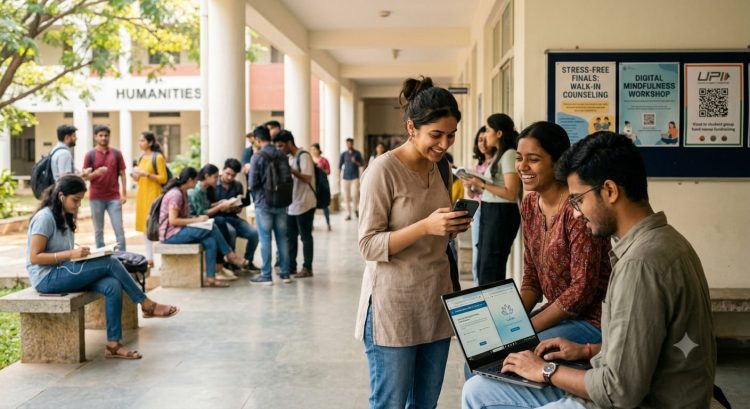
- Regional Language Equity: Platforms like YouTube, SWAYAM and NPTEL provide elite coaching and foundational science material in Hindi, Tamil, Telugu, Bengali and other languages. This helps students from Tier-2, Tier-3 and rural areas prepare for national exams like JEE, NEET and UPSC without needing expensive tutors.
- Self-Directed Skilling: Young coders, animators and content creators use online resources and community forums to gain skills quickly. They earn income through work and digital freelancing often skipping traditional education paths.
Despite these gains, digitization has made the academic race relentless. The line between studying and relaxing has blurred:
- The Never-Off Dynamic: With coursework assigned via WhatsApp test prep leaderboards updated daily and instant solving apps available anytime school pressure never stops. Learning happens in classrooms, but also more outside the classrooms and libraries—and even during breaks and in evening hours. This is taxing the learnersas the greed to learn and score has gained a high currency in our nation. Even 95 percent is no score of excellence at schools and colleges.
- Attention Degradation: The constant stream of videos and quick updates erodes attention spans. Students struggle to focus on texts, perform deep thinking or solve complex problems. The reflex to check notifications interrupts thought flow. Prevents true mental recovery. Naturally stresses mount up.
3. Workplace Realities: The Deloitte Findings and Early Career Pressures
As Gen Z begins working life in India the promise of work and digital efficiency meets real workplace challenges. The Deloitte Global Gen Z and Millennial Survey 2026 shows that young professionals in India report some of the stress levels as high as globally. More than 45% say they feel stressed or anxious most of the time. Key reasons include:
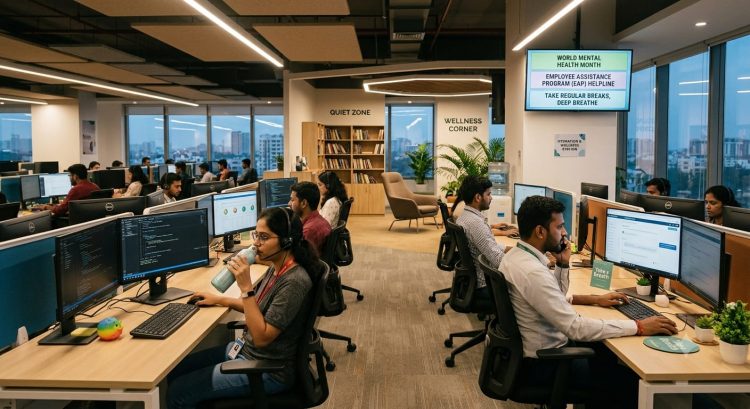
1. Financial and Career Uncertainty: Fierce competition among young job seekers amplified by open access to salary information on sites like LinkedIn and Glassdoor creates intense pressure.
2. Technological Always-On Expectations: Employers now expect responses after working hours using messaging tools and surveillance software. This makes it hard to separate work from time.
3. Impostor Syndrome and Burnout: The speed at which digital skills become outdated means young workers must constantly retrain. This leaves them feeling unprepared and overwhelmed.
4. Generative AI: Augmentation versus Cognitive Atrophy
The rise of artificial intelligence in Indias tech hubs marks another key moment for Gen Z’s minds.
India is one of the largest adopters of AI tools. For developers and knowledge workers AI speeds up routine tasks. It helps write code summarize documents and translate language quickly with high accuracy. The Gen Z is crazy about AI readiness for education and for future of work.
But deeper understanding of the stresses need further probong:
- The Value of Rigour: Real skill comes from wrestling with questions, debugging messy code and creating original ideas. Skipping these steps weakens strength.
- Critical Discernment: When learners depend early on AI-generated answers, they miss the chance to develop judgment. Using AI as a helper is fine—but treating it as a substitute for thinking leads to absence of learning.
5. Toward Digital Temperance (Samyama): Institutional and Personal Action
Solving the health issues tied to technology does not mean rejecting digital progress. It means practicing temperance—also known as samyama—a mindful intentional approach to digital use.
1. Platform Accountability and Regulatory Guardrails
Policymakers must protect the mental well-being of the Gen Z. This can be done through:
- Algorithmic Transparency: Laws like the Digital Personal Data Protection (DPDP) Act should enforce design. Platforms should stop using features like endless scrolling, auto-play videos and push notifications that force engagement.
- Mandatory Digital Well-Being Features: Social media and educational platforms must offer built-in usage tracking, limit algorithm-driven targeting for minors and link users to health support when needed.
2. Institutional Digital Hygiene in Education
Schools and colleges should do more than give devices—they need to teach their proper use:
- Attentional Training: Include lessons on verifying information, managing distractions and understanding sleep science in the curriculum.
- Analog Sanctuaries: Protect spaces where students can learn without screens. Exam halls, research libraries and discussion groups should remain focused zones for human only interaction.
3. Deliberate Self-Regulation
Young people must take charge of their own digital habits:
- Scheduled Digital Sabbaticals: Set aside specific times each day to disconnect—especially the first hour after waking and the last hour before bed.
- Physical Grounding: Balance screen time with activity, sports and local community events. Spending time outdoors and engaging face-to-face strengthens resilience.
Conclusion
Generation Z in India holds immense digital power. They can lead movements, build global startups and learn anything they want—without permission from institutions. But success cannot be measured in gigabytes, app downloads or hours logged online. True well-being depends on clarity, emotional balance and strong self-awareness. By combining ambition, with careful boundaries young Indians can make innovation serve them—not the other way around.
The Author Sanskrit Sharma is a 12th Grader at Amity International School and is devoted to creating a heathy humanity.

Comments are closed.