
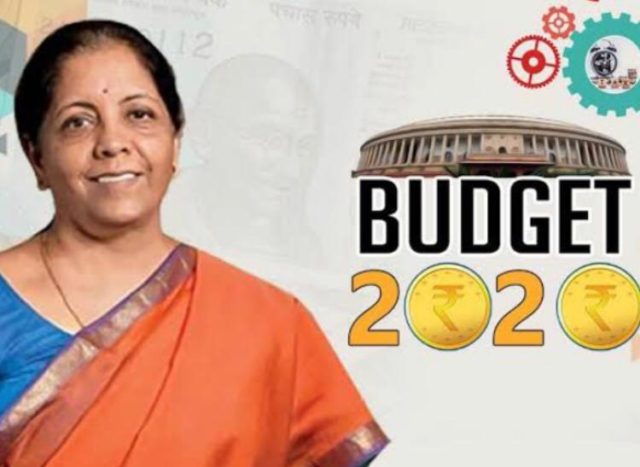
AIAI : Implement Budget Announcements and provide Special Relief Package
Ten News Network

Mumbai : Ms. Sangeeta Jain, Senior Director, All India Association of Industries said while the 21-day lockdown announced by the government and its expected extension has helped India mitigate the spread of Coronavirus on a large scale, the economy is reeling under tremendous pressure of an imminent recession likely to be brought out by the COVID-19 crisis. It is feared that the crisis will lead to huge job losses in the informal sector and may end up into shutdown of many small and large organizations. In order to mitigate the adverse impact of the crisis, we at AIAI are pleased to make following suggestions that the government may consider implementing to come out less-scathed of this precarious situation:
MSME sector
Reduce GST rates and increase interest rate subvention
The Finance Minister, in her Budget Speech, had highlighted the government’s significant achievements under GST and emphasised that over 60 lakh new taxpayers were added in the last two years, despite enhancement of the threshold and composition limits for the MSME sector.
In another development, the government has announced 2% interest rate subvention for all GST registered MSMEs on fresh or incremental loans, and has done away with the requirement of Udyog Aadhar Number (UAN) for units eligible for GST.
At a time when the economy is severely hit by the COVID-19 crisis, the government should target these MSMEs and handhold them through reduction in GST rates, which will also reduce the incidence of taxation on consumers, thereby increasing demand. Further, the government should increase interest rate subvention to 5% in order to support the viability of MSMEs once the lockdown period is over.
Enhance the corpus of CGTMSE and collateral-free lending limit
The Credit Guarantee Fund Trust for Micro and Small Enterprises (CGTMSE) scheme allows collateral-free lending (term loan and/or working capital loan) to new and existing micro and small enterprises by eligible lending institutions up to Rs. 2 crore per borrowing unit. The lending is in turn guaranteed by the government.
The FM, in her Budget Speech, had further proposed to introduce a scheme to provide subordinate debt for MSME entrepreneurs and said that this subordinate debt, provided by banks, would count as quasi-equity and would be fully guaranteed through the CGTMSE scheme.
We suggest, in this time of distress, the government should enhance the corpus of the CGTMSE scheme to Rs. 50,000 crore and allow collateral-free lending to MSMEs to the tune of Rs. 5 crore per borrowing unit. This will enable MSMEs rebuild their business once the crisis is over, while banks and financial institutions should also collaborate with fintech companies to ascertain that the credit is only disbursed to eligible borrowers.
Expedite implementation of Budgetary announcements
The government should further expedite implementation of budgetary announcements such as launching of an app-based invoice financing loans product aimed at obviating the problem of delayed payments and consequential cash flow mismatches for MSMEs, and enabling NBFCs to extend invoice financing to MSMEs through the TReDS platform, thereby enhancing their economic and financial sustainability.
Incentivize investment in R&D and Technology Upgradation
Considering that over-dependence on China for import of raw material and intermediate products has led to disruption in our supply chains, it is time we revisit the concept of import substitution and ‘Make in India’. In this regard, the government should further incentivize investment in R&D and technology upgradation among MSMEs, as also address the problem of inverted duty structure observed in the sale of certain finished products.
Expedite implementation of export-promotion schemes
At a time when countries are looking at diversifying their import baskets, export promotion schemes announced by the government such as Niryat Rin Vikas Yojana (NIRVIK) and Remission of Duties or Taxes on Export Product (RoDTEP) can enhance Indian MSMEs’ participation in Global Value Chains.
While the NIRVIK scheme aims to provide higher export credit disbursement, enhanced insurance cover and reduced premium for small exporters, the RoDTEP scheme will reimburse value added tax, electricity duties and fuel used for transportation by exporters in their production process, which are currently not being exempted or refunded under any other mechanism. These schemes should be implemented expeditiously so that MSME exporters get government handholding in these difficult times.
Provide wage subsidies and relief from statutory payments
The government should also provide wage subsidies to MSMEs in order for them to retain their workers and waive statutory payments such as municipal taxes, power tariffs and PF contribution for the next six months.
Apart from the above, following are some sector-specific suggestions to come out of this anomaly:
Aviation and Tourism
Bring Aviation Turbine Fuel (ATF) under the ambit of GSTwith full input taxcredit on all goods and services
Bring tourism entities such as airlines and hospitality providers under the priority sector lending category
Auto and Auto Components
Postpone implementation of BS VI norms until 1st October, 2020
Incentivize purchase of new vehicles
Retail and E-commerce
Bring more items under the essential commodities list
Ensure smooth transportation of goods and services
Real Estate and Construction
Enforce the provision of invoking ‘Force Majeure’ clause where projects are delayed due to the lockdown
Relax NPA classification norms for stressed projects
Textile and Clothing
Announce a special relief package for the sector
Expedite refund of taxes levied on exports
Pharmaceuticals
Ensure quality testing and faster approvals for manufacturing of COVID-19-related drugs
Promote digital payment mechanisms in order to adhere to social distancing
We hope our suggestions will be taken into consideration.
Agriculture
Farmer distress: The farming community has come under severe stress because of the disruption to the supply chain linking farms to the market. Many agriculture mandis have been closed, trucks and trailers for transporting farm goods have been idled because of scarcity of drivers. Under this circumstance, farmers harvesting rabi crops (viz. mustard, wheat, paddy and pulses which are harvested between end of March to end of May) are finding it difficult to sell their goods in the market. Also, perishable agriculture goods such as fruits and vegetables are rotting in the farm because of lack of transport facility or shutdown of agriculture mandis. Consequently, farmers who cultivated these crops are unable to recover the cost incurred on production.
Proposed measure: 1. The central government, in collaboration with the state government and local bodies, should open procurement centres for rabi crops near the place of harvest to enable farmers sell their crops directly to government or government-designated agencies.
2. The government, in consultation with the state governments, should allow farmers to sell their crops outside the regulated mandis, so that they can sell at the nearest available market and recover cost.
3. The state government should send advisory to the law enforcement agencies to allow opening of farm mandis by ensuring that buyers and sellers follow social distancing.
4. The government may also explore the idea of linking farmers directly to the consumers through e-commerce. This can be done in collaboration with the private e-commerce companies such as Flipkart or Amazon.
4. In this extraordinary time, the government should extend the benefit under PM Kisan to landless labourers, and migrant farm workers as well.
5. The government should declare pest management and fumigation as essential service as these are required to prevent infestation of farm commodities.
6. The government should provide relief to farmers storing their goods in cold chain and warehouses by reducing the electricity tariff charged in these facilities. This will reduce the cost of storage for farmers.
The above measures will provide relief to farmers who cultivated rabi crops. Apart from the above measures, the government should also take the following measures to ensure that farmers can prepare for the upcoming kharif season:
1. The government should include all agriculture equipments, include irrigation sets under the essential items list to ensure there is no scarcity of these goods for farmers
2. The government should automatically extend the license period of seeds as this will prevent any disruption in availability of seeds for the next cropping season.
3. The government, together with NABARD and RBI should ensure that flow of agriculture credit for the next cropping season is not affected.
Ms. Jain, said that we hope our suggestions are considered
