
Amity Webinar Highlights Blend of Vedic Wisdom and Modern Science for Water Conservation
TEN NEWS NETWORK

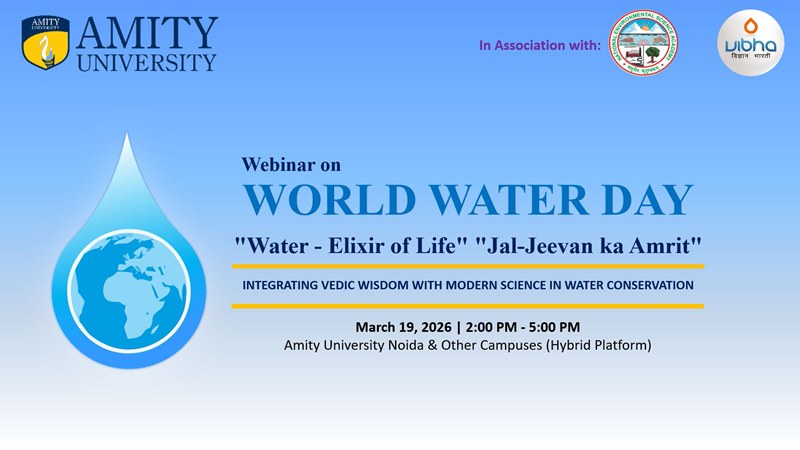
Greater Noida News (21/03/2026): On the occasion of World Water Day 2026, Amity University Noida organized a significant hybrid webinar titled “Water – Elixir of Life” (“Jal-Jeevan ka Amrit”), bringing together global experts to deliberate on sustainable water management. The event emerged as a unique platform that bridged traditional ecological knowledge with advanced scientific innovations to tackle pressing issues such as water scarcity and pollution.
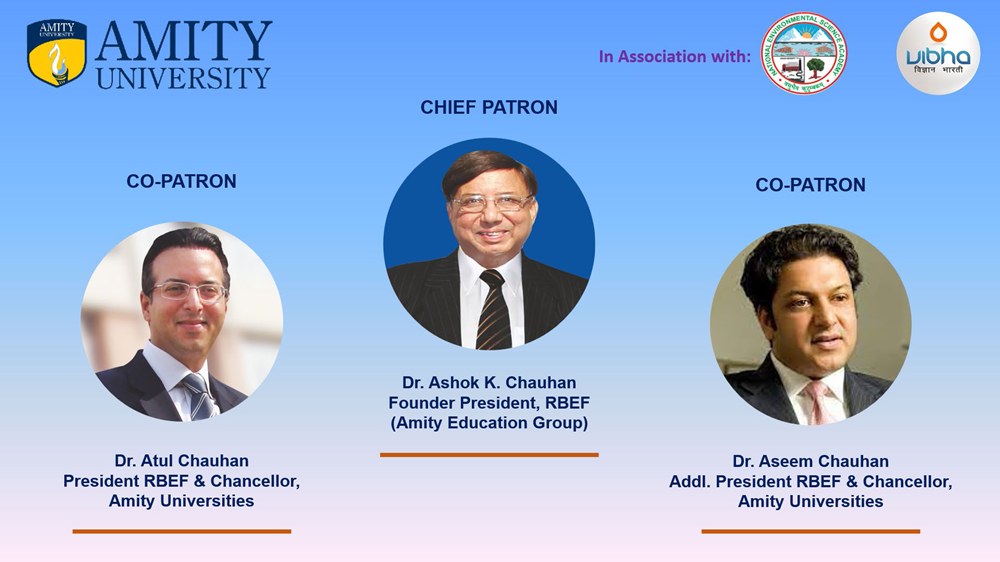
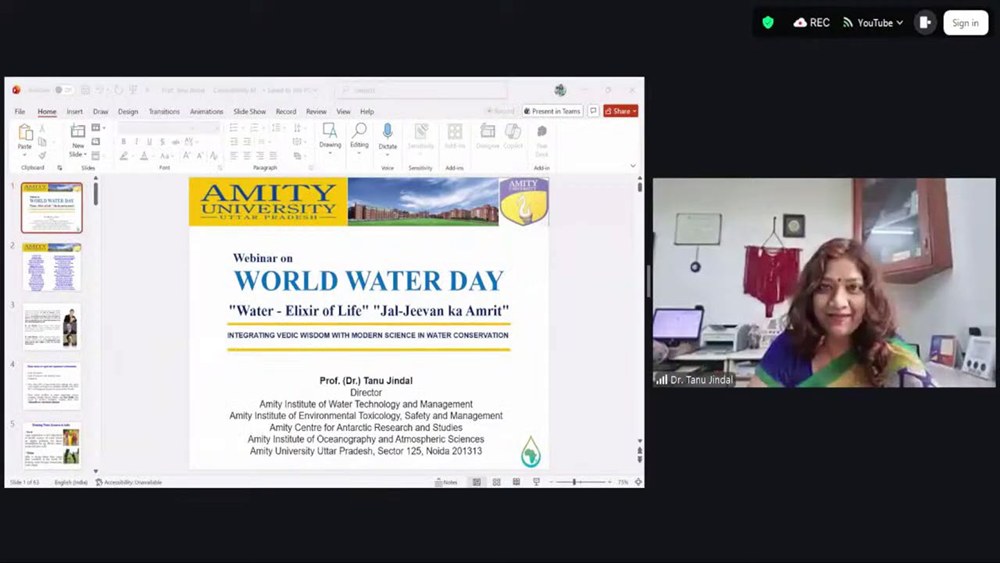
The webinar was organised under the patronage of Dr. Ashok K. Chauhan, Founder President of the Ritnand Balved Education Foundation (RBEF), along with Dr. Atul Chauhan and Dr. Aseem Chauhan, Chancellors of Amity University. The program was coordinated by Prof. (Dr.) Tanu Jindal, Director of AIETSM. In his welcome address, Dr. D.K. Bandyopadhyay emphasized the indispensable role of water in driving sustainable development and ensuring societal well-being.
Global Experts Share Insights
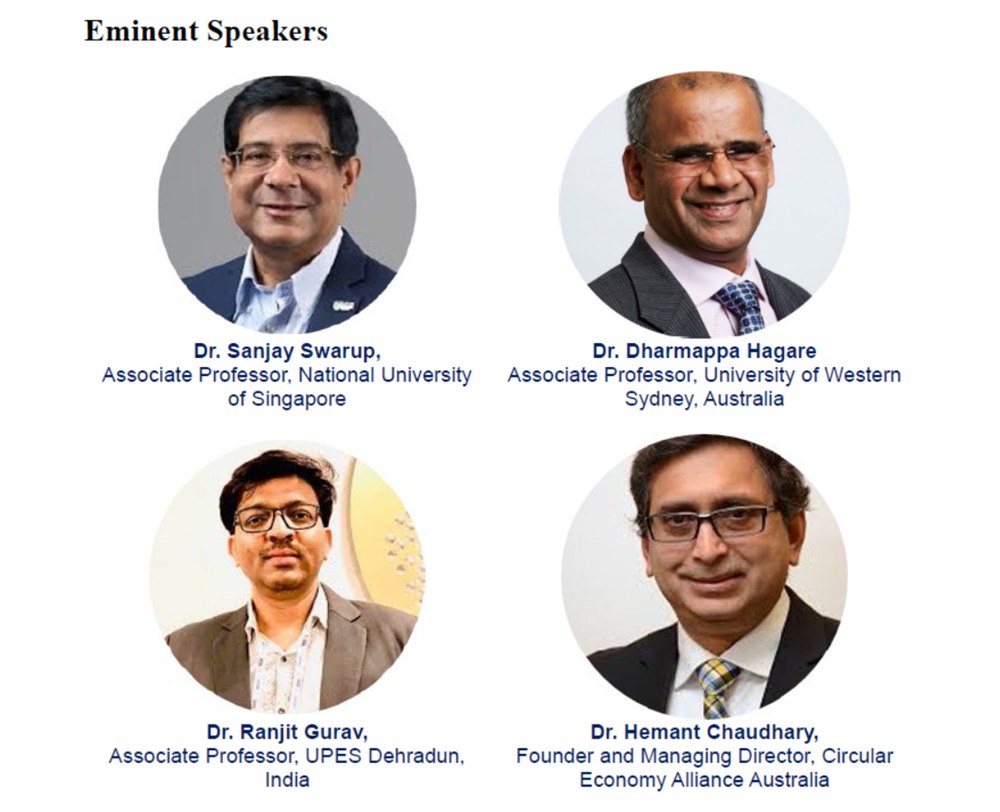
The webinar witnessed participation from a distinguished panel of international and national experts, each contributing diverse perspectives on water conservation and management.
Dr. Sanjay Swarup from the National University of Singapore highlighted the importance of ecosystem-based water management. He stressed the use of machine learning and hybrid physics-AI models for real-time monitoring and predictive analysis of water systems.
Dr. Dharmappa Hagare of the University of Western Sydney discussed the potential of wastewater recycling, particularly in agriculture, as a sustainable solution to enhance water efficiency and strengthen food security amid climate change.
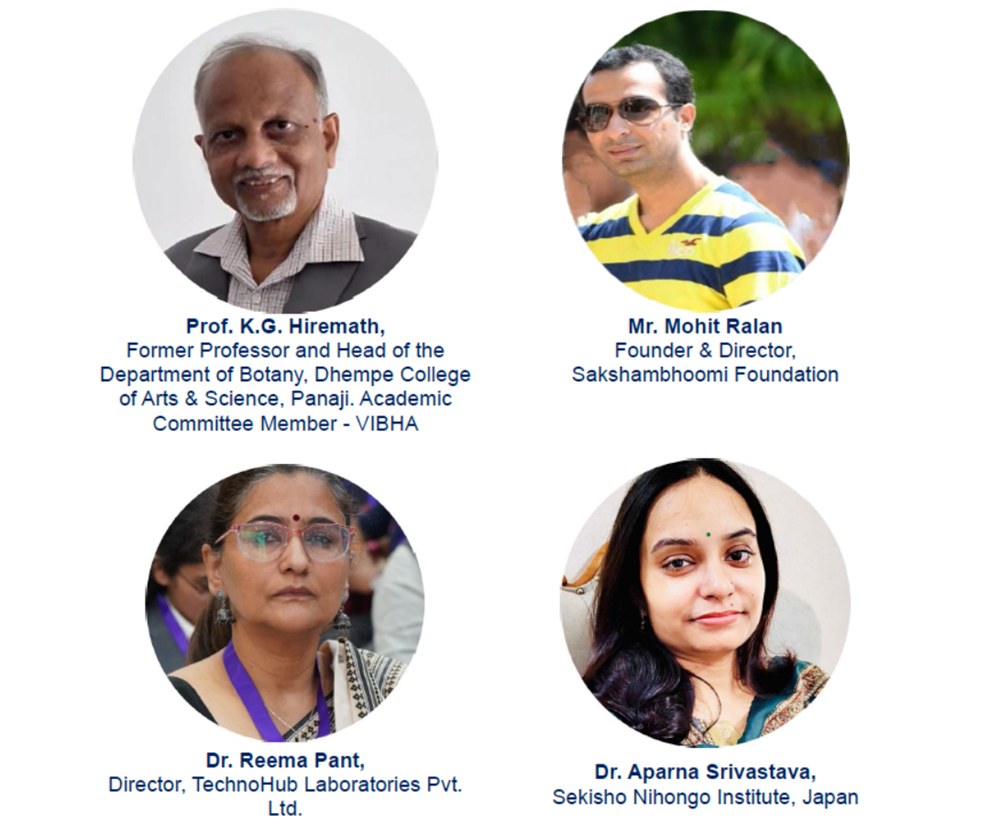
Addressing community-driven initiatives, Mohit Ralan from Sakshambhoomi Foundation spoke about the revival of the Yamuna River through collective action, guided by Vedic principles such as Panchtatva, which emphasize harmony among the five natural elements.
Dr. Ranjit Gurav from UPES Dehradun shed light on emerging technologies like bioelectrochemical systems and microbial fuel cells, which can effectively eliminate contaminants such as microplastics and PFAS from water sources.
Offering an international cultural perspective, Dr. Aparna Srivastava of Sekisho Nihongo Institute, Japan, compared Indian water traditions with Japanese practices, particularly the philosophy of Mottainai, which advocates minimizing waste and respecting natural resources.
Prof. K.G. Hiremath from VIBHA/Dhempe College elaborated on ancient Indian water management systems, citing examples from Dholavira and references from the Arthashastra as models of sustainable design.
Dr. Hemant Chaudhary of the Circular Economy Alliance Australia emphasized adopting a circular economy approach to water usage, including efficient resource management and appropriate economic valuation.
Focusing on ecological restoration, Dr. Reema Pant from TechnoHub Laboratories highlighted the need for public participation and technology-driven eco-restoration, particularly in environmentally sensitive regions like the Himalayas.
Key Recommendations and Future Roadmap
The discussions culminated in a series of actionable recommendations aimed at strengthening water security. Experts called for integrating advanced technologies such as AI-driven monitoring systems with traditional ecological knowledge to ensure efficient water management.
Speakers strongly advocated for large-scale adoption of wastewater recycling, especially in agriculture, to optimize water usage. Community-led initiatives for river rejuvenation, inspired by traditional values, were also highlighted as crucial for long-term sustainability.
In addition, the panel stressed the importance of adopting innovative water treatment technologies to address emerging pollutants, alongside promoting ethical water consumption through behavioral change.
The revival and adaptation of ancient Indian water conservation techniques were recommended as practical solutions for modern challenges. Experts also underlined the need for policy-level interventions and economic frameworks based on circular economy principles.
A Holistic Approach to Water Security
The webinar concluded with a consensus that addressing global water challenges requires a comprehensive and interdisciplinary strategy. The integration of traditional wisdom, scientific advancements, effective policymaking, and active community engagement was identified as essential for ensuring sustainable water management in the future.
Dear Readers and Viewers, Please note that tennews.in: National News Portal daily publishes latest and top ten news from government, politics, national, business, education, technology, lifestyle, entertainment, health etc ten categories. You may submit your e mail and subscribe it to get updates on your e mail. Please also subscribe TEN NEWS NATIONAL YouTube Channel.

Comments are closed.