

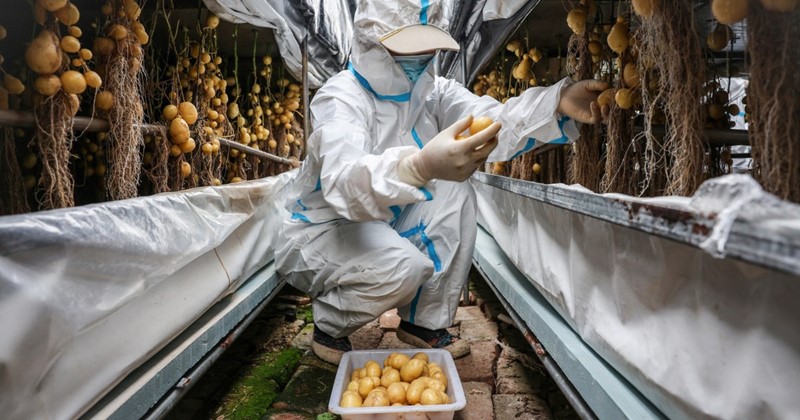
Chemical-Coated ‘New Potatoes’ Raise Food Safety Concerns in UP, Delhi-NCR
TEN NEWS NETWORK
National News (29/08/2026): An investigation into the potato trade in Uttar Pradesh has raised serious questions over the alleged practice of chemically processing old potatoes and selling them in the market as freshly harvested produce. According to the investigation, potatoes stored in cold storages for several months are allegedly being treated with soil, powders and chemicals to alter their appearance and make them resemble newly harvested potatoes. The practice is reportedly driven by the sharp price difference between old and new potatoes at the beginning of the fresh-produce season.
The investigation claims that Uttar Pradesh authorities seized around 750 tonnes of such processed potatoes in 2025, indicating the scale at which the practice may have expanded. The alleged activity has reportedly been observed across several districts of western Uttar Pradesh, with supplies reaching markets in Delhi, Haryana, Madhya Pradesh and Uttarakhand.
How Old Potatoes Are Allegedly Made to Look Fresh
The investigation describes a multi-stage process in which potatoes that have remained in cold storage for eight to 10 months are reportedly taken out and processed. First, the stored potatoes are kept outside for a day or two to reduce their moisture content. They are then allegedly coated with different types of soil to give them the appearance of freshly harvested produce.
The colour of the soil is reportedly selected according to the market where the potatoes are intended to be sold. Yellow, black and red soil are used to create different appearances associated with potatoes grown in particular regions.
The investigation further alleges that substances such as selkhadi powder and catechu (katha) are mixed with the soil. In another stage, ammonia or ammonium hydroxide is reportedly sprayed over the coated potatoes. This is claimed to create moisture and help loosen the potato skin, giving the produce an appearance similar to newly harvested potatoes. According to the investigation, the entire process can allegedly be completed within eight to 10 hours.
Cold Storage Operations Under Investigation
The investigation reportedly involved visits to cold-storage facilities in Sambhal, Bahjoi, Chandausi and Gunaur, where conversations with people associated with the trade allegedly revealed details about the processing and distribution of such potatoes.
In one interaction, a cold-storage employee reportedly described the use of Rajasthan soil, selkhadi powder and ammonia to alter the appearance of stored potatoes. The employee also allegedly said that potatoes could be prepared in different colours depending on the requirements of the destination market.
The investigation further claimed that some of the processed potatoes were being supplied to major Delhi wholesale markets, including Okhla, Ghazipur and Azadpur.
In another alleged interaction at a cold-storage facility in Gunaur, a manager reportedly discussed the prices at which the potatoes could be transported to Delhi and sold during the season.
Why the Practice Can Be Highly Profitable
The alleged business model is largely based on exploiting the premium attached to early-season new potatoes.
Old potatoes may be available at considerably lower wholesale prices, while newly harvested potatoes can command substantially higher rates when they first enter the market. This creates an incentive for unscrupulous traders to make stored potatoes resemble fresh produce and sell them at a premium.
The investigation estimates that old potatoes costing roughly ₹8-10 per kg may incur another ₹4 per kg in processing, labour, transportation and other expenses. This could put the estimated cost of the processed product at around ₹12-14 per kg. Depending on market conditions, such potatoes are allegedly sold for ₹50-80 per kg, creating a substantial margin for those involved in the trade.
Fake Early-Season Potatoes May Enter Markets Before Fresh Harvests
The alleged practice is particularly lucrative before the arrival of genuine new potatoes. Fresh potatoes from districts such as Farrukhabad, Kannauj, Agra, Mainpuri and Hathras generally begin reaching markets around November, while supplies from across Uttar Pradesh increase during December.
However, the investigation alleges that artificially processed potatoes may enter markets as early as September. Traders can reportedly market them as early-season produce, claiming that they have come from farms where harvesting began ahead of schedule.
Such claims can allow sellers to charge significantly higher prices from consumers.
Business Reportedly Expanded Over the Past Three Years
The investigation indicates that the practice has grown rapidly in Uttar Pradesh over the last three years. Authorities reportedly detected around 2.5 quintals of allegedly fake new potatoes in Gorakhpur in 2022, while the quantity seized across Uttar Pradesh in 2025 was claimed to have reached approximately 750 quintals, according to the figures cited in the investigation.
The report further alleges that the activity has spread to more than 20 districts of western Uttar Pradesh, with cold-storage facilities being used as processing and distribution points.
The reported supply network extends beyond Uttar Pradesh, with alleged consignments being sent to Delhi, Haryana, Madhya Pradesh and Uttarakhand.
Health Concerns Over Chemical Exposure
Food-safety concerns are particularly significant because the alleged process involves chemicals.
Gastroenterologist Dr. Mridul Mehrotra, cited in the investigation, warned about potential health consequences associated with consuming excessive ammonia residues. According to the expert, ammonia is processed by the liver into urea, while excessive accumulation of urea in the body can affect the nervous system and may place additional stress on the kidneys.
The health impact, however, would depend on factors including the chemical used, its concentration, whether residues remain on the food and the quantity consumed. Therefore, laboratory testing of the processed potatoes would be necessary to establish the precise level of chemical contamination and associated risk.
How Consumers Can Be More Careful
Consumers may find it difficult to distinguish artificially treated potatoes from genuine new potatoes simply by looking at them.
Freshly harvested potatoes generally have a lighter, uneven appearance and naturally occurring soil. Potatoes that have been artificially coated may appear unusually uniform in colour or have an externally applied layer that comes off when rubbed.
However, visual inspection alone cannot reliably establish whether a potato has been chemically treated. Washing and peeling produce before consumption is a basic food-safety precaution, but it should not be considered a substitute for regulatory testing.
Food Safety Regulators Face a Larger Challenge
The reported practice highlights a broader problem for food regulators: detecting products that are not necessarily rotten or visibly contaminated but have allegedly been artificially altered to misrepresent their freshness and origin.
Regular inspections of cold storages, wholesale markets and supply chains could help identify such practices. Laboratory analysis would also be important in determining whether chemical residues exceed permissible limits.
For consumers, the issue is not merely about paying more for an old potato sold as a new one. If unauthorised chemicals are indeed being used in the process, the matter also becomes a potential food-safety and public-health concern. The alleged trade therefore warrants closer scrutiny from food-safety authorities, particularly during the period when new potatoes begin entering markets and the price gap between fresh and stored produce widens.
Dear Readers and Viewers, Please note that tennews.in: National News Portal daily publishes latest and top ten news from government, politics, national, business, education, technology, lifestyle, entertainment, health etc ten categories. You may submit your e mail and subscribe it to get updates on your e mail. Please also subscribe TEN NEWS NATIONAL YouTube Channel.

Comments are closed.