

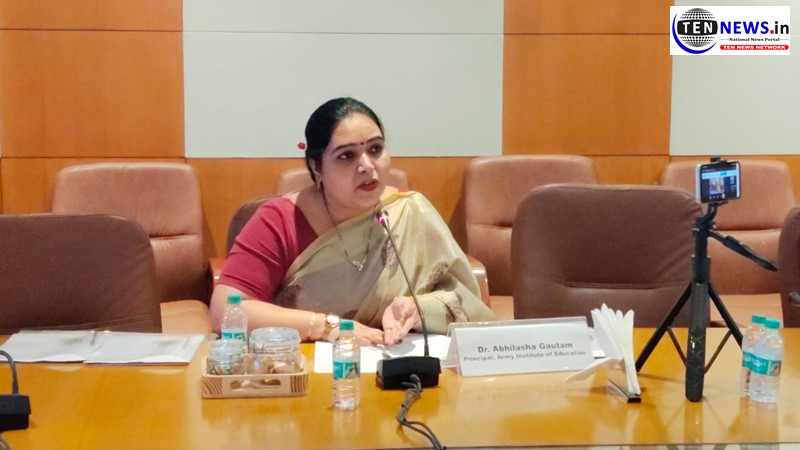
Inclusion Must Go Beyond Infrastructure: Dr Abhilasha Gautam’s Roadmap for Viksit Bharat Education
TEN NEWS NETWORK
Greater Noida News (06 September 2026): Empowering teachers with greater autonomy, strengthening the quality of teacher education, creating space for meaningful research and prioritising students’ mental wellbeing are essential to India’s journey towards becoming a developed nation, Dr Abhilasha Gautam, Principal, Army Institute of Education, said at the Bharat Shiksha Expo Initiative – Senior Educationists’ Round-Table in Greater Noida.
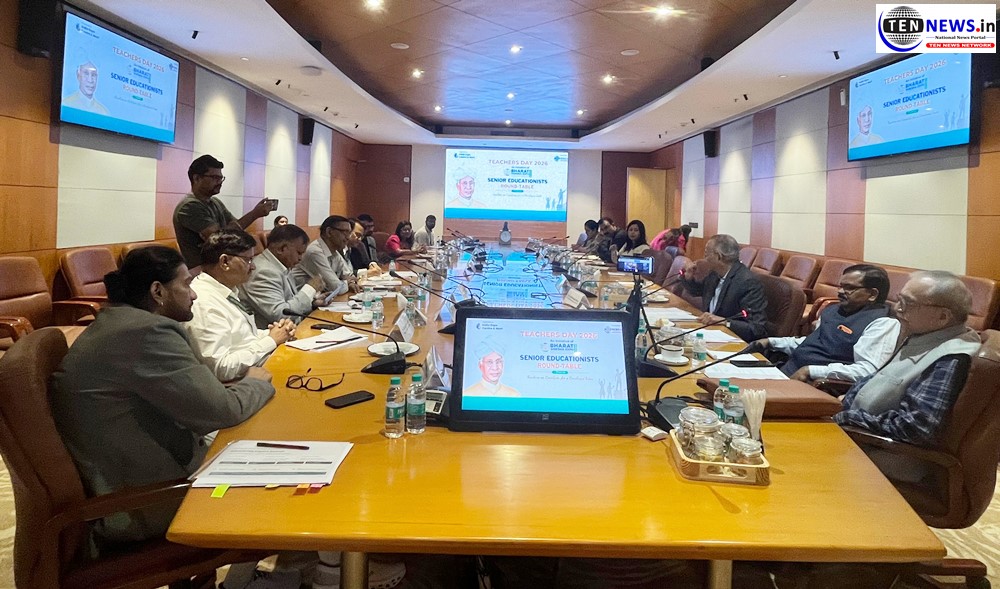
Held on the occasion of Teachers’ Day 2026, the high-level education dialogue was organised by India Expo Mart & Centre in association with TEN NEWS NETWORK on the theme “Teachers as Catalysts for a Developed India.” The round-table brought together senior educationists and institutional leaders to discuss the future of India’s education system, teacher development, research, innovation and the evolving role of educators in building a Viksit Bharat.
Teacher Autonomy Can Transform the Learning Environment
Speaking on the theme of “Teacher as a Catalyst,” Dr Gautam emphasised that teacher development should not be treated as a one-time exercise but as a continuous professional journey.
She called for regular learning opportunities, professional autonomy and greater freedom for teachers to experiment with innovative approaches in classrooms.
According to Dr Gautam, when teachers are trusted and empowered to introduce new ideas, they can create a more dynamic learning environment and develop activities that extend beyond conventional academic practices.
She said her own institutional experience had demonstrated that giving educators greater autonomy could encourage innovation and enable teachers to introduce activities that enrich students’ overall learning experience.
Teachers Need Time and Freedom for Quality Research
Dr Gautam also highlighted the need to create a stronger research culture within educational institutions. She said teachers who aspire to become researchers must be provided adequate time and institutional support to undertake meaningful and high-quality research.
She pointed out that faculty members are often expected to publish research papers in reputed journals, including Scopus-indexed publications, while simultaneously handling extensive teaching, administrative and other institutional responsibilities.

This, she said, can affect the quality and depth of research.
Dr Gautam suggested that research undertaken by teachers and professors should not remain confined to academic publications. Instead, research findings should also be integrated into classroom teaching so that students can benefit directly from new knowledge and teachers remain committed to producing high-quality academic work.
‘Teachers Cannot Be Expected to Do Everything’
Addressing the growing workload on educators, Dr Gautam said teachers today are increasingly expected to perform multiple roles beyond teaching. From research and administration to clerical responsibilities, educators are often required to manage several tasks simultaneously. She stressed the need for institutions to clearly define teachers’ responsibilities and create an environment where educators have sufficient time and resources to focus on their core academic functions.
A balanced institutional framework, she said, would enable teachers to perform more effectively while also improving the quality of education delivered to students.
Quality Control Needed in Teacher Education
Dr Gautam raised concerns over the rapid expansion of Teacher Education Institutions (TEIs) and stressed the need for stronger quality-control mechanisms. She said the proliferation of institutions should not come at the cost of academic standards and teacher quality. Institutions that fail to provide quality education, she argued, should not be allowed to continue operating without corrective measures.
At the same time, stronger institutions should play a mentoring role by supporting weaker institutions and helping them identify and address gaps in infrastructure, faculty quality, academic resources and institutional practices.
Why Are Students Turning to Coaching Centres?
Dr Gautam also questioned the growing dependence of school students on external coaching institutions, particularly from Classes 9 to 12. She asked why students increasingly feel the need to leave the formal school ecosystem to prepare for competitive examinations such as NEET and IIT-JEE. She called for greater alignment between school education and students’ future academic and career requirements.
According to her, curriculum designers and school leaders must ensure that classroom learning provides students with a strong academic foundation for competitive examinations while simultaneously developing 21st-century skills, critical thinking, creativity and problem-solving abilities.
AI Will Transform Education, But Human Intelligence Remains Central
Artificial Intelligence, Dr Gautam said, will play an increasingly important role in shaping education and building a developed society. However, she emphasised that AI cannot replace the importance of human intelligence because AI itself is a product of human intelligence and human innovation. She called for the responsible and ethical use of AI, particularly among young people who are increasingly using digital platforms for communication and expression. Dr Gautam stressed that students must be taught to critically evaluate their online behaviour and communication.
They should learn to ask whether their opinions, comments and digital interactions are fair, balanced, respectful and appropriate before putting them into the public domain.
Teachers’ Mental Health Must Become a Priority
Another important issue highlighted by Dr Gautam was the mental health and wellbeing of teachers. She stressed that educators cannot effectively fulfil their responsibilities if they are not provided adequate emotional, psychological and institutional support. Teacher wellbeing, she said, should receive greater attention at both the school and university levels.
A healthy education ecosystem, according to Dr Gautam, must recognise teachers not merely as service providers but as individuals who also require support, professional growth and a conducive working environment.
Indian Knowledge Systems and Family Values Need Greater Focus
Dr Gautam also called for stronger emphasis on Indian Knowledge Systems, along with the preservation of family and social values. She said modern education must not disconnect young people from their cultural and social roots. Strong foundations, she emphasised, are essential for building responsible individuals and, ultimately, a stronger society.
‘Inclusion Must Go Beyond Infrastructure’
Concluding her remarks, Dr Abhilasha Gautam stressed that an inclusive society is fundamental to the vision of Viksit Bharat. She said inclusion should not be restricted to creating physical infrastructure or conducting occasional capacity-building programmes for persons with special needs.
Instead, inclusivity must become a broader social responsibility.
Society, she said, must develop a more sensitive, responsible and empathetic approach towards individuals with different needs and abilities so that the benefits of India’s development reach every section of society.
Dr Gautam’s observations at the Senior Educationists’ Round-Table placed teacher empowerment, academic quality, research, responsible AI adoption, teacher wellbeing and inclusive education at the centre of India’s education agenda.
The Round-Table was presided over by Dr. H. Chaturvedi, Pro-Chancellor, IILM University, Greater Noida, Sudeep Sarcar, CEO, India Expo Mart and attended by distinguished senior educationists and institutional leaders from leading universities, colleges and schools.
Those participating included Dr. K. Mallikharjuna Babu, Galgotias University; Prof. Sibaram Khara, Sharda University, Greater Noida; Brig. Dr. Rakesh Gupta, GIMS, Greater Noida; Ms. Kanchan Kumari, Delhi World Public School, Knowledge Park; Dr. R. S. Rai, Bennett University; Dr. Pankaj Gupta, O.P. Jindal Global University, Hisar; Dr. Abhilasha Gautam, Army Institute of Education, Ujjawal Pratap, Galgotias University, Prof. Vivek Kumar, Amity University, Noida; Gajanan Mali, Founder, Ten News Network among others.
The participation of senior academic leaders provided a diverse perspective on the role of teachers, higher education, research, innovation and public-private collaboration in advancing India’s development agenda.
The discussions reinforced a central message of the Bharat Shiksha initiative: India’s journey towards becoming a developed nation will depend not only on expanding access to education, but also on improving quality, strengthening research, empowering teachers and ensuring that technology-driven transformation reaches every layer of the education system.
Dear Readers and Viewers, Please note that tennews.in: National News Portal daily publishes latest and top ten news from government, politics, national, business, education, technology, lifestyle, entertainment, health etc ten categories. You may submit your e mail and subscribe it to get updates on your e mail. Please also subscribe TEN NEWS NATIONAL YouTube Channel.

Comments are closed.