

What Is HTTP Proxy and Why It Still Matters
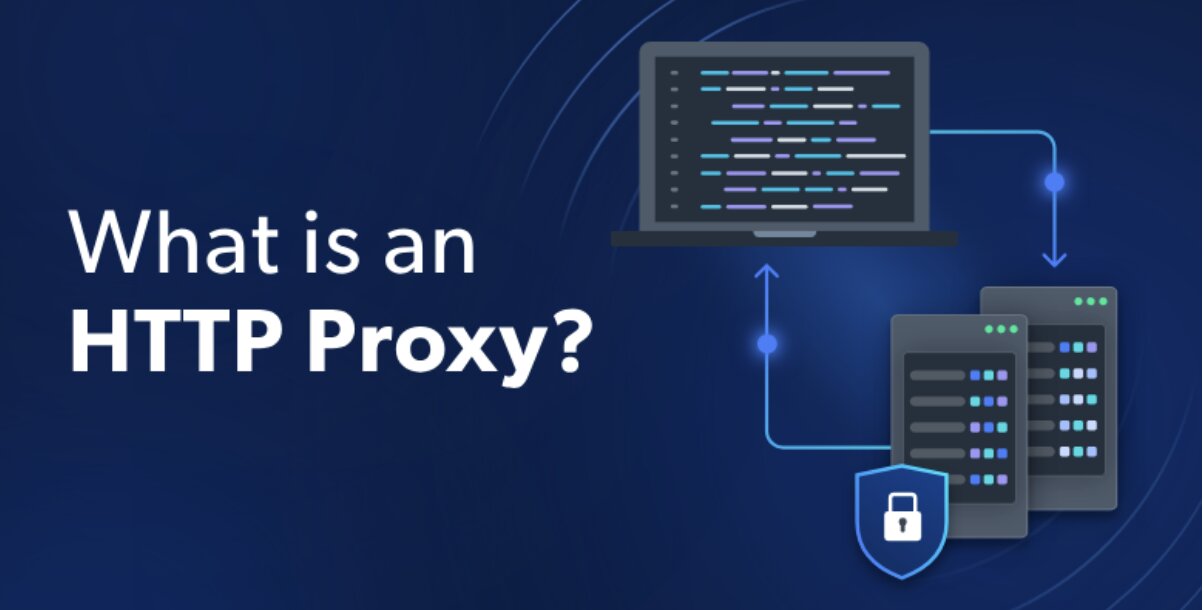
If you’ve ever wondered what is http proxy, the easiest way to think about it is this: it’s a middle layer between you and the website you’re trying to reach.
Normally, when you open a site, your browser connects straight to its server. With an http proxy, that direct path changes. Your request first goes to another server — the proxy — which then passes it along and brings the response back to you.
It sounds simple, but that extra step changes a lot. It can hide your real IP address, speed things up in some cases, or give someone control over what can and cannot be accessed.
If you’re exploring tools like this, you’ve probably already seen options to buy http proxy. But before choosing anything, it helps to clearly understand the http proxy meaning in practice — not just as a definition, but as a working mechanism.
At its core, a proxy doesn’t “replace” your internet connection. It just reroutes it in a smarter (or sometimes more controlled) way.
How an HTTP Proxy Works: Step-by-Step Process
Let’s walk through what actually happens when you use a proxy. No theory — just the real sequence behind a single page load.
Here’s how the process unfolds:
- You type a URL into your browser
- Instead of going directly to the website, the request is sent to the proxy server
- The proxy receives and checks the request
- It forwards that request to the destination server
- The website responds back to the proxy
- The proxy processes the response (sometimes stores it)
- Finally, the data is sent back to your browser
From your side, everything looks normal. The page loads, links work, nothing unusual. But technically, you never contacted the website directly.
That’s the practical http proxy meaning — acting as a go-between that handles communication on your behalf.
One subtle but important detail: HTTP proxies operate at the application level. That means they can “see” and work with the content of requests — URLs, headers, and more. This is why they’re often used in controlled environments like company networks or testing setups.
Key Features and Functions of an HTTP Proxy
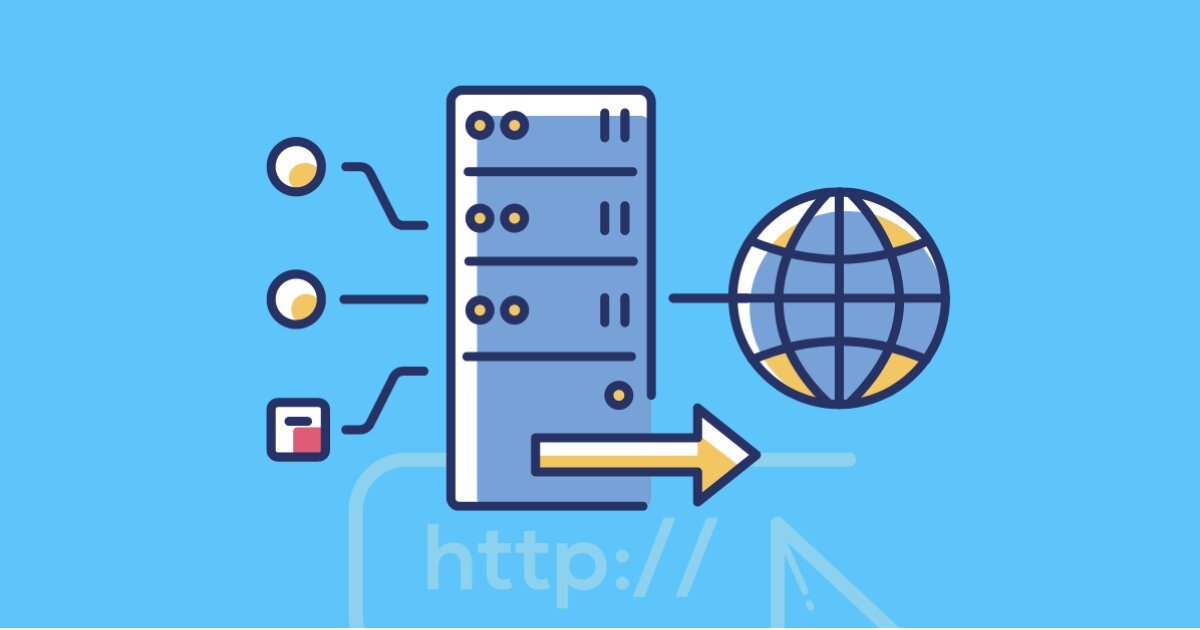
Once you understand the flow, the real value of an http proxy becomes clearer. It’s not just about rerouting traffic — it’s about what can be done with that traffic along the way.
Here are the core things a proxy can handle:
- Hiding your IP address
The website you visit sees the proxy’s IP, not yours. This is one of the main reasons people use proxies in the first place. - Filtering access
Certain sites or types of content can be blocked. This is common in offices, schools, or shared networks. - Saving bandwidth through caching
If multiple users request the same content, the proxy can store it and deliver it faster next time. - Monitoring activity
Administrators can track which resources are being accessed and how often. - Adjusting requests
In some setups, parts of a request can be modified before it reaches the server — useful for testing or automation.
All of this makes proxies surprisingly versatile. They’re not just a privacy tool — they’re also a control point.
That said, there’s a trade-off. Standard HTTP proxies don’t encrypt traffic. So while they can hide your identity from a website, they don’t fully protect the data itself.
Types of HTTP Proxies Explained
Not every proxy works the same way. The differences mostly come down to how visible they are and who they’re working for.
Here’s a quick comparison:
| Type | Description | Typical Use Case |
| Forward Proxy | Sends requests from a user to external websites | Browsing, anonymity |
| Transparent Proxy | Intercepts traffic without hiding the user’s identity | Network control in schools or offices |
| Open Proxy | Public proxy available to anyone | Quick access, but often unreliable |
| Reverse Proxy | Handles incoming traffic on behalf of a server | Load balancing, performance optimization |
A forward proxy is what most people mean when they ask what is http proxy. It’s the standard setup used by individuals.
Transparent proxies are different — they’re usually imposed by a network. You don’t configure them; they’re just there, quietly filtering or logging traffic.
Open proxies might look tempting because they’re easy to access, but they often come with serious risks — from slow speeds to questionable security.
Reverse proxies, on the other hand, are used by websites rather than users. They help servers handle traffic more efficiently and stay protected under load.
Understanding these types makes it easier to avoid common mistakes — like choosing the wrong tool for the job or relying on something that doesn’t fit your needs.

Benefits and Limitations of HTTP Proxy
Once you spend a bit of time working with an http proxy, you start noticing something: it’s not a magic tool. It solves specific problems really well — but only those.
For example, one of the biggest reasons people use proxies is simple: they don’t want websites to see their real IP address. And that works. The site only sees the proxy server, not you directly. For everyday tasks, that’s often enough.
Another practical advantage shows up in shared environments. Imagine an office where dozens of people open the same pages during the day. A proxy can store those pages and serve them faster the next time. It’s not something you notice instantly, but over time it reduces load and speeds things up.
There’s also the control factor. In companies or schools, proxies are often used to limit access — not in an abstract way, but very concretely: blocking certain domains, tracking usage, or managing traffic peaks.
At the same time, there are a few things people tend to misunderstand.
A proxy does not encrypt your connection. That’s probably the most important limitation. If you’re dealing with sensitive data, relying only on a proxy is not the best idea.
Speed can also be unpredictable. A good proxy works almost invisibly, but a poor one can slow everything down. Since every request goes through an extra server, quality matters more than people expect.
And then there’s trust. Your traffic passes through someone else’s infrastructure. If the provider logs data or handles it carelessly, you wouldn’t necessarily know.
So in practice, a proxy is useful — but only if you clearly understand what it does and what it doesn’t.

Real-World Use Cases of HTTP Proxy
The easiest way to understand the http proxy meaning is to look at how people actually use it day to day.
In business environments, proxies are rarely optional — they’re just part of the setup. Companies use them to keep internal networks under control: filtering websites, tracking activity, and avoiding unnecessary traffic overload.
Then there’s data-related work. If you’ve ever dealt with scraping or large-scale monitoring, proxies become almost unavoidable. Without them, repeated requests from a single IP get blocked very quickly. With them, those requests can be distributed more naturally.
Some people use proxies for access reasons. Not in a dramatic “bypass everything” sense, but more in a practical way — for example, checking how a website looks from another region or accessing content that’s slightly restricted.
Developers have their own use cases. When testing APIs or web applications, a proxy can help inspect or tweak requests. It’s a small tool, but it makes debugging much more manageable.
What’s interesting is that most of these use cases are not about hiding — they’re about flexibility. That’s a big part of why proxies are still around.
Expert Insight: What Professionals Say About HTTP Proxies
If you strip away all the explanations, the idea of a proxy is actually very straightforward — and that’s exactly how it’s described in technical standards. “A proxy is a message forwarding agent that is selected by the client.” — Roy T. Fielding, Principal Author of HTTP/1.1, RFC 9110
It’s a short definition, but it says everything that matters. A proxy doesn’t “enhance” the internet on its own — it simply forwards communication in a controlled way.
That simplicity is probably the reason proxies never disappeared. Even as new tools appeared, this basic mechanism remained useful.
Conclusion: Is an HTTP Proxy Right for You?
If you go back to the original question — what is http proxy — the answer turns out to be less complicated than it first seems.
It’s not about secrecy or speed alone. It’s about inserting a controllable step between you and the web.
For some tasks, that’s exactly what you need. Managing requests, distributing traffic, testing systems — a proxy handles all of that without much overhead.
But if your priority is security in the strict sense, then a proxy on its own is not enough. It wasn’t designed for that.
In the end, it’s less about whether a proxy is “good” or “bad” — and more about whether it matches what you’re trying to do.
FAQ: Everything You Need to Know About HTTP Proxy
What is http proxy used for?
In most cases, it’s used to route web requests through another server instead of connecting directly. That helps with things like masking your IP, managing traffic, or handling repeated requests more efficiently in shared environments.
Is HTTP proxy safe to use?
It can be safe in certain scenarios, but it depends heavily on the provider. Since standard proxies don’t encrypt traffic, they’re not ideal for sensitive data. The level of safety mostly comes down to how much you trust the service you’re using.
What is the difference between HTTP proxy and VPN?
A proxy typically works only with specific applications, like a browser, and doesn’t encrypt traffic. A VPN covers your entire connection and adds encryption, which makes it more suitable for privacy-focused use.
Can an HTTP proxy hide your real IP address?
Yes, that’s one of its main functions. The server you connect to will see the proxy’s IP instead of yours. However, that alone doesn’t guarantee full anonymity, especially with modern tracking techniques.
Is it legal to use an HTTP proxy?
In general, yes. Using a proxy is legal in most regions. The legality depends more on what you do with it rather than the tool itself. Misuse can still lead to legal issues.
Do HTTP proxies work with all websites?
Not always. Some websites detect and restrict proxy traffic, especially if the IPs are known or overused. In those cases, access might be limited or blocked entirely.

Comments are closed.