

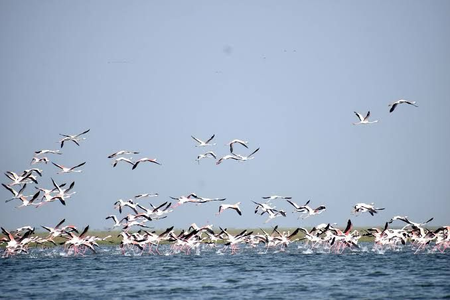
New spots emerge as roosting, breeding grounds for migratory birds in Chennai
Chennai, Dec 1 (IANS) In Tamil Nadu, the Otteri Lake in Vandalur, the sprawling Melmaruvathur tank, and the tall tree clusters inside the Sri Ramachandra Medical College (SRMC) campus in Porur are emerging as this season’s busiest roosting and breeding grounds for migratory birds.
While SRMC remains closed to the public, the other two locations are witnessing a steady flow of visitors eager to see flocks settle in for the winter.
At Otteri Lake inside the Arignar Anna Zoological Park, officials said the migratory season has begun early. Egrets, grey herons, and Asian open-billed storks have already arrived to explore nesting sites. They will soon be joined by painted storks, cormorants, and spoonbills, pushing the overall count to nearly 3,500 birds during peak winter.
The lake supports the successful breeding of several species, including open-billed storks, spoonbills, white ibis, grey herons, pond herons, large egrets, and darters. Spot-billed pelicans visit regularly but do not breed here, a senior park official noted.
Painted storks, often late arrivals in January, extend the migratory season until April. Their presence depends on water availability, and sustained water levels — thanks to desilting and restoration efforts — have already drawn more than 5,000 birds after this year’s monsoon.
Further south, the Melmaruvathur tank has quietly grown into a dependable habitat for migratory birds for more than a decade.
Local bird monitors recall that the turning point came in 2013, when Melmaruvathur Trust installed iron nesting and roosting platforms inspired by bird sanctuaries in other states. Trustee G.B. Anbazhagan led the effort, helping convert the tank from a seasonal stopover into a thriving winter refuge.
Meanwhile, the SRMC campus at Porur continues to support large flocks on its towering trees, though entry restrictions limit observations to researchers and staff. These growing hotspots underline how scattered wetlands and tanks across the Chennai region are taking on greater ecological significance.
With urbanisation squeezing traditional habitats, the rise of such alternative destinations shows how targeted conservation — whether through community support or institutional action — can create resilient spaces for migratory birds.
As the peak season unfolds between November and March, these quiet refuges are becoming essential lifelines in the city’s wider biodiversity network.
–IANS
aal/dpb

Comments are closed.