

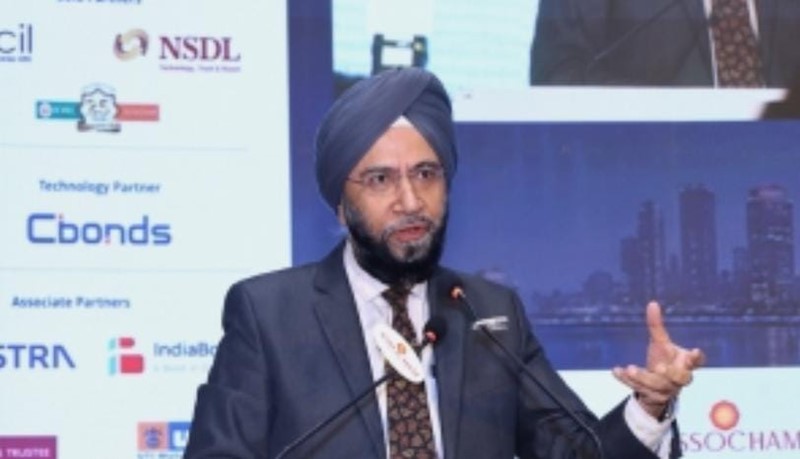
Strong Corporate Bond Market Essential to Finance India’s Next Phase of Growth: Ashish Jaiswal
TEN NEWS NETWORK
National News (23 August 2026): India will need a deeper, more resilient and diversified corporate bond market to meet its growing requirements for long-term capital, infrastructure development and sustainable economic growth, industry leaders and policymakers said at the 9th National Summit & Awards on Corporate Bond Market organised by the Associated Chambers of Commerce and Industry of India (ASSOCHAM).
Held under the theme “Building a Resilient Corporate Bond Market: A Key Enabler of Viksit Bharat@2047,” the summit brought together senior policymakers, regulators, financial institutions, stock exchanges, depositories, investors and other stakeholders to discuss ways to strengthen India’s corporate debt ecosystem.
The discussions focused on expanding the investor base, improving secondary-market liquidity, promoting technology-led innovation, strengthening market infrastructure and enhancing global connectivity. Participants also underlined the need to make corporate bonds more accessible to retail investors and to increase their role in financing infrastructure and sustainable development.
Ms. Nipa Sheth, Chairperson, ASSOCHAM National Council for Corporate Bond Market and Founder & Director, Trust Group, said a well-developed corporate bond market would be critical to mobilising long-term capital and diversifying funding sources as India’s economy continues to expand.
She noted that although India’s outstanding bond market has recorded substantial growth, activity in the secondary market remains comparatively limited. She highlighted ongoing regulatory and market initiatives, including digitisation, tokenisation and market-making measures, aimed at improving the efficiency and depth of the market.
Mr. Rajkiran Rai G, Managing Director, National Bank for Financing Infrastructure and Development (NaBFID), said India’s ambition of becoming a US$30 trillion economy by 2047 would require massive investment in infrastructure and capital expenditure.
He emphasised that meeting this financing requirement would make the bond market increasingly important. According to him, India needs greater availability of patient and long-duration capital, with the corporate bond market playing a crucial role in bridging the financing gap for infrastructure projects.
Mr. Sriram Krishnan, Chief Business Development Officer, National Stock Exchange Ltd. (NSE), said a stronger corporate bond market could complement traditional bank lending by giving companies additional and diversified channels for raising capital.
He stressed that building a resilient bond ecosystem would require greater innovation, broader participation, deeper liquidity and coordinated efforts across the financial sector. He also highlighted the contribution of exchange infrastructure towards transparent price discovery, efficient capital raising and stronger secondary-market activity.
Krishnan further pointed to the increasing adoption of online bond platforms, which are helping expand access to corporate bonds and enabling greater participation from retail investors beyond the traditional institutional investor base.
Mr. Vijay Chandok, MD & CEO, National Securities Depository Ltd. (NSDL), said a mature economy would require not only a robust banking system but also a deep and efficient bond market.
He identified limited liquidity, market concentration, relatively low retail participation and fragmentation as some of the key challenges confronting India’s corporate bond market. He called for stronger secondary-market liquidity and price discovery, a wider investor and issuer base, and greater deployment of technology to create a more efficient and resilient ecosystem.
Mr. K. Rajaraman, Chairperson, International Financial Services Centres Authority (IFSCA), said regulators and industry stakeholders must work collectively to reduce the cost of doing business and improve ease of access to financial markets.
He said the objective should be to develop a bond market capable of meeting the enormous financing requirements associated with India’s 2047 development agenda. He emphasised that regulators, issuers, investors, exchanges, intermediaries, industry bodies and policymakers would all have to contribute towards creating a stronger and more capable debt market.
Mr. Nehal Vora, MD & CEO, Central Depository Services Ltd. (CDSL), highlighted the significant potential for increasing retail participation in corporate bonds.
He observed that while equity investment has become increasingly familiar to Indian households, corporate debt instruments remain relatively difficult for ordinary investors to discover, understand and purchase. He said investors typically seek safety, predictable income, diversification and convenient access—all areas where debt products can play an important role.
Vora stressed the need to simplify bond investing and improve transparency around credit and liquidity risks so that retail investors can participate with greater confidence.
Mr. Amarjeet Singh, Whole Time Member, Securities and Exchange Board of India (SEBI), said the regulator’s objective is to develop a corporate bond market that is deeper, more liquid, diversified, accessible and trusted.
He emphasised that achieving this objective would require continued engagement and cooperation among regulators, investors and intermediaries. He added that SEBI would continue consultations and outreach with issuers and other market participants to support the development of a corporate bond market commensurate with the scale of India’s economic ambitions.
Speaking at the summit, Advocate Ashish Jaiswal, Hon’ble Minister of State for Finance, Planning, Agriculture, Relief & Rehabilitation, Law & Judiciary and Labour, Government of Maharashtra, underlined the importance of building a strong corporate bond market alongside a robust banking system.
He said that as India moves towards becoming a developed economy, corporate bonds would be critical for financing the country’s next phase of growth and supporting long-term capital formation. He called for a greater focus on deepening the debt market and widening investor participation as India advances towards the Viksit Bharat@2047 vision.
Jaiswal also highlighted the growing financing needs of Maharashtra’s major urban centres, including Mumbai, Pune, Nagpur, Nashik and Thane. He pointed to the need for substantial investment in public transportation, water supply, affordable housing, waste management and climate-resilient infrastructure.
According to him, municipal bonds could provide an important additional financing avenue for urban local bodies and help reduce the pressure on public finances while supporting infrastructure development. He said Maharashtra remained committed to supporting reforms aimed at strengthening capital markets, improving access to long-term finance and accelerating infrastructure-led growth.
Ms. Aditi Mittal, Co-Chairperson, ASSOCHAM National Council for Corporate Bond Market and Director, AK Group, emphasised the distinctive strength of debt markets, describing consistency and stability as key characteristics of debt investments.
She noted that while equity markets often attract greater visibility, debt markets provide consistency and can play a crucial role in supporting long-term financial stability and economic development.
The summit also witnessed the release of the ASSOCHAM-NSE Knowledge Report on the Corporate Bond Market, which examines the current state of India’s corporate bond ecosystem and outlines measures required to enhance its resilience, liquidity and participation.
The report and deliberations highlighted several priorities for the future, including deepening secondary-market liquidity, expanding retail and institutional participation, increasing issuer diversity, strengthening market infrastructure, adopting technology-led solutions and improving integration with global financial markets.
Stakeholders agreed that a stronger corporate bond market would complement the banking system and provide companies, infrastructure developers and public bodies with additional sources of long-term financing.
With India targeting rapid economic expansion and major infrastructure development over the coming decades, participants emphasised that a deep, transparent and accessible debt market would be an important financial pillar for achieving the objectives of Viksit Bharat@2047 and supporting sustainable, infrastructure-led growth.
Dear Readers and Viewers, Please note that tennews.in: National News Portal daily publishes latest and top ten news from government, politics, national, business, education, technology, lifestyle, entertainment, health etc ten categories. You may submit your e mail and subscribe it to get updates on your e mail. Please also subscribe TEN NEWS NATIONAL YouTube Channel.

Comments are closed.