

Galgotias University MUN 2025 Call for Global Awareness and Youth Leadership
TEN NEWS NETWORK
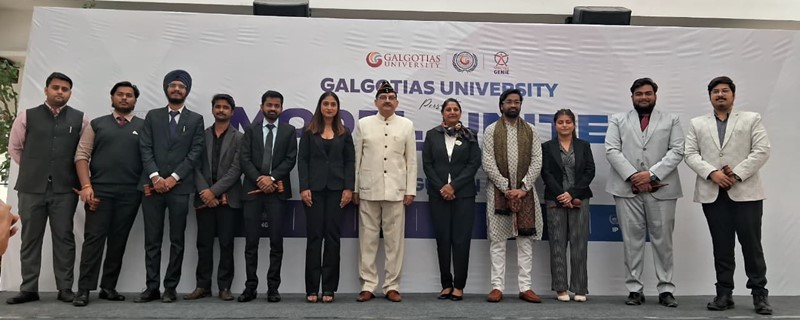
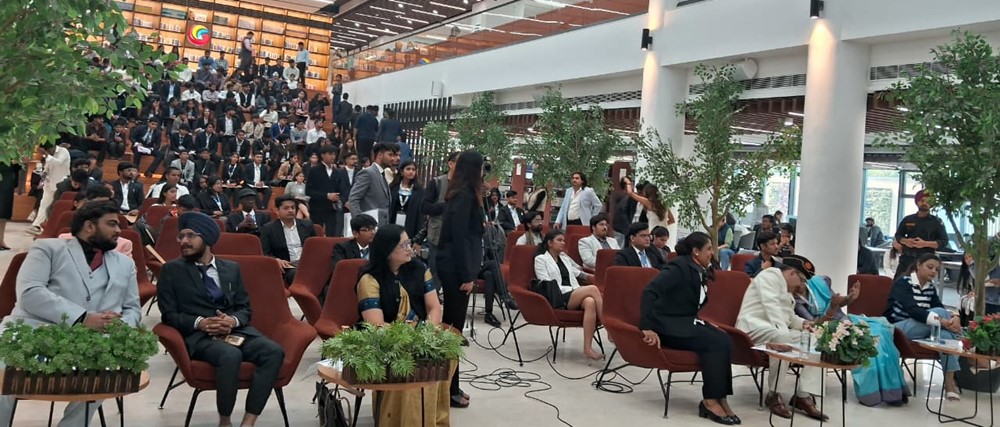
Greater Noida News (29 November 2025): Galgotias University under the futuristic leadership of CEO Dr Dhruv Galgotia commenced the two-day Model United Nations (MUN) 2025 conference on Saturday with a vibrant and ceremonial opening that drew students, faculty, diplomats, and dignitaries into an atmosphere of intellectual excitement and global engagement.
The inaugural event, themed “Diplomacy in Action, Peace in Motion,” began at the Knowledge Centre of the AI&DS Block with the traditional Lighting of the Lamp and Saraswati Vandana.
Addressing the delegates, Ms. Geeta Karunakaran, Head of the MUN Committee, Galgotias University delivered welcome addresso, expressing pride at seeing so many young minds united under one platform of diplomacy, global citizenship, and leadership. She emphasized that the conference is not just an academic exercise, but a true laboratory for future leaders, where students learn to think critically, negotiate thoughtfully, and navigate the complex dynamics of international relations.
In the keynote address delivered by Chief Guest Maj Gen Dr. Rajan Kochhar, VSM, who captivated the audience with an expansive, deeply analytical and powerful speech on geopolitics, multilateralism and the evolving global order. Opening his address, he encouraged students to reflect on the purpose of the conference, asking, What is the end state after two days? What are your takeaways going to be?
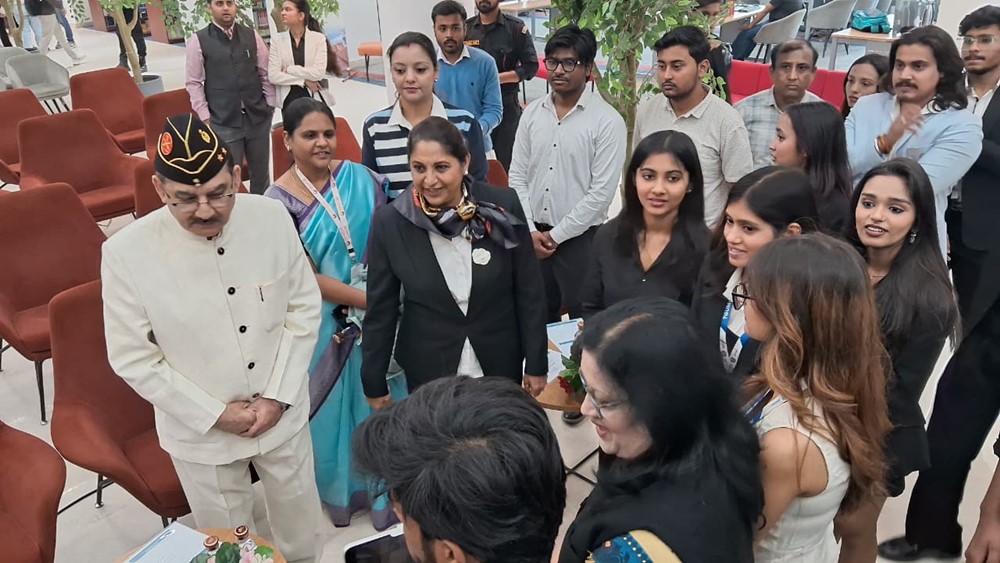
He emphasized that MUN 2025 is an opportunity for delegates to understand the global shifts shaping the 21st century. This conference gives you a chance to understand where the world is heading, he said, explaining the transition from a unipolar world after World War II to today’s complex multipolar landscape. He urged the students to question who is shaping this multipolar world, why they wield influence and how India positions itself within this emerging order. “Unless you understand where India stands today and where it wants to be tomorrow, you will fall short in your efforts during the conference.
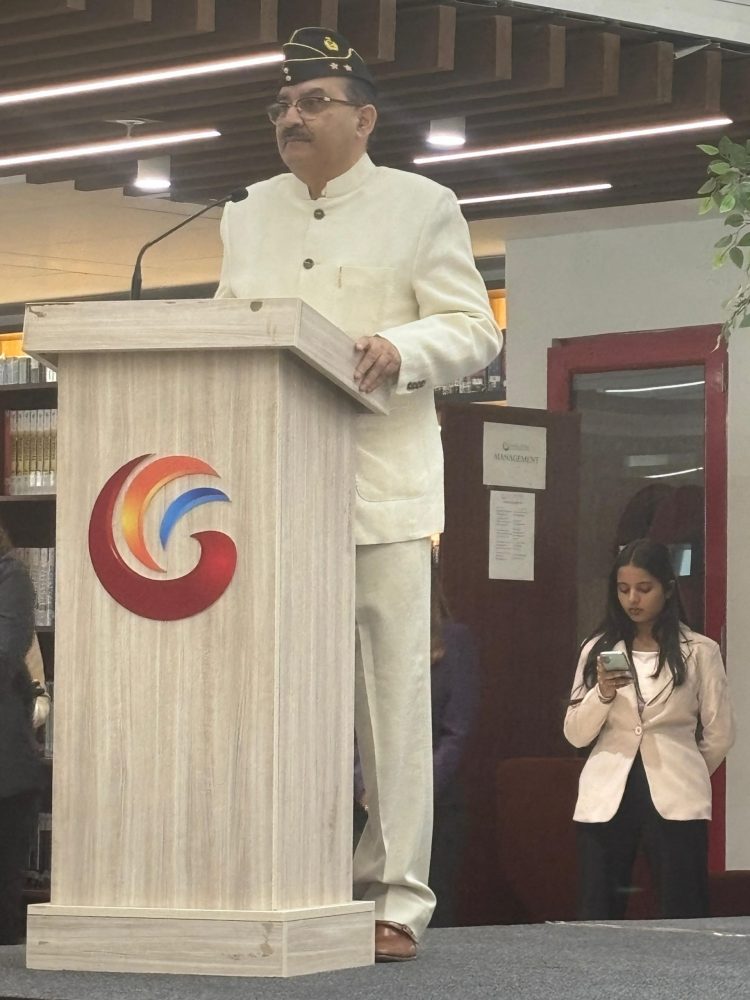
Dr. Rajan Kochhar went on to highlight the vital role of multilateral institutions under the United Nations. He reminded the audience that the UN is far more than peacekeeping, pointing to its legal, humanitarian and developmental arms, such as the International Court of Justice, the International Criminal Court, UNICEF and the World Food Programme. He illustrated their significance through current global crises, including the war in Gaza, widespread hunger and malnutrition, and conflicts across Sudan and South Sudan. Look at what is happening in Gaza. Look at the children suffering due to malnutrition. Look at Africa, where so many nations remain trapped in cycles of conflict. The UN’s role in these regions cannot be overstated.
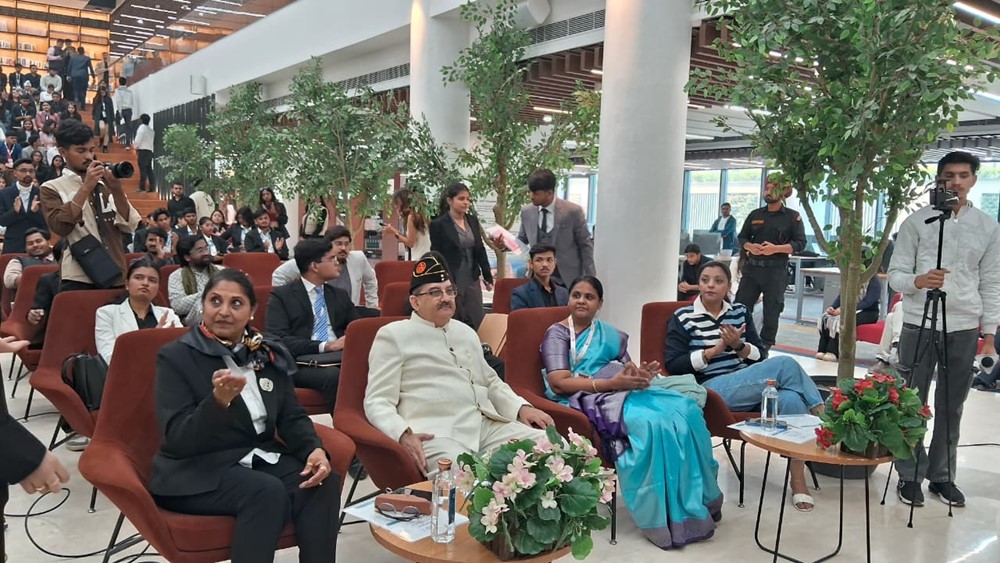
He delivered a particularly compelling argument on India’s long-standing demand for a permanent seat on the United Nations Security Council. Questioning the relevance of the current P5 framework set in 1945, he asked, Do you feel that France and the United Kingdom deserve to be in the Security Council today? Are they still reflective of the top powers of the world? He urged students to critically examine why India—despite being the world’s fifth-largest economy and home to 1.4 billion people—remains outside the Security Council. One-sixth of the world’s population lives in India. Can the UN claim to represent the world if a country representing such a huge portion of humanity is excluded from its most powerful decision-making body? he asked. Citing India’s extraordinary contribution to peacekeeping, he added, “India is the second-largest contributor to UN peacekeeping forces. Around 2,75,000 of our men and women have served under the UN flag, and 160 of our soldiers have sacrificed their lives for global peace. These are not small numbers. If that does not strengthen our claim for a permanent seat, then what will?
Dr.Rajan Kochhar also addressed the importance of critical thinking, cautioning students against getting stuck in textbook structures of the UN and insisting they focus on deeper issues such as terrorism, global hunger and climate-driven instability. Do not be carried away by what you read on social media, he warned. Social media can be constructive, but it can also be deeply destructive. A single misleading post can corrupt your mind if you don’t question it. He emphasized that modern leaders must think rationally, study facts, and rise above emotional arguments. He further highlighted the importance of teamwork and leadership in MUN, reminding delegates that every member—not just the leaders—plays a crucial role. He encouraged them to research the countries they represent, saying, Unless you know your country well, you cannot represent it well.
Shifting to contemporary geopolitical developments, he spoke about former US President Donald Trump’s statement proposing a halt to immigration from third-world nations, calling it a matter of global concern. “This will impact India,” he said. As part of the UN, can a President make such a statement? Is it legal? And what will it mean for Indians aspiring to go to the US? He added that the world is changing rapidly, often unpredictably, and urged students to stay informed, aware and critical.
He also encouraged delegates to develop empathy by understanding global conflicts from multiple perspectives, citing the Russia–Ukraine war and the Israel–Palestine conflict. If you are representing Ukraine, think like a Ukrainian. If you are representing Russia, think like a Russian, he said. Referring to the peace plans proposed by Donald Trump, he challenged students to evaluate whether these proposals can realistically bring stability to the regions. He concluded by emphasizing the power of dialogue over war, particularly in the context of India–Pakistan relations, saying, No war can solve the India–Pakistan issue. These statements you see online about capturing territories are not realities. To annex another country requires immense military and economic power, which is not feasible.
Ending his address with a powerful message on personal excellence, he said, Your competition is not with others but with yourself. If you commit to a cause and stand by your principles, sky is the limit. His speech received long applause from the delegates and faculty present
Dear Readers and Viewers, Please note that tennews.in: National News Portal daily publishes latest and top ten news from government, politics, national, business, education, technology, lifestyle, entertainment, health etc ten categories. You may submit your e mail and subscribe it to get updates on your e mail. Please also subscribe TEN NEWS NATIONAL YouTube Channel.

Comments are closed.