

We Are Inhaling Invisible Poison Every Day: Prof. Tanu Jindal Warns as Delhi-NCR Air Turns Deadly
TEN NEWS NETWORK
GREATER NOIDA News (21/01/2026): As winter tightens its grip over Delhi-NCR, the region is once again battling a severe air pollution crisis. A dense blanket of smog has engulfed Noida and Delhi, drastically reducing visibility, choking roads during night and early morning hours, and making even routine breathing a challenge. Cold temperatures, calm winds, and moisture-laden air have created ideal conditions for pollutants to remain trapped near the ground, worsening the situation day by day. Hospitals across the region are reporting a rise in respiratory ailments, with asthma and bronchitis patients facing acute distress.
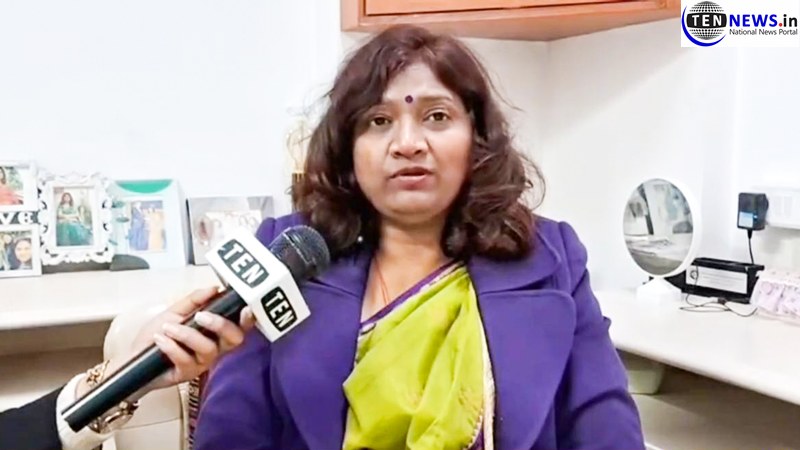
To understand the gravity of the situation and possible long-term solutions, Ten News Network spoke with Prof. (Dr.) Tanu Jindal, Group Pro Vice Chancellor (R&D) and Director of Environmental Toxicology at Amity University, Noida. As a leading environmental expert, she painted a stark picture of the current scenario and emphasized the urgent need for systemic as well as community-driven action.
Prof. (Dr.) Tanu Jindal said, The present situation is extremely alarming. The Air Quality Index has reached a level where we are facing severe smog, visibility is almost zero, and people are struggling even to breathe properly. At night, you cannot clearly see the next vehicle on the road. This smog is a dangerous mixture of air pollutants and water particles formed due to cold weather conditions.
She warned that air pollution is no longer just an environmental issue but a public health emergency. We are seeing a sharp rise in asthma cases, and people suffering from bronchitis are facing serious inhalation problems. Air pollution here has become so bad that it is directly affecting our quality of life.
Highlighting the global impact, she added: India is a great nation and Delhi is a great city, but this level of pollution is damaging our image internationally. We must address it urgently by identifying and tackling the root causes. Construction dust and road dust re-suspension are among the biggest contributors to pollution in Noida and Delhi.
We must strictly follow building construction norms. Recently, I visited cities like Boston and Dubai. Despite massive construction activity, there is hardly any dust because open soil is properly covered. Bare land—whether public or private—must be covered with grass, pebbles, wood straw, or steel nets. Open dust gets re-suspended into the air with even slight wind or vehicle movement. She stressed the need for better infrastructure planning and strict enforcement of construction regulations to prevent dust from becoming airborne.
The second major cause, she said, is vehicular emissions. Temporary measures like GRAP are not enough. We need strict norms against old, highly polluting vehicles and a strong push for public transport to reduce traffic load. While we focus on PM2.5 and PM10, we forget that we are inhaling invisible poisons like SOx, NOx, carbon monoxide, and ground-level ozone.
Prof. Jindal explained that these invisible pollutants are extremely dangerous: When SOx and NOx react in the atmosphere, they form ground-level ozone, which is carcinogenic. This toxic gas makes breathing extremely difficult, and prolonged exposure is silently killing us.
She also spoke about stubble burning, acknowledging government efforts: Parali burning has been a major contributor in recent years, but the government has taken positive steps by subsidizing new technologies and offering incentives to farmers. This year, its impact is relatively less. However, construction and road dust have now emerged as much bigger problems.
Another critical factor, according to her, is Delhi’s geography. Delhi is landlocked. Cities like Mumbai benefit because the sea acts as a natural sink for pollution. Unfortunately, we have turned our primary sink—the Yamuna River—into a drain. If we revive our water bodies and clean the Yamuna, they can play a vital role in absorbing pollutants.
She emphasized that greenery is the strongest natural defense against air pollution.
Due to rapid infrastructure development, a large number of trees have been cut. While development is necessary, plantation must go hand in hand. We should plant trees that absorb more carbon dioxide and release higher amounts of oxygen, especially along pavements, dividers, and open spaces.
Prof. Jindal strongly advocated indoor and community-level initiatives: We run a campaign called ‘Give lungs to your home’ by nurturing indoor plants. Indoor air pollution is often worse than outdoor pollution. Certain plants even release oxygen at night. You can feel the difference—my office is full of plants, and the environment feels refreshed.
She also encouraged terrace and balcony gardening, calling it both a health and fitness activity. Instead of going to the gym, gardening itself is a form of exercise and mental relaxation.
On personal health protection, she shared traditional wisdom: Applying ghee in the nostrils is an ancient method that helps trap dust particles. Herbal formulations like Chyawanprash, turmeric, aloe vera, and amla help build immunity. Strong immunity is the reason some people cope better than others in polluted conditions.
Prof. Jindal highlighted Amity University’s role in monitoring and awareness: At Amity, we use AI-driven air quality monitoring systems that provide minute-to-minute data on PM2.5, PM10, SOx, NOx, ozone, carbon monoxide, and ammonia. Based on this data, we issue advisories to help people reduce exposure.
She concluded with a strong call for unity and behavioral change: It is easy to blame the government or industries, but real change will come only when we act together. Say no to individual firecrackers, opt for community celebrations, light diyas instead of excessive electric lighting, and plant trees. Our population is not a weakness—it is our strength. Unity is strength, and together we can overcome this menace.
Prof. Tanu Jindal emphasized that awareness, responsibility, and collective action are the only sustainable paths forward. As scientists and educators, it is our duty to inform and motivate people. Yes, the problem is serious—but yes, we can still do something about it.
As Delhi-NCR continues to struggle under worsening air quality and harsh winter conditions, experts warn that the crisis can no longer be treated as seasonal or temporary. Prof. Tanu Jindal’s observations underline the urgent need for a combined approach—strong policy enforcement, scientific planning, and active public participation. Without immediate and collective action to control pollution sources, revive natural sinks, and adopt healthier lifestyles, the region’s air will remain a serious threat to both public health and the future sustainability of the city.
Dear Readers and Viewers, Please note that tennews.in: National News Portal daily publishes latest and top ten news from government, politics, national, business, education, technology, lifestyle, entertainment, health etc ten categories. You may submit your e mail and subscribe it to get updates on your e mail. Please also subscribe TEN NEWS NATIONAL YouTube Channel.

Comments are closed.