

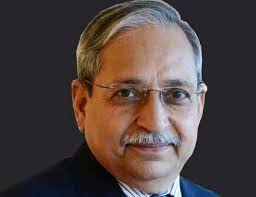
Repeated NEET Paper Leaks Are Destroying Trust in India’s Education System: Dr Harivansh Chaturvedi, DG, IILM
Ten News Network
Greater Noida News (13/05/2026): The cancellation of the NEET-UG 2026 examination following allegations of a nationwide paper leak has sparked massive concern among students, parents, and education experts across the country. With nearly 22.8 lakh aspirants affected, the decision has once again raised serious questions over the credibility, transparency, and security of India’s high-stakes examination system.
The controversy has also reignited debates around repeated exam leaks, the accountability of the National Testing Agency (NTA), and the growing mistrust among students who spend years preparing for competitive entrance examinations.
Expressing deep concern over the cancellation of the NEET-UG 2026 examination following allegations of a paper leak, Harivansh Chaturvedi told ANI News Agency the incident has once again shaken students’ faith in the country’s examination system and exposed serious flaws in the conduct of high-stakes entrance tests.
Reacting to the development, Chaturvedi said that nearly 22.8 lakh students will now have to endure further uncertainty and stress due to the re-examination process.
I am deeply disturbed that 22.8 lakh students will now have to suffer. They will have to wait for another month and appear for the examination once again. Unfortunately, this is not happening for the first time. Similar incidents have occurred repeatedly over the last one or two decades. Even in 2024, there were several cases of NEET paper leaks reported from Bihar and other parts of the country, he said.
He further stated that repeated incidents of examination leaks are creating widespread suspicion and distrust toward the system.
This recurring pattern is creating serious doubt and mistrust about the system we are building. The National Testing Agency (NTA) was established in 2017, and the Ministry of Education has invested heavily in strengthening the examination framework. Yet, despite the best efforts and use of technology, paper leaks continue to occur. Young people are beginning to question whether corruption and exam leaks in India can ever truly be stopped, he remarked.
Highlighting the enormous competition and financial stakes attached to medical admissions, Chaturvedi pointed out that only around one lakh medical seats are available for nearly 22.8 lakh aspirants every year.
Drawing an international comparison, he referred to China’s highly competitive national examination system.
If we compare this with countries like China, the contrast is striking. In 2025, nearly 1.35 crore students appeared for China’s Gaokao examination, which is conducted for admissions into medical, engineering, and several other disciplines. During the examination period, the entire country remains alert and disciplined, and no one dares to leak the paper. There are strict legal consequences for anyone involved in such crimes, including imprisonment of at least seven years, he said.
Chaturvedi warned that repeated examination fraud is weakening the values of honesty and meritocracy among the youth.
There is a growing disillusionment with honesty and hard work. Students feel that even if they work sincerely and honestly, they may still suffer, while those with money can manipulate the system and secure admissions — either in private colleges or abroad. Honesty is the foundation upon which a nation is built. If our younger generation stops believing that integrity and hard work can shape their future, it becomes a matter of grave concern, he stated.
Calling for urgent reforms in the examination ecosystem, he emphasized that technology alone cannot solve the crisis unless accountability is ensured throughout the process.
The government is increasingly relying on technology, and technology certainly offers solutions to many problems. However, in this case, despite all safeguards, the paper was still leaked. The harsh reality is that in the value chain of high-stakes examinations like NEET, JEE, or UPSC, there will always be individuals willing to pay huge amounts of money to obtain question papers illegally. This has happened repeatedly and is damaging not only our education system but also our entire human resource system, he said.
He concluded by raising concerns over the long-term impact on public institutions and governance. By saying that, If people are entering government medical colleges, hospitals, or public services through corruption and leaked papers, then what assurance do we have about their competence, integrity, and commitment toward public service? This is a serious issue that requires immediate and structural reform.

Comments are closed.